Full article about Tunes: Espresso & Almond-Scented Rails
Tunes, Silves: sip 80-cent espresso at Café O Entroncamento, board 38 daily trains, taste Monchique honey, razor clams & Bisaro sausage.
Hide article Read full article
The train exhales at Tunes, a station opened on 1 July 1889, and for a heartbeat the carriage is flooded with late afternoon light that only the Algarve can brew. Through the window: a single-storey ribbon of whitewash along Rua 5 de Outubro, back gardens where orange and almond branches flicker above terracotta walls. No monument competes for attention; there is not even a formal square. Instead, the town’s compass point is Café O Entroncamento, trading since 1976, where António still pulls 80-cent espressos from the same lever machine and recites timetables like poetry.
The crossroads between hills and coast
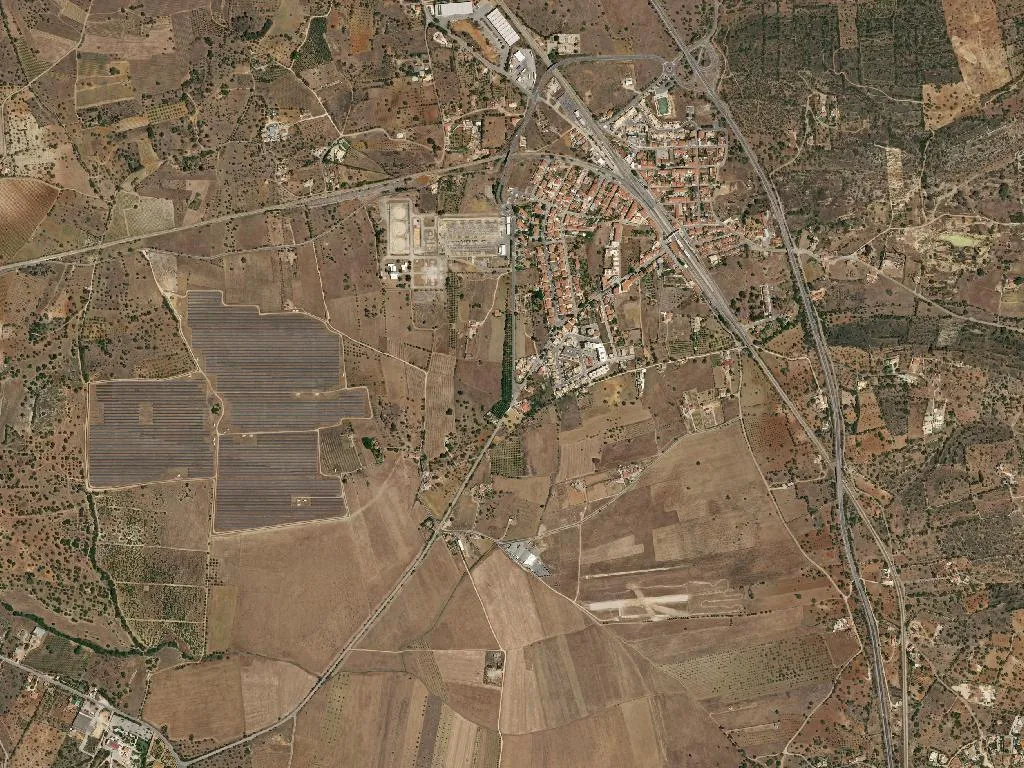
Tunes stretches across 12.25 km² of barrocal limestone at the southern lip of the Serra, 58 m above sea level and exactly halfway between Faro and the market town of Albufeira. The railway and the EN 269 slice through it; 3,418 people live here (2021), more than a quarter of them over 65. At 278 inhabitants per km² it is the densest parish in Silves, a statistic owed entirely to the station: 38 trains stop daily, 14 of them the Lisbon–Faro Regionais that cover the 300 km in 3 h 15 m.
Before the iron road arrived there were only two farmsteads belonging to the São Marcos da Serra estate. The name first surfaces in a 1573 charter as “Thunnes”, referring to the low hill now capped by the parish church, Nossa Senhora da Conceição, built in 1897 over a sixteenth-century hermitage.
Scents and tastes of the nearby serra
Inside the Varandas convenience store Zulmira Guardio keeps shelves of Monchique heather honey—DOP-protected, €7 for 500 g. The beekeeper, João Fialho, stations 250 hives between Fóia (902 m) and Picota (774 m). On Friday mornings the market spreads over the primary-school forecourt: conquilhas (Alvor clams) at €8/kg, razor clams from Quarteira at €6, and chalk-stream sausages of Bisaro pork smoked over medronho wood by Joaquim Faísca up in São Marcos.
O Fernandinho (Largo da Igreja 5) lights its charcoal at 13.00 sharp: eel stew thickened with Alentejo bread (€14), then asparagus migas topped with a hen’s egg from the yard (€9). Between mealtimes, Café Central on Dr Vicente Moreira will carve 24-month Barrancos ham into a bolo do caco sandwich (€4) and pour a glass of Alentejo red for €1.20.
Generations sharing the same pavement
The primary school—named after local poetess Maria dos Remédios Martins—has 97 pupils in seven classes; the nursery fills the old teacher’s house with 22 toddlers. At 16.30 the Vamus 47 bus disgorges 14 teenagers back from Albufeira secondary; a ticket bought on the app is €2.35. In the parish council hall on Rua da Liberdade the Centro de Convívio serves lunch—turnip soup, pork Alentejo-style, municipal oranges—for €3. Afternoons are given over to Swedish rummy and Radio Algarve FM 94.6. The 2019 sports hall hosts C.F. Tunes (Silves second division) and Sónia’s zumba class, Tuesdays and Thursdays, €5 an hour.
Accommodation is strictly small-scale: 30 local-licence units—12 flats on Rua 25 de Abril, nine villas in Loteamento da Achada, seven rooms in family homes. Occupancy averages 38 %; expect €45 in May, €70 in August. The nearest hotel is Vila Galé Náutico, 11 km away in Algoz.
17.43 departure
On platform 2 the 1900 Regional noses in. Dona Aurora Santos, 74, from São Bartolomeu de Messines, heaves a string bag of her son’s oranges aboard. The whistle blows; the church bell answers three times. Tunes contracts back to its usual scale, but no one minds: by 18.00 the bar is tuned to Sky Sports, and the day resumes the cadence Dr Armando—GP here since 1987—calls “interior time”, measured in harvests and train horns, not likes.