Full article about Luz de Tavira: salt glare & flamingo-pink dawn
19th-century salt warehouses, Arab water channels and a 72-metre-wide beach at Portugal’s end
Hide article Read full article
The salt-white morning
Dawn peels open the Ria Formosa like an oyster shell. In the half-light, 19th-century salt warehouses loom charcoal-black against the lagoon, their silhouettes copied exactly in the mirror-calm water. As the tide slips away, grey-green mudflats appear and flamingos in slow-motion ballet pick through them, each step a pink exclamation mark. The air tastes metallic—brine, silt and the faint sweetness of sea-crystallising salt so white it makes you squint.
This is Luz de Tavira, the parish that took its name from the glare of the Atlantic. Medieval pilots once called the entire coast “Luz de Mar” because the water itself seemed luminous. The warehouses still stand, brick bones of a trade that once freighted 600 tonnes of hand-raked fleur de sel to Amsterdam every winter, packed by the now-silent Tavira Salt Company.
Two villages become one
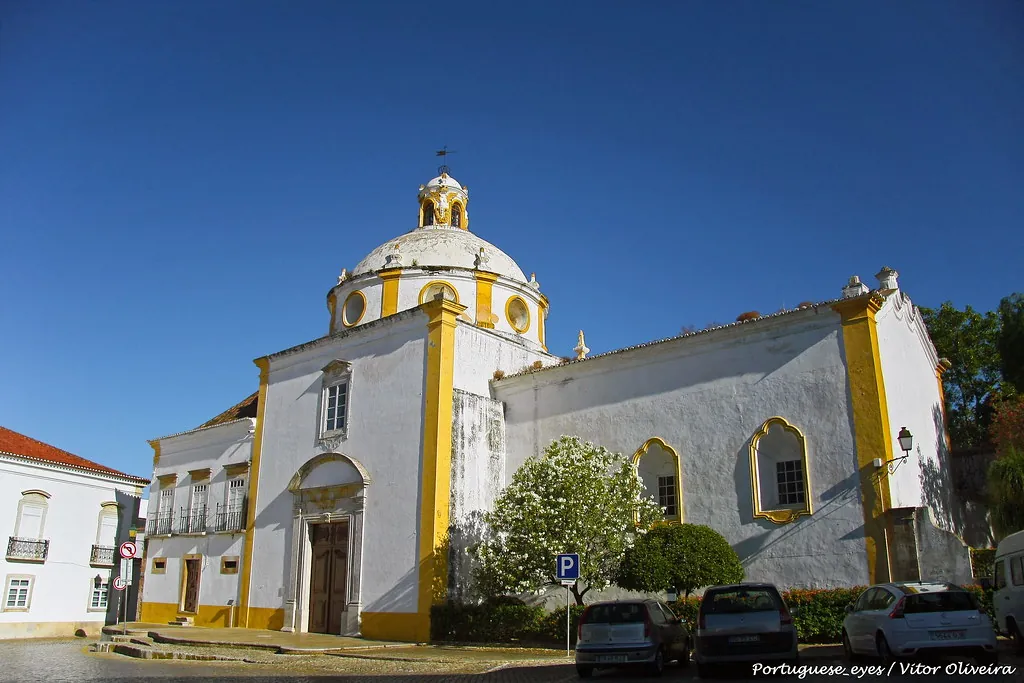
Luz de Tavira was stitched together in 1997 from the older hamlets of Luz and Santo Estêvão, yet the settlement ledger starts four centuries before Portugal became a kingdom. Arab irrigation channels from the 10th century still vein the dry orchards behind the lagoon; later, the twin engines of tuna and salt financed the baroque rebuild of Luz’s parish church after the 1755 earthquake. Inside, an altarpiece dated 1763 frames a 1644 statue of Nossa Senhora da Luz—brought, legend insists, by Gibraltar fishermen who swore she calmed a storm. A mile inland, Santo Estêvão’s tiny 16th-century hermitage hides a Manueline altar rescued from a demolition skip and reinstalled in 2018; single-naved, 12 metres long, its limewashed walls filter light like a camera obscura.
The last lighthouse
mainland Portugal ends at the Cabo de Santa Maria, the blunt tip of Ilha de Tavira. A 12-minute water-taxi from Quatro-Águas lands you at a sand-spit so narrow that high tide reduces the beach to 72 metres—Atlantic on one side, lagoon on the other, both clawing at the same ribbon of sand. Storm Ciara shaved 15 metres off it in February 2020, and winter gales continue the sculpture. The 1851 lighthouse—still hand-wound each evening—throws its first beam at 20:42, the country’s southernmost punctuation mark.
Birds, boats and brine
Eight of the original 24 salt pans still operate, their shallow ponds now part of the Ria Formosa Natural Park. Between September and April they become a service station for avian frequent-flyers: avocets, spoonbills, and the stray greater flamingo that rides the thermals up from Africa. A 5.2-km trail circles the freshwater Lagoa de Santa André, threading orange groves and 200-year-old oliveires before passing the brick stumps of three windmills that ground barley until 1952. Cyclists can pick up the Algarve Ecovia here: 7.3 km of dead-flat asphalt with elevated boardwalks that let you look directly onto the decks of fishing boats heading out at 06:30 for cuttlefish and gilt-head bream.
Kitchen archives
flavour is archived here. A clay pot from Estremoz simmers caldeirada de peixe da Ria—sea bass, weevers, razor clams and garden tomatoes—slow-cooked for two hours with wild mint. Razor-clam rice keeps the shells on, the broth reduced until it tastes like breathing surf. Octopus is trapped among the basalt at Cabeço, boiled in seawater, then roasted over carob wood with punched “Antonas” potatoes and a final lick of 2023 Galician olive oil. Xerém, a thick corn porridge loosened with cockles, recalls the wheat-scarce winters of 1917-18; dessert is ovos moles called luzitos, invented by nuns in the long-gone Convento de Santo António in 1897, now made at home with either cinnamon or a whisper of orange zest—every family guards its own ratio.
Fireworks and field blessings
The first Sunday in May fills the church square with 800 people, brass bands and 150 rockets for the Romaria de Nossa Senhora da Luz. On 26 December, Santo Estêvão’s parish priest sprinkles holy water over vegetable plots before the tasting of convent sweets. Three Kings arrive by tractor on 5 January, singing the epiphany couplets collected by village schoolmistress Maria da Luz Almeida (1919-1954) and now filed in Tavira’s municipal museum. Summer ends with the Festa do Mar: copper cauldrons of caldeirada served on the Quatro-Águas quayside while octopus-fishing techniques are demonstrated with bamboo traps and patience.
Last light
The boat turns homeward as the sun flattens into the salinas and the salt crust turns to shattered glass. Engine off, you hear only water slapping the pine-plank hull and the mew of a lone lesser black-backed gull wheeling above the channel. Behind you, the Cabo lighthouse begins its nightly sentence: flash, eclipse, flash—the full stop at the end of mainland Portugal.