Full article about Santa Catarina da Fonte do Bispo
Whitewashed ridge village above Tavira, scented by corksmoke and rosemary broth
Hide article Read full article
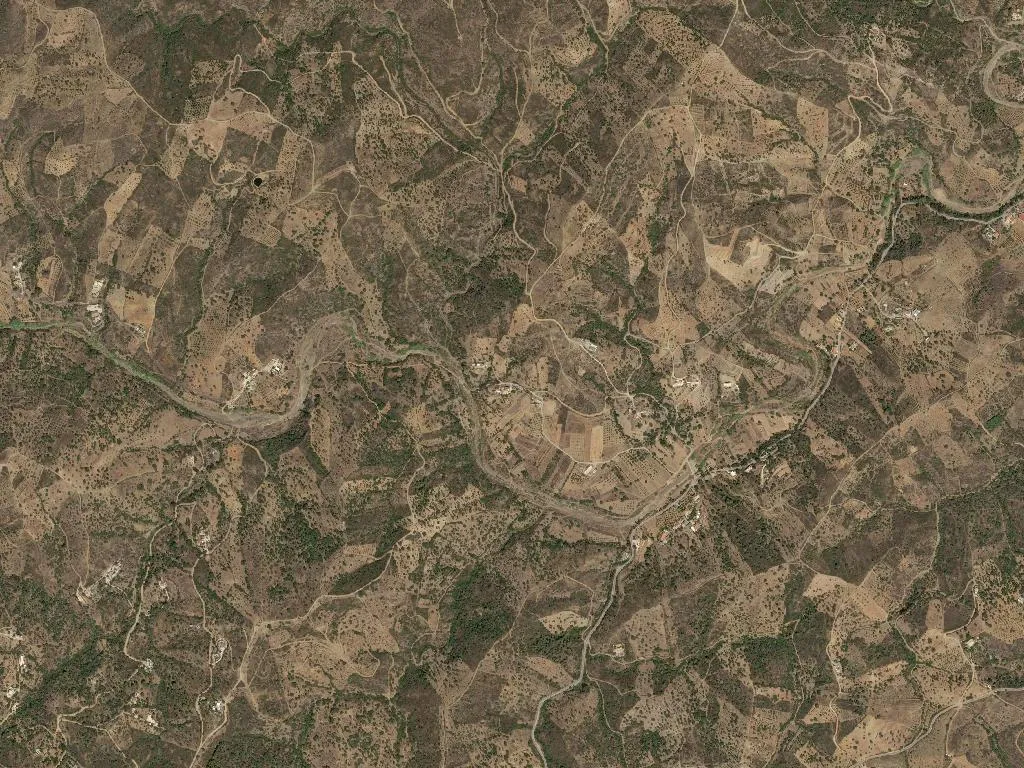
Woodsmoke and rosemary arrive before the village does. The N270 corkscrews upward through olive terraces and umbrella pines, their trunks stripped for cork like armour undone. Then, suddenly, white houses appear—trimmed in turmeric-yellow and Wedgwood-blue—hung on a ridge 140 m above the coastal plain. A single bell tethers the quiet; the only other sound is the wind worrying the cistus scrub.
The spring that named the place
Tucked beneath a lintel of mossy limestone, the Fonte de Santa Catarina still seeps clear, cold water. Locals call it água de olhos—“eye water”—and on 25 November they process here in single file, clutching lace handkerchiefs and plastic bottles to fulfil vows first sworn in the sixteenth century. Legend claims a travelling bishop (or perhaps a blind shepherd—the chronicles differ) bathed here and saw again; since then, the myopic, the cataract-clouded and merely curious have washed their eyes in the shallow basin. Electricity reached the village only in 1964, so until then the spring also served as refrigerator, laundry and midnight mirror for moonlit gossip.
Between cork trees and the parish church
The Igreja Matriz, begun in 1726, is a lesson in Algarvian restraint: whitewashed walls, a single nave, no gilded wood or blue-and-white azulejos—just sun-bleached plaster and a carved limestone font where babies still receive the same water that healed eyes. Around it, terraced lanes are edged with pisão—compressed earth the colour of burnt sugar—and fronted by doors only shoulder-high, their paint blistered into alligator patterns. Behind them, smallholdings run to chicken coops, orange saplings and the occasional pomegranate trained flat against a wall like espaliered hope.
Kitchens that run on firewood
Café Central has no sign; everyone simply says “o do Zé”. Tuesdays and Thursdays mean sopa de hortelã com caracóis—mint broth laced with land snails collected after the first autumn rain. Saturdays belong to xarém, a polenta-like porridge of cracked corn fortified with smoky bacon and wheels of farinheira sausage. The wood-fired stove never goes out; kid stew burbles alongside it for four hours with garden garlic and coriander, while irregular slabs of boroa cornbread develop the requisite crust. Dessert is filhós de abóbora—pumpkin fritters fried in local olive oil, dusted with cinnamon that drifts across the room like red-brown snow. There is no wine list; instead, unlabelled jugs of crimson table wine arrive in five-litre garrafões, the contents fermented in a neighbour’s shed.
Trails that tilt toward the Caldeirão
Santa Catarina sits on the hinge between the coastal Barrocal and the upland Serra do Caldeirão. A signed footpath strikes east to Santo Estêvão, cork-oak shade giving way to impenetrable maquis of strawberry tree and rosemary. Stone water-mills, roofless since the 1954 earthquake, stand like rotund sentinels beside dry levadas; from the ridge you look across centenarian olives whose roots braid the limestone like arthritic fingers. Though the village lies 12 km inland, the influence of the Ria Formosa Natural Park is airborne: in winter, marsh harriers and hoopoes ride thermals overhead, commuting between lagoon and upland.
On the first Monday of each month the main square becomes an open-air larder: wicker baskets of cabbages, goat cheeses wrapped in chestnut leaves, and sticky-sweet alfarroba biscuits that leave grit on the molars. By noon the gossip is as plentiful as the produce; bargaining is conducted sotto voce, almost apologetically, because everyone knows the price before they arrive.
When the sun drops behind the ridge, the façades glow like the inside of a seashell and the village loudspeaker crackles—first the national anthem, then the nightly news no one asked for. The bell tolls again, softer now, and the only other sound is the clink of medronho glasses set down on granite. The water that cured a bishop still runs; it may not restore sight, but it rinses the dust from any traveller’s gaze.