Full article about Vila do Bispo e Raposeira: Wheat, Cliffs & Firewater
Winter waves of cereal meet black schist cliffs inside Portugal’s last wild coast.
Hide article Read full article
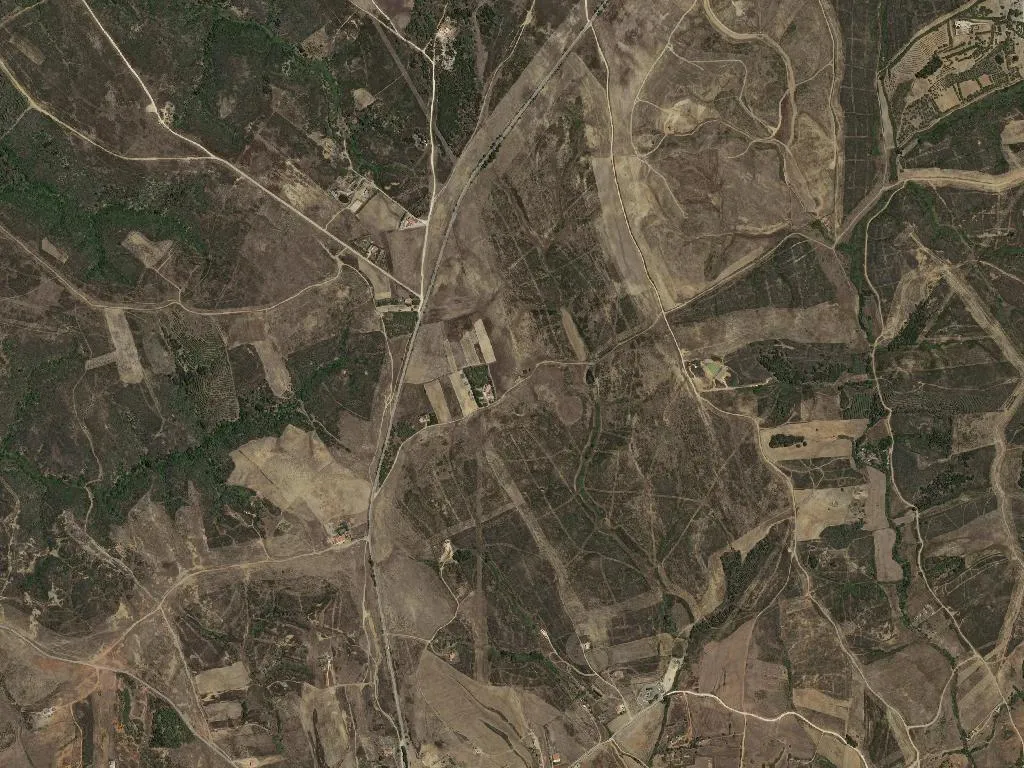
The wind combs the plateau and arrives smelling of turned earth and Atlantic brine. Stand on the rise above Raposeira in January and you’ll see wheat—not almonds or carobs—rolling in metallic waves towards a horizon of black schist cliffs. It is this sudden inland sweep of cereals that earned the joint parish of Vila do Bispo e Raposeira its local nickname: the Algarve’s granary.
Where mitre meets ear of wheat
The name Vila do Bispo nods to a medieval bishopric that once collected tithes here; the parish arms still split the field between a bishop’s mitre and golden wheat sheaves. Inside the 16th-century mother church of Vila do Bispo, dedicated to St Vincent, the only colour is the oxblood of the altar wood and the occasional flash of azulejo. Walk three kilometres east to Raposeira’s modest chapel and you’ll find a 1661 silver monstrance—parish pride and the sole monument on Portugal’s public-interest heritage list—evidence that these 1,380 souls scattered over 84 km² have never needed grandeur to prove permanence.
Atlantic in the raw
Population density drops to 16 per km² the moment you leave the EN125. The parish lies entirely within the Southwest Alentejo and Costa Vicentina Natural Park, the last uninterrupted stretch of Portuguese coastline where building is banned within 500 m of the cliffs. Dark schist precipices shear onto beaches reached only by sandy goat tracks tunnelled through carrasco oak and gum cistus. At Praia do Barranco the only soundtrack is gull-call and wave-slap; the Benaçoitão stream has carved a humid gorge where maidenhair ferns sprout from basalt. Hike the fishermen’s path that links Vila do Bispo to Zavial and the ocean colour-shifts from slate to cobalt with every hour of winter light.
Firewater and dawn-catch
Food here obeys the same dual commandment: land gives, sea gives. Arbutus berries ripened by salt wind are distilled into medronho, the Algarve’s protected-origin firewater, knocked back in 25 ml measures with a twist of orange peel. Before dawn, small boats beach at nearby Zavial and Ingrina; by lunchtime the catch is steaming inside a copper cataplana with coriander and peppers. Try the açorda de marisco—shellfish bread stew sharpened with cilantro and piri-piri—then finish with winter-grown broad beans and black pork sausage from the same fields that supplied Henry the Navigator’s caravels.
Tides, not timetables
There are 260 beds—ranging from whitewashed cottage rooms to cork-insulated cabins—but no five-star choreography. The church in Raposeira opens when the caretaker feels like it; Praia do Barranco reveals itself only after a 30-minute shuffle down loose-stone ruts. The parish council’s Christmas market and August seafood fair briefly animate the streets, otherwise the rhythm is set by the Atlantic’s pulse and the wheat’s slow green-gold rotation. Arrive without agenda and you’ll discover the last Algarve district where landscape still writes the programme.