Full article about Monte Gordo: Sun-Baked Concrete & Clams at Dawn
A 1960s-built beach strip where 3 100 hours of annual sunshine meet razor-clams and Atlantic tides.
Hide article Read full article
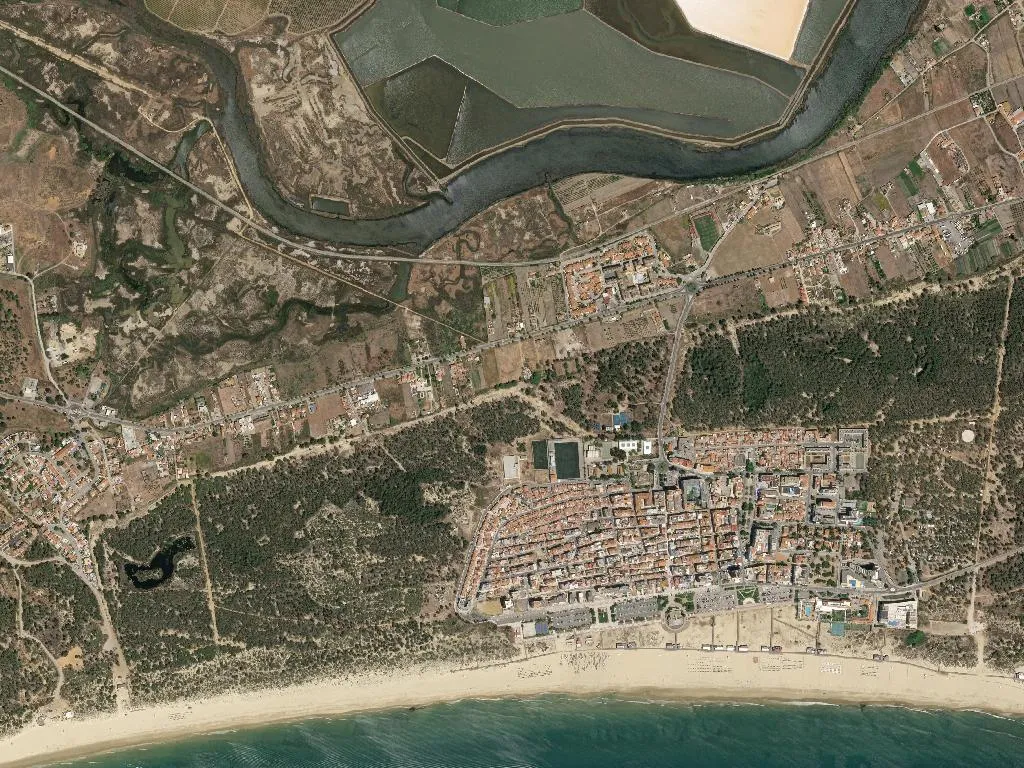
The sand is still cool from the night when the first footprints appear on Monte Gordo’s beach. Light arrives low and butter-yellow, racing down 1.5 km of ruler-straight, south-facing sand – a coastline so rare in Portugal it feels more Provençal than Atlantic. Across the water, the Spanish coast dissolves in a heat haze; the tide slips in without fuss, retreating in sheets of lace that vanish between your toes. Here the sun keeps office hours other resorts can only dream of: 3 100 hours a year, one of the highest tallies on mainland Europe.
Concrete, sand and a plan called progress
In 1967 the Algarve Tourism Board marked this sweep of coast for “modernisation”. Monte Gordo became the laboratory: roads were cut, seven-storey concrete slabs rose overnight, and half a million cubic metres of sand were dredged to widen the beach. The hillock of arbutus and rockrose that gave the fishing hamlet its name disappeared beneath geometric flowerbeds and sodium lamps. The parish only came into official existence on 31 December 1985, already divorced from Vila Real de Santo António and wearing the uniform of a purpose-built resort. Nostalgia never had a chance; Monte Gordo is exactly what it set out to be – sun, sea and an easy taxi ride from Faro airport.
Clams, cuttlefish and the 7 a.m. market
By seven the municipal market is in full swing. Clams arrive still wet from the salt pans, grit lodged between the shells; they sell for €6 a kilo, best eaten minutes later with lemon, or wrapped in brown paper to take home. Along Avenida Marginal, the deep-fried cuttlefish at Boémia comes with tomato rice the colour of a Lisboa sunset (€12). At O Pescador razor-clams are grilled to order on a hot-plate (€18), while Atlântico’s octopus drips garlicky olive oil over punched potatoes (€16). Tasca do Bairro’s caldeirada is whatever the tide brought in that morning – sea bass, bream, baby cuttlefish – simmered with onion, tomato and coriander (€20 pp, two-person minimum). Wash it down with a bottle of rough-and-ready table wine from Lagoa cooperative (€3) or a glass of aguardente-mist agua-pé (€1.50). Finish with a cold spoon of doce de ovos from Pastelaria Monte Gordo (€2) and you’ve clocked the Algarve in one breakfast.
Dunes, salt pans and Europe’s rarest donkeys
Cross the EN125 and the Atlantic vanishes behind you. In the Parque Natural da Ria Formosa and the adjoining Castro Marim reserve, Iberian painted frogs bleep from abandoned saltpans while wild Retuerta horses – closer to the original Iberian genotype than any Andalusian – graze between the creeks. The 6 km Conquilhas Trail runs west along the dunes to Praia de Santo António, alternating between boardwalk, firm sand and short stretches that flood at spring tide. Black-winged stilts and avocets needle the mud at Carrasqueira pier; grey herons stand motionless, spears at the ready. The Castro Marim Nature Centre will rent you a kayak (€15 for two hours) to paddle up the Guadiana between cane brakes and tamarisk until the seafront high-rises shrink to Lego.
When the promenade lights up
At 21:30 the seafront lamps flick on – 147 white posts that stitch the pavement to the casino doors. August brings the White Night (15th), when locals dress in linen and the avenue becomes an open-air stage, followed the next evening by the Sea Festival: jazz from Loulé’s municipal orchestra and a firework fusillade at 23:30. Monte Gordo’s casino, the first in the district when it opened on 26 June 1993, still runs tables until 3 a.m.: €5 minimum at roulette, €10 at blackjack. Take your Negroni to the roof terrace and you can watch the Spanish border glow like a distant Heathrow runway. On 15 September the parish honours Nossa Senhora das Dores: a 17:00 procession down to the water’s edge, fishermen tossing dahlias into the wash as the band strikes up a slow march.
When the late-day nortada blows, fine curtains of sand skim the promenade and the last swimmers fold their towels. What remains is the low, metronomic thud of the sea on compacted sand – a sound as unromantic and reassuring as a distant factory shift-change – and the certainty that tomorrow the sun will clock in again, on time, generous, merciless.