Full article about Forninhos: Silence, Stone & Serra Cheese on the Beira Platea
Walk olive terraces to ruined São Pedro lagar, taste thistle-set Serra da Estrela in sleepy Forninho
Hide article Read full article
The Slow Breath of the Beira Plateau
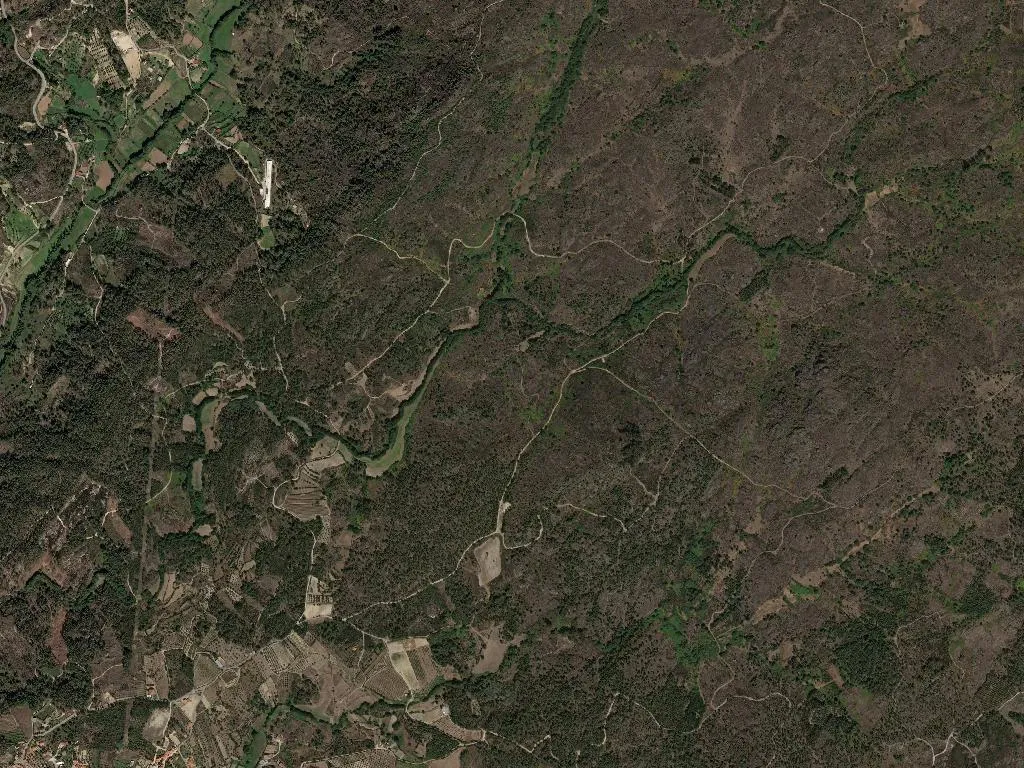
The wind combs the fields at an idle pace, lifting the smell of sun-baked soil and straw. In Forninhos, silence is not emptiness—it is a thick, deliberate hush, broken only by a rooster somewhere beyond the olive terraces and the dry clatter of leaves against schist walls. At 527 m the morning fog unrolls like a loose bandage; long shadows stripe the ochre paths that twist between small vineyards and wet meadows where cattle have grazed since the Reconquista. The plateau inhales, exhales, then stills.
Stone that Remembers
Walk ten minutes west of the village sign and you reach São Pedro de Matos, a shelf of granite where history has settled in layers. A 2013 dig uncovered a tenth-century fortified enclosure—knee-high walls that once corralled shepherds, taxmen or perhaps a look-out over the Mondego headwaters. Beside the ruins a lagar is still gouged into the bedrock: a blackened trough where feet pressed grapes for five hundred years, the stone stained purple by tannins that never quite wash away. Fragments of limestone sarcophagi jut from the turf like broken vertebrae; the little church that stood here was dynamited in the 1980s, taking its medieval graveyard with it. All that remains is a cave-like recess under the outcrop where every footstep echoes and the collapsed hamlet above—doorframes opening onto sky, roofs replaced by kestrels.
The name Forninhos derives from the Latin fornus, a bread or cheese oven. Local memory claims pottery kilns too once glowed on this ridge, turning Beira clay into storage jars. The tradition survives in flavour rather than flame: Serra da Estrela DOP ewe’s-milk cheese and its cloud-like cousin, requeijão, arrive weekly from neighbouring quintas, faintly sharp from Cynara cardunculus thistle rennet. On Rua da Igreja the shuttered Casa do Queijo, closed since 1997, still smells of timber shelving where Rosa Guarda—“Rosinha do Queijo”—stacked wheels to mature for three winter months above a wood-burning salamander.
Altitude in the Glass
Vines ride the rounded hills in contour lines, their fruit earmarked for Dão reds—inky Touriga Nacional blends whose firm tannins relax after a few years in granite cellars. Solitary cork and oak trees provide shade for the Barrosã cattle that graze between rows. Quinta do Vale da Raposa, on the north-facing slope, still crushes in an open-air stone lagar carved in 1952; come September the Reis family hires neighbours at €8 an hour to tread grapes to accordion reels that drift across the valley. On the horizon the Serra da Estrela massif floats like a charcoal wedge, a reminder that glacial valleys lie only an hour away even when the thermometer edges past 30 °C.
Village Metronome
208 people are registered here; two-thirds have passed retirement age. The street grid preserves classic Beira architecture—low granite cottages with slate skirting, doors you duck to enter, windows the size of biscuit tins to keep December draughts at bay. One house offers beds to outsiders: no television, no breakfast buffet, just lime-washed walls and a dawn chorus that replaces any alarm clock. Café Correia, on the corner of Rua Principal and Travessa do Chafariz, lifts its shutters at 7.30 a.m. An espresso is 60 cêntimos and the bowl of lupins on the counter is bottomless; on Tuesdays farmers park their tractors outside for a serious game of Sueca, the four-player trump game that passes for parliament here. Roads CM1147 and CM1148 stitch Forninhos to the slightly larger settlements of Sequeiros and Carapito; asphalt ends where a mule-width schist levada heads downhill to the Meruje stream. Every August the Festa de Nossa Senhora do Viso hauls in visitors from five parishes for a barefoot procession up the baroque steps of the 1750 mother church, hymn sheets provided by Aguiar da Beira’s choral society and Tó Zé squeezing out the refrain on a battered Hohner.
Late afternoon, and the sun throws petrol-blue clouds across the fields. Back at São Pedro de Matos the lagar fills with cool shadow; the granite still holds last night’s chill, damp against your palm. Somewhere below, a bell sounds—whether from the parish church or simply the residue of bells that no longer swing is impossible to tell.