Full article about Pinheiro: where church bells echo over pine-sweet slopes
Granite lanes, thistle-curdled Serra da Estrela cheese and a mill trail through cork oak shade
Hide article Read full article
Pinheiro
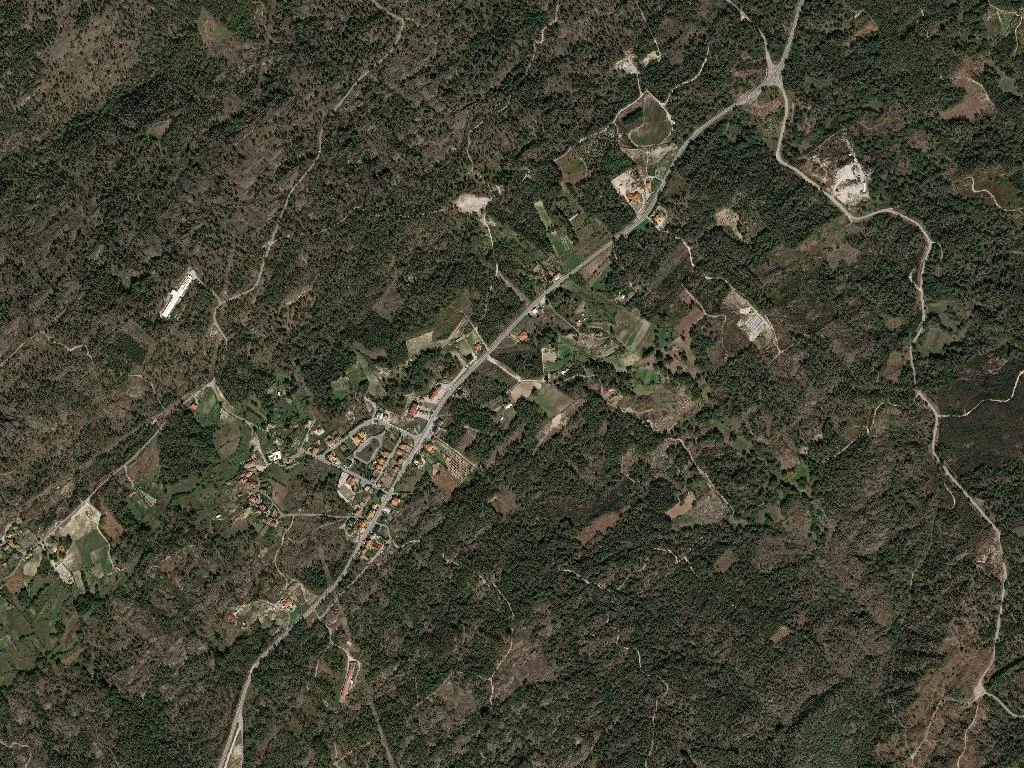
The bell of Igreja de São Tiago strikes three times. Midday in Pinheiro: 231 souls suspended at 740 m between pine resin and hearth smoke. Granite slabs stitch the lanes; slate roofs angle like folded wings. A rivulet threads the village, murmuring over schist, pooling into mirror-bright tanks where dragonflies hover.
Inside the 18th-century church, gilded acanthus curls around a baroque retable. In the churchyard, two ancient olive trunks arch into a natural gateway. Beside them, a three-step pillory—unique in Aguiar da Beira—recalls medieval administrative reach. Forty paces away, Capela de São Sebastião fills each 20 January with farmers leading oxen for blessing against murrain.
Cheese
At 7 a.m. the milking parlour at Quinta do Pinheiro steams with Bordaleira ewe’s milk. Curdled with cardoon thistle, the wheels mature on rough pine shelves until they qualify for Serra da Estrela DOP status. Eat it by the spoonful with dark rye, or spread the whey-soft requeijão over toasted broa. The farmhouse kitchen also bakes kid goat chanfana in a black clay pot and ladles turnip-leaf soup studded with smoked chouriço; almond rockets and squash tiles finish the meal.
Trails
Follow the yellow waymarks of the Rota dos Moleiros eight kilometres through cork oak pasture to the restored Pego watermill. En route you’ll pass granite corn stores, a five-arched medieval bridge and a chestnut grove scored by wild-boar prints. Summer pools stay at 15 °C—bring a towel. End at the village tasca: €9 for chanfana, €2 for a half-litre of house white. Fridays feature nabada soup; on midsummer’s eve the churchyard blazes with a São João bonfire, concertina in tow, while cornbread toasts on the coals.