Full article about União das freguesias de Amoreira, Parada e Cabreira
Crumbling Latin stone, 1778 candle-lit altar and granite barrocos above 774 m on the Guarda border
Hide article Read full article
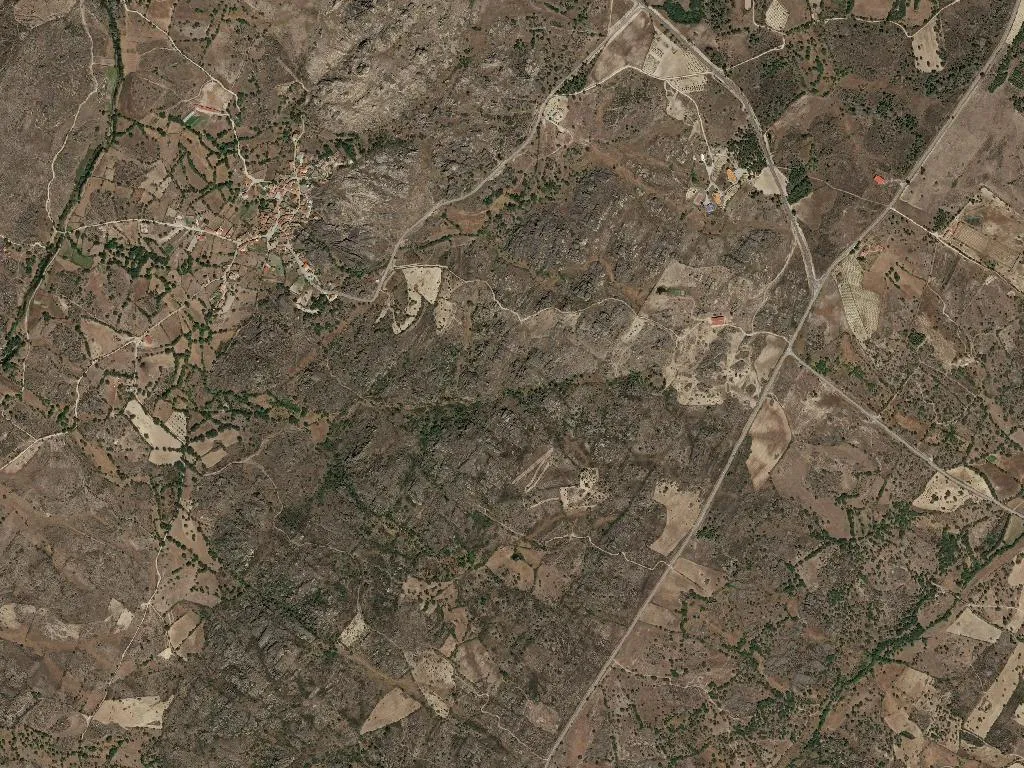
At 774 metres above sea level, the wind combs the plateau, bringing with it the scent of sun-baked schist, olive leaves and, in late autumn, the thin blue thread of woodsmoke drifting from a single chimney. Three hamlets—Amoreira, Parada and Cabreira—were stitched into one civil parish in 2013, yet each keeps its own pulse and its own silence.
Where stones remember Latin
In Parada, a second-century Roman tombstone leans against the wall of the parish church like a retired sentry. The inscription—D M TALABONIS CENIONIS—still legible after eighteen centuries, marks the spot where imperial couriers once halted on the road between Vilar Formoso and Guarda. The village name itself is a fossil of that function: Parada, the pause. Inside the adjoining Igreja de S. Domingos, the Rococo high altar (dated 1778) floats in candlelight, while the medieval bell tower keeps its original slit windows, perfect for archers, useless for mobile reception. When the single bell tolls, the note rolls unhindered across 3,128 hectares of broom and olive before vanishing into the gorge of the Ribeira das Cabras.
A mile to the south, Cabreira’s Igreja de Santa Maria Madalena was rebuilt in 1840 on the bones of a 1611 Manueline chapel. No gold, no marble—just proportion and altitude. High, narrow windows pour cold white light onto the whitewashed nave, the kind of light that makes the congregation look like extras in a Dutch painting. Around the village, seventeenth-century stone crosses—alminhas—stand at crossroads where pack-donkeys once chose between paths to Almeida or Castelo Mendo. The one by the cemetery is the most photographed: a miniature niche with a fading fresco of souls in purgatory, their faces rubbed away by thumbs asking for intercession.
Granite hide-and-seek
The plateau is not gentle. Granite barrocos—giant sleeper waves of stone—break through the soil along the paths from Parada: Guincho, Pera Gorda, Estaca, Mesinha, Lapa Escura. In 1810, when Masséna’s troops marched through on their way to Torres Vedras, villagers hid their goats and themselves inside these natural bunkers. Moss now upholsters the north faces; the south sides are warm to the touch even in December. The most isolated, Barroco da Arbitureira, demands a forty-minute walk from the nearest tarmac but repays with a 360-degree view: undulating broom, the distant gleam of the Côa river, and the knowledge that you are sharing the skyline with no one.
A plate that tastes of altitude
The olive terraces that ribbon the slopes belong to the Beira Interior DOP—both the Beira Alta and Beira Baixa sub-regions qualify. At this height the fruit ripens slowly, storing sugar for the long, cold nights; the resulting oil is dense, almost chewable, with a peppery finish that catches the back of the throat. It is the only sensible companion for Cabrito da Beira IGP—kid reared on heather and broom, then roasted for six hours over holm-oak embers until the skin lacquers itself.
Vines survive here too, crouched between 500 and 800 m. Alfrocheiro gives inky, violet-scented reds; Síria (the local name for Roupeiro) produces taut, herbal whites. In family cellars you will still find bottles ageing at the rhythm of the seasons—no neon, no piped music, just the faint hiss of the lantern and the smell of cobwebs soaked in wine.
Every May, the Raid do Bucho e Outros Sabores—literally “Belly Raid and Other Flavours”—briefly replaces the wind with the rumble of motorbikes. Riders converge on the villages to taste blood-sausage, chestnut bread and olive oil poured from unmarked tins. For forty-eight hours the plateau forgets it is empty; then the bikes leave, and the silence settles again like dust.
The arithmetic of absence
307 people share 3,128 hectares: 9.8 souls per square kilometre. The 2021 census records 117 residents over sixty-five; only thirteen are under fourteen. Abandoned since the 1990s CAP subsidies, wheat terraces have returned to broom; loose-stone walls slump like broken teeth; iron gates bleed orange into the soil. Yet something resists. The church stays open because the irmandade—literally “brotherhood,” though most members are women—takes turns with the key. In a smoke-blackened outhouse, chouriça cures over a smouldering fire of cork-oak chips. A 1977 John Deere, paint flaked to bare metal, still ploughs the gentler slopes because the mechanic in Almeida keeps a drawer of spare parts older than his apprentices.
Walk across the main square of Parada at dusk and your footfall echoes back amplified, as if the granite itself were an amphitheatre. Romans, French deserters, pilgrims, smugglers hauling coffee from Spain during the Colonial War—all have left their sound here. When the wind drops, the only interruption is the bell counting the hour for whoever is still counting.