Full article about Castelo Bom: wind, rye dust and a name that survived
Walk schist lanes where 1296 echoes in claps of Moda do Entrudo and wood-oven kid goat.
Hide article Read full article
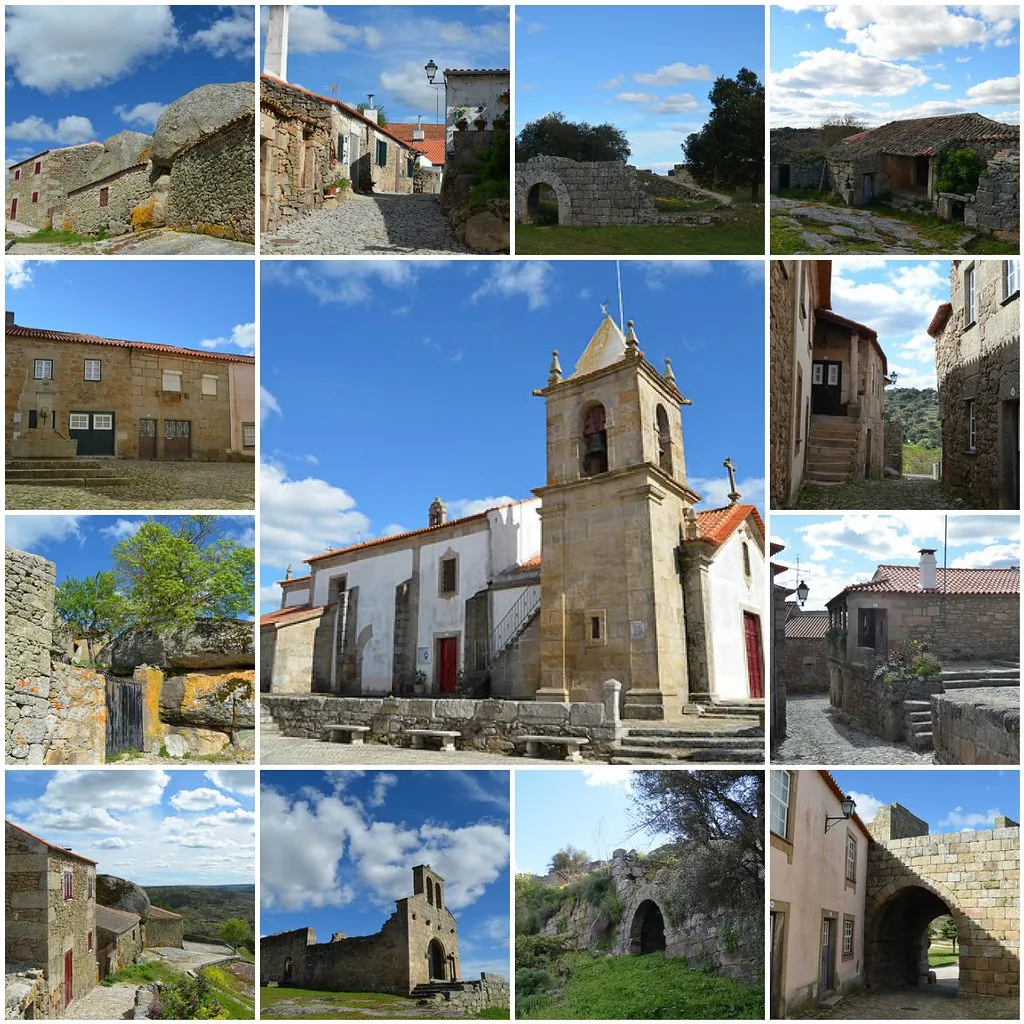
The wind arrives in Castelo Bom tasting of yesterday’s brushwood bonfires. It is not the thin, bright air of the Serra da Marofa; it carries rye dust from the stubbled plateau and the diesel note of freight lorries coasting the N16. Schist cottages—slate-dark, mica-flecked—still shoulder together along the lane, though plywood sheets nail shut the windows of houses whose heirs now live in Bordeaux. Cobbles pitch and roll like a slow-motion swell; a cockerel lets out a cracked midday crow, confused by January light that feels like April.
A village that refused to lose its name
King Dinis granted the charter in 1296, yet the document matters less than the habit: locals still give their address simply as “Castelo”. No one can point to where the fortress stood—only the name remains, stubborn as the broom that reseeds after fire. When the municipality was abolished in 1834 the parish council vanished, yet villagers kept the designation because that was how you collected bread from the baker in Almeida: “Somos de Castelo Bom.” The parish church bell-tower lists two degrees east since the 1755 earthquake; its 1741 stone cross now doubles as a motorbike rest when the priest isn’t looking.
What you do with silence
Census ink says 172 residents; winter reality is lower. The primary school shut the year Joana left for Coimbra in 2003. Still, silence is negotiable: power-lines hum, Alberto’s Massey-Ferguson coughs at dawn, dogs conduct rolling audits of strangers. On St John’s Eve the town hall trucks in a cover band and fireworks, yet the real festa is private—Zé Manel cuing vinyl by Xico da Cidade on a 1970s turntable, Maria da Graça teaching grand-daughters the exact clap-pattern for the Moda do Entrudo.
The taste of the plateau
The kid goat arrives from Vilar Formoso—an open secret. Sequeira’s grocery sells it frozen, but aunts in outlying hamlets still fetch a milk-fed carcass on the back seat. It roasts in Zézinho’s wood oven, fuelled solely by evergreen oak; neighbours use pine, but the smoke is too sweet, too quick. Rice with winter greens carries a lardon hacked from the pig António slaughtered in January. Queijadas follow Avó Felismina’s rule: shop-bought puff, filling of Serra da Estrela curd whenever Intermarché runs a promotion. In Silvério’s garage demijohns breathe out a nip of 11-degree white—no DOC, no collar, just alpine clarity that disappears like water.
Between the Côa and the gorse
The PR3 trailhead sign has bleached to ivory since the pinewood burnt. Beyond the charcoal trunks the path dissolves into cork-oak scrub where Vale de Coelha narrows to a rabbit-run. The streambed is dry all summer; only thunderstorms summon a red tide that clogs the Roman bridge. The 1732 water-mill wheel snapped the year the miller’s grandson emigrated to Toulouse. Yet great bustards still tilt overhead each October when Rui heads for the last chestnut groves—birds the size of feed-sacks, wings threshing like cooling fans on a laptop. Dusk settles; stone benches fill with overcoats and gossip. The bell tolls three times, not seven—the cracked clapper too heavy for old António’s shoulder. Sun slips behind the hill of the Lord of the Afflicted, and for half an hour the church wall glows the colour of heather honey. Then the light folds, and cottage windows ignite one by one, as though someone were sketching the village back into existence.