Full article about Freixo: wind-scoured olives and echoing granite
At 735 m, Guarda’s forgotten hamlet survives on rye, kid and oil while emptiness howls
Hide article Read full article
Wind at 735 metres
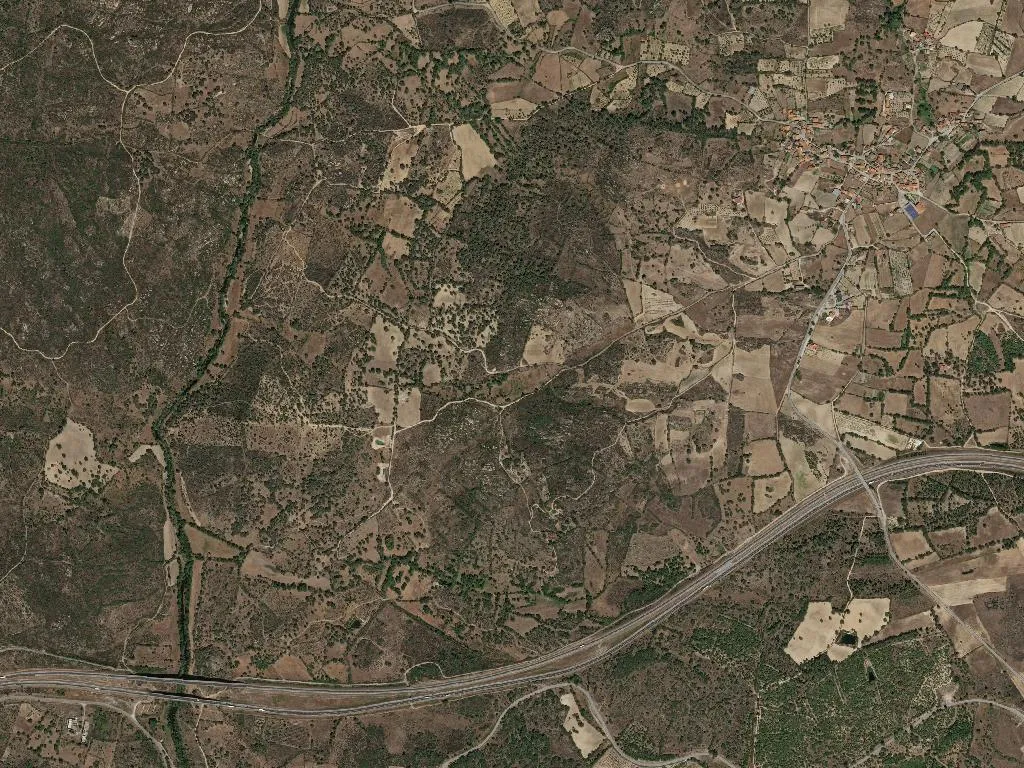
Augusto José, 78, still walks his rye lines at first light, the same fields his father and grandfather measured with boot leather. At this altitude the wind arrives unfiltered, flattening the standing cereals in silver pulses. Beyond the last furrow the land breaks open into a high plateau that only stops when it bumps against the Spanish ridge. The only punctuation is the ink-dark blot of Quinta do Freixo’s centenarian olives, their trunks cork-screwed by a century of Atlantic weather.
The mathematics of absence
One-hundred-and-sixty-seven people share seventeen square kilometres here. The ledger is brutal: sixty-three pensioners, ten children. Density drops below ten souls per square kilometre, a silence so complete you can isolate the yap of Bobi, Dona Rosa’s watchdog, two valleys away, or the single-cylinder cough of Zé Carlos’s John Deere at sowing time. Granite houses huddle in the old nuclei; many have been buttoned up since 1998, when Maria do Carmo locked her iron gate and joined the Lisbon exodus. Only August keeps his chimney breathing year-round.
Oil and kid
High Beira Interior is branded on the map as wine country, but olives pay the bills. Joaquim planted his grove in the 1960s; the trunks now split like cracked porcelain, leaves flashing pewter when the afternoon sun slants in. At the Almeida co-op the new-season oil smells of crushed tomato leaf and thistle—bitter, green, almost electrically alive.
The same cooperative truck that collects the olives drops off kids from the neighbouring IGP-approved herd. In Lurdes’s kitchen at O Albertino the cabrito da Beira is rubbed with rock salt, threaded onto an olive-wood spit and roasted over a medronho-wood fire until the skin fractures like caramel. She bastes for three hours with a brush of rosemary and the estate’s own oil, the same bottle that will later anoint D. Amélia’s wood-oven potatoes and the dark rye bread Father Aníbal commissions from the communal oven every Saturday.
Logistics of distance
Reaching Freixo requires intention. The Guarda bus leaves twice daily—07:15 and 17:30—provided at least three passengers have rung the dispatcher. From Almeida the municipal road corkscrews 12 km to the plateau; the nearest supermarket is 23 km away in Vilar Formoso. The family doctor clocks in on Monday and Wednesday mornings only, 09:00-12:00. Visitors arrive with full tanks, full boots and the unspoken agreement that connectivity ends where the tarmac peters out. That scarcity is the village’s final crop, and it keeps the tour coaches, Instagram geotags and artisanal-gin distillers firmly on the distant lowland roads.
Dusk ignites the schist walls Adelino has been repairing stone by stone since 1974; by nine o’clock in October the thermometer has already fallen to 5 °C. Wood-smoke rises straight up in the still air, white columns against a bruised sky. Freixo turns in early, lulled by the high-altitude hush and the promise that tomorrow the same wind will return, as it has since the first pilgrims crossed these fields eight centuries ago, heading for Santiago.