Full article about Malhada Sorda: Portugal’s 794 m high plain of silence
Slate-walled olive terraces, peppery DOP oil and ten children under fourteen
Hide article Read full article
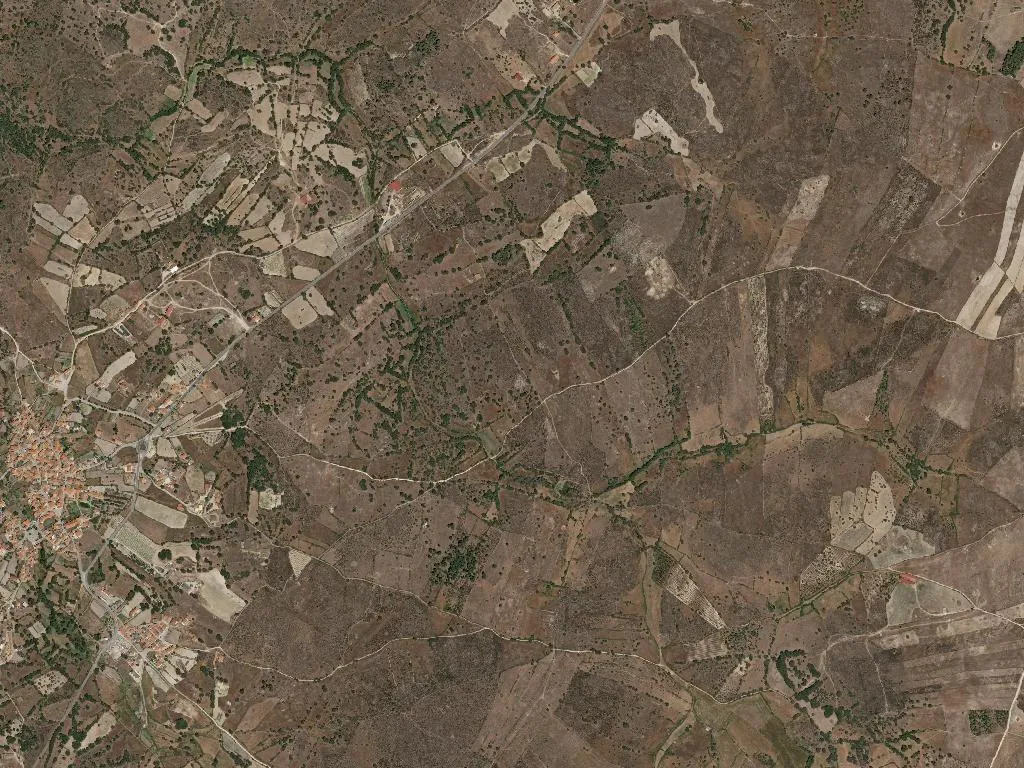
The wind combs the plateau uninterrupted. At 794 m the air of Portugal’s eastern Beira Interior is thinner, sharpening every scent: cold schist at sunrise, resinous wild thyme by noon. Malhada Sorda occupies 45 km² of this high plain, a parish within the fortified frontier municipality of Almeida where dark slate walls still map field boundaries first laid out after the 1755 land reform. There is no dramatic reveal—just a slow calibration of the senses to near-perfect flatness.
Where silence has weight
INE statistics count 254 residents; 138 are over 65. Children up to fourteen number ten. Density: 5.6 souls per km². A kitchen garden can sit so far from its neighbour that the horizon is the only fence. What in Sussex might feel like isolation here reads as breathable space—no schedules, no performance, simply the metronome of roosters and the faint clink of a distant sheep bell.
Olive ink and smoke-kid
The parish’s only listed building is the sixteenth-century Capela de São Sebastião, but the real monument is geological: the folded schist that shelters 150-year-old olive terraces. Hand-harvested in mid-November, the fruit yields Beira Alta DOP oil with acidity below 0.3 % and a peppery snap that recalls northern Umbria. In kitchens the same wood-fired ovens turn kid goat—Cabrito da Beira IGP—into blistered, parchment-crisp parcels served with 2018-era Beira Interior DOC reds grown at 800 m; the altitude keeps alcohol modest, tannins sinewy.
Horizon as clock
Walk the single farm track east at 16:00 and the plateau unpacks itself: first the illusion of emptiness, then a working smokehouse, a walled vegetable plot, two mastiffs that bark once and lose interest. Winter dawns can start at –5 °C; August peaks just under 30 °C, drying the grass to wheat-straw. Visitors tend to arrive seeking subtraction: no playlists, no tour buses, no gift shop—only the thin, ruled line where buff earth meets cobalt sky, changing colour like a Rothko canvas as the day drains away.