Full article about Miuzela & Porto de Ovelha: wind-sculpted Beira borderlands
Where granite ridges cradle the infant Côa and 280 souls keep ancient olive groves alive
Hide article Read full article
Where granite breaks the surface like bone
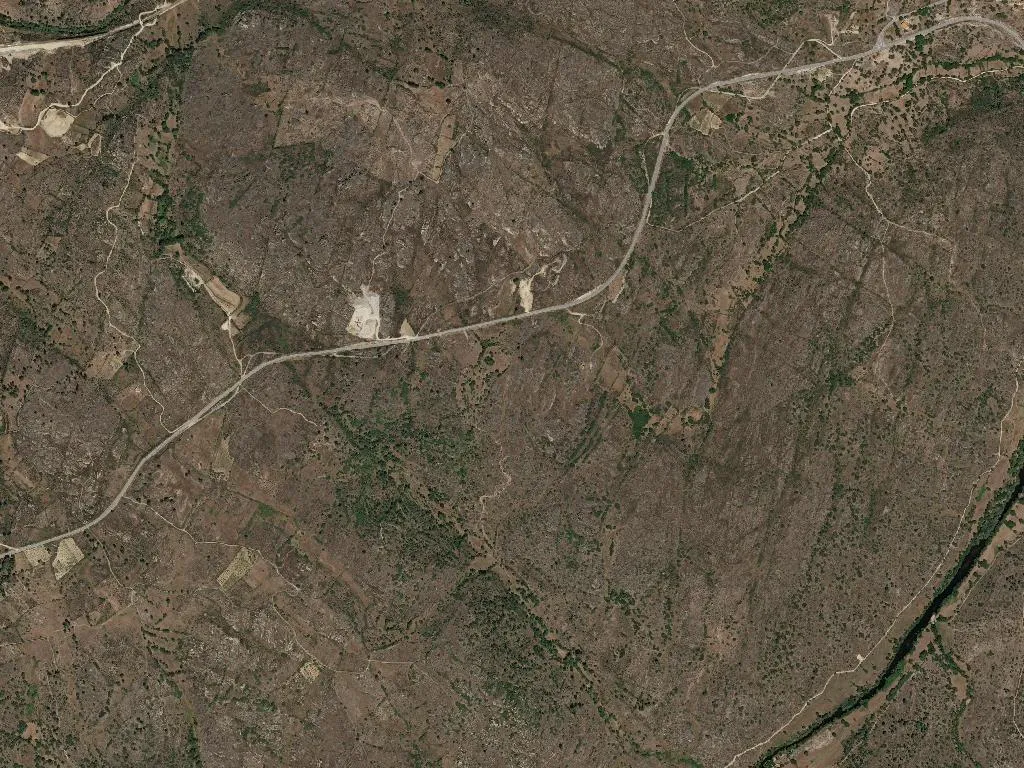
At 783 metres the wind has right of way. It scours the high plateaux of Beira Interior, slips between schist and granite doorframes, and bends the ancient olive trunks into arthritic shapes that all point north-east. Miuzela and Porto de Ovelha share just 280 souls spread across 29 square kilometres – a population density lower than the Mongolian steppe – so silence acquires weight; you feel it press against your ear-drums.
Two parishes, one heartbeat
The 2013 merger of the two parishes merely tidied up what geography had already decided. Until 1855 both hamlets answered to the vanished town council of Castelo Mendo; they then shuffled between Sabugal and Almeida before Lisbon drew the final line. The origin of “Miuzela” is lexicological quick-sand – Moorish, pre-Roman, perhaps both – while “Porto de Ovelha” is bluntly functional: a ford once trodden by transhumant flocks moving between summer and winter pasture. Today 47 per cent of residents are over 65; only a dozen children attend the primary cluster in Vilar Formoso. Yet the land keeps its side of the bargain: olives still travel to the cooperative press that earns Beira Alta DOP status for its oil, and kids graze the same slopes that supply the Cabrito da Beira IGP label.
A river that runs backwards
The Côa is born here, an oddity that refuses the Atlantic pull and slips north instead. Even in May its headwater pools are shallow enough to warm under the sun, yet the granite bedrock is already incised with Palaeolithic engravings – a reminder that people have always read their futures in these schist walls. There are no way-marked trails, no interpretation centre, no ticket booth. You follow a sheep track, hop a dry-stone wall, and the gorge simply begins.
Taste of the uplands
Food is calibrated to altitude. Wood-oven kid goat arrives burnished with local oil that carries the faint metallic note of the soil; smoke-cured charcuterie hangs in kitchen larders like rust-coloured bunting. The wine list is short, honest and cold-climate: Rufete and Marufo reds that ripen just enough to throw a garnet sheen. No chef has “re-imagined” anything; recipes pass by word of mouth and the only michelin in evidence is still attached to a tractor tyre.
Echoes at dusk
When the wind drops you hear the 1862 bell of Miuzela’s church – rebuilt over a medieval chapel whose foundations are Visigothic. The single stroke crosses the open basin, rattles loose quartz on the walls, then dissolves into fields that no longer carry enough sheep to warrant the old toll. It is a clock that measures centuries rather than hours, and it is still running on time.