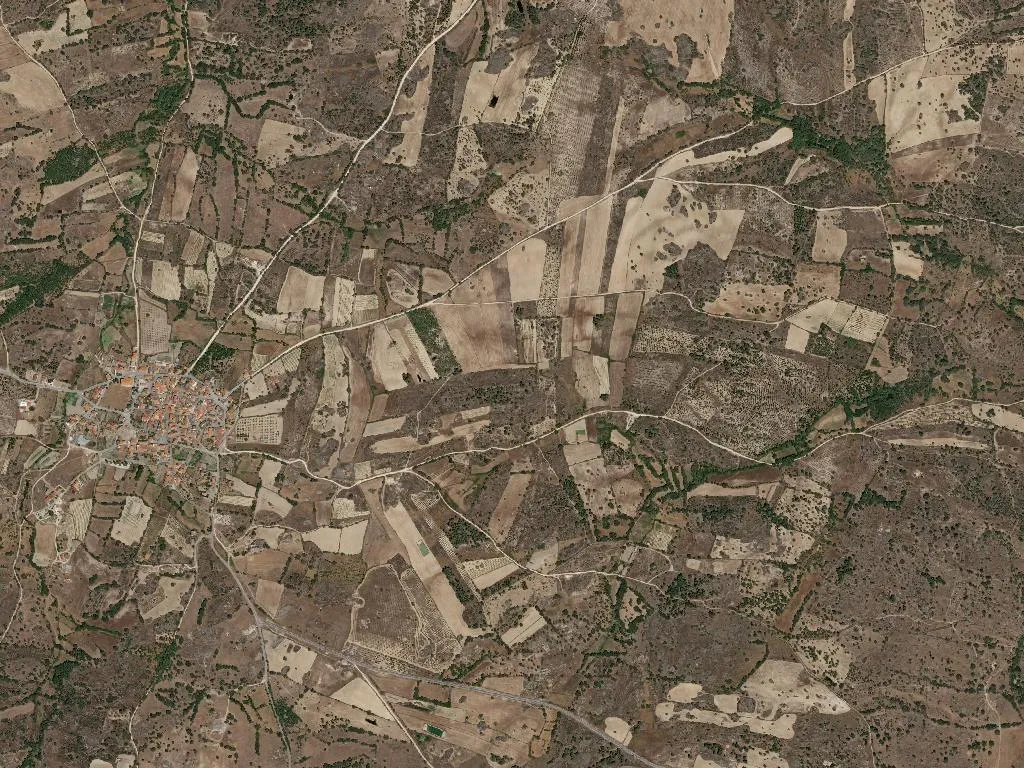
Full article about São Pedro de Rio Seco: Dawn on 782 m of Border Schist
Stone lanes, silent river, ageing village breathing olive smoke under Beira ridges
Hide article Read full article
782 m: first light on schist
Morning sun strikes the schist walls so quickly you can feel the stone exhale. São Pedro de Rio Seco wakes at the pace of a single set of footprints echoing down its empty granite lane. A dog barks somewhere beyond the last house; the wind carries it down from the ridge. At 782 m, on the exposed lip of Portugal’s Beira borderland, winter air snaps like linen and summer light lingers long enough to read by at nine-thirty.
One-hundred-and-fifty-four people are on the parish roll; most are past retirement age. Children are a census footnote – you could tally them on one hand.
The river that gave the place its name is less a watercourse than a stubborn idea. For much of the year it is a skim of silver over dark basalt, revealing its bed like a secret. Along the banks, olive trees hold their ground against drought. These groves supply Beira Interior DOP oil – protected origin status since 1996 – whose late-harvest fruit gives the unmistakable bitter-pepper note that catches the back of the throat when dripped over warm crust.
What the land keeps
Population density: 6.8 people per km². The parish unfurls across 2,258 ha of terraces and common grazing where sheep move like slow metronomes. Cabrito da Beira IGP kid is reared here on maternal milk and dry-land pasture; at Easter it is roasted in wood-fired ovens with nothing more than garlic, smoked paprika and a thread of local oil. The smell drifts down the street, stitching the year together more reliably than any calendar.
Wine is made, but not for show. Vineyards are family subplots, their red juice siphoned into demijohns for the table rather than trophy bottles. High altitude grants the tinta grapes a bright, rasping acidity – a rural cousin to the more polished Dão wines an hour west.
Growing old in the sun
Seventy-one residents are over sixty-five; five are under fifteen. The primary school closed in 2009, the last café shuttered in 2017. Those who remain keep vegetable plots, goats and oral archives. Conversations on doorsteps loop through weather forecasts, the neighbour who left for France, the price of lamb. Gestures are slow, exact, inherited.
Winter darkness drops early. Fires are lit, doors pulled tight. Outside, the sky unpollutes itself: Orion feels close enough to snag a sleeve. The wind brings the smell of wet schist when it rains, of woodsmoke when it doesn’t. And beneath it, almost imaginary, the murmur of a river that is never entirely dry.