Full article about Carrapichana’s Lamb Week: smoke, stone & star-lit feasts
At 521 m in Serra da Estrela, Carrapichana hosts Portugal’s most fragrant lamb weekend each October.
Hide article Read full article
Woodsmoke and Roast Lamb
Woodsmoke drifts uphill, braiding with the scent of lamb crackling on makeshift grills. It is the last weekend of October in Carrapichana, and for forty-eight hours this granite hamlet (year-round population: 180) becomes the reluctant capital of Serra da Estrela lamb. Fold-up tables groan under earthenware dishes; cutlery clinks against tin plates while the church bell, high on its narrow tower, keeps medieval time. Sons who left for Porto and Lisbon squeeze back up the single-track road, boots dusty from the city, and outsiders—those who heard the rumour of a feast—claim the last seats.
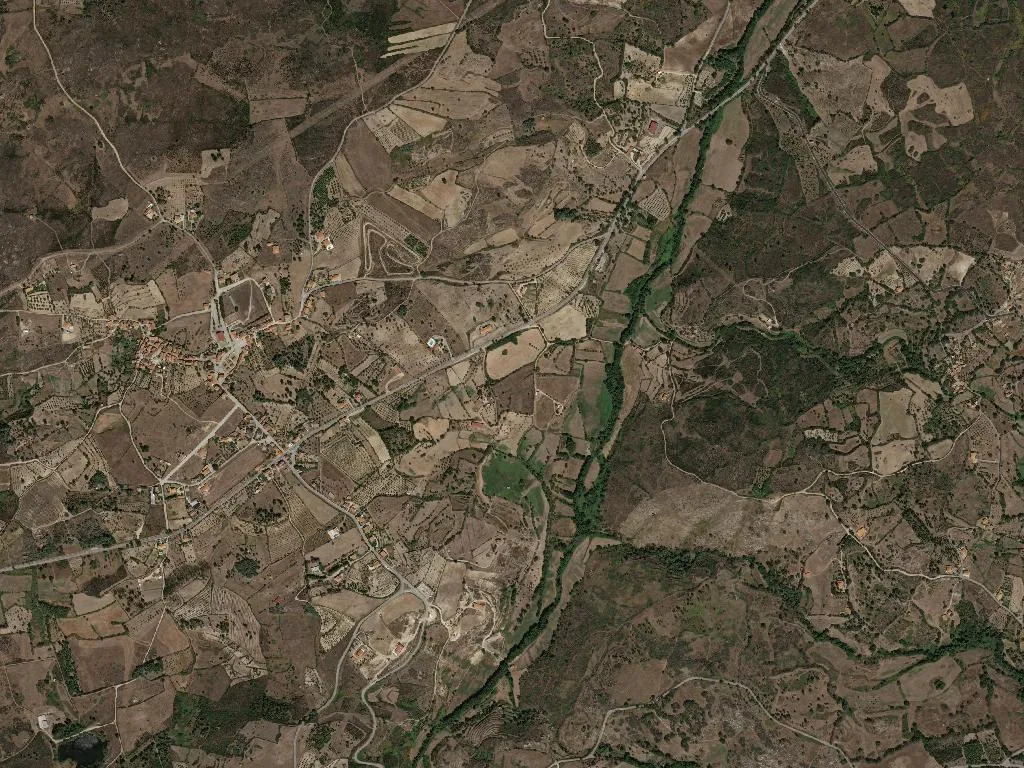
The village sits at 521 m in a crease of Portugal’s highest range, inside the Parque Natural da Serra da Estrela. Pasture rolls away for 560 hectares, clipped short by merino-breed sheep whose milk becomes Queijo Serra da Estrela DOP and whose adolescent flesh, still fed only on that grass, earns the lesser-known but tightly regulated Borrego Serra da Estrela DOP label. Dry-stone walls, built piecemeal in the 1940s when wheat subsidies lured hands to the fields, now segment the slopes like contour lines no one bothered to erase.
Roman Footprints in the Flagstones
Walkers on the Geopark Estrela trails tramp straight over a 2,000-year-old supply road that once hauled gold and silver from northern mines to Emerita Augusta (today’s Mérida, Spain). The route slipped through Longa, Arcos and Guilheiro before cresting the ridge above Belmonte; occasional slabs of pitted basalt still surface in the turf like loose molars. Old-timers swear copper coins turn up in vegetable plots, then shrug—worth less, they say, than an espresso.
A Lamb that Draws Ten Counties
The Festival do Borrego Serra da Estrela—25–26 October—turns the parish council forecourt into a pop-up gastronomic capital. Twenty-five restaurants across ten municipalities run “Lamb Week” menus, yet everyone agrees the pulse is here, where Joaquim’s accordion has reprised the same 1987 set list under fairy-lights strung between plane trees. Legs, shoulders and ribs hiss over vine-pruning embers, basting themselves into a bronze crust that shatters audibly. Waiters pour Beira Interior olive oil thick as late-summer grass; nearby, Zé do Lameiro unwraps an ewe’s-milk cheese aged six months in his own cellar—he admits it rarely survives two days on any table.
Breathing Room
Density is 31 souls per km², rarer than ospreys in the Lake District. Space is measured in silence: the click of a closing five-bar gate, the hush before a shepherd’s whistle. There are two guest places—rooms Dona Amélia and her neighbour António cleared out once their children married away. No reception desk: ring on the fourth chime and someone will toss you a key. Dawn fog sticks to skin; the bakery unlocks half an hour late in winter because the owner waits for the sun to soften the frost. At dusk you may meet Alberto driving thirty sheep downhill, detouring first for a brandy at the Tasca do Ferraz where the counter is still Formica.
On the festival’s final night, when coals dim and voices scatter down lanes, a metallic clink rises from the square: Célia collecting pans, a ritual unchanged since she married Joaquim. The sound drifts against stone like a reminder that, for another year, normal service resumes—until the lamb ascends its brief throne once more.