Full article about Casas do Soeiro: concrete dreams in Guarda’s youngest parish
Paris wages built pastel villas where rye once grew, 1217 stone still murmurs
Hide article Read full article
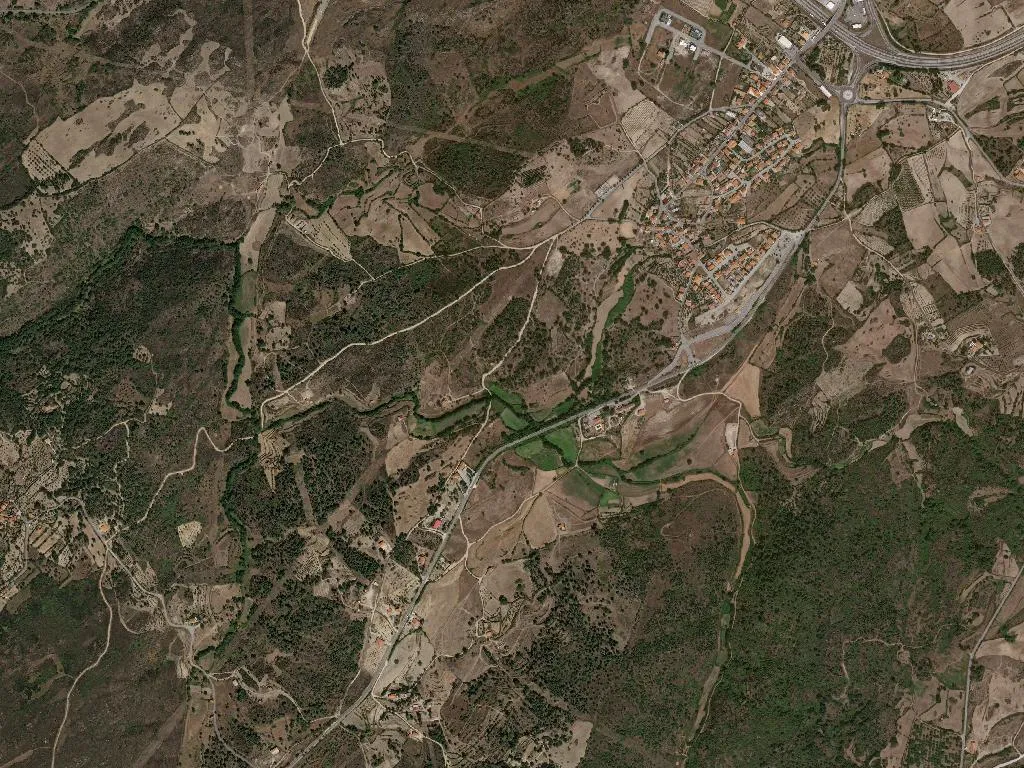
The scent of warm cornbread drifts up the lane as the church bell strikes ten. Casas do Soeiro wakes slowly, sunlight sliding across rendered façades the colour of fresh buttermilk – a deliberate break from the slate-grey schist of neighbouring hamlets. In the 1980s hundreds of men returned from the Renault plants of Paris, the watch factories of Neuchâtel and Milan’s building sites and, flush with savings, poured concrete where their parents had once grown rye. The result is a parish that feels suspended between two eras: the rural memory of goat bells and potato furrows, and the brisk modernity of satellite dishes and double-glazed balconies.
A civic campaign that worked
On 23 May 1988 Casas do Soeiro became the youngest parish in Celorico da Beira. A two-year petition – typed in the back rooms of cafés, signed at Sunday mass – convinced the town hall that 400 taxpayers deserved their own council, their own budget, their own seat at the regional table. Previously the settlement had fallen under São Pedro; chunks of Cortiçô da Serra were stitched on to round out the new boundary. Legend attributes the name to a medieval knight called Soeiro, but the real founders are the emigrants whose remittances paid for the nursery school, the football pitch and the Casa do Povo that replaced barley fields.
The 1217 inscription everyone forgets
Amid the fresh tarmac and PVC shutters, Quinta dos Cedros keeps a quieter record. A granite block set into the estate wall carries the earliest dated church inscription in the municipality: “1217 – ERA MCCCLV – MARTINUS”. Eight centuries of wind and lichen have blurred the Romanesque capitals; you need to crouch to read them. Beside it, the carved coat of arms of Quinta do Vale recalls the petty nobility who once administered these olive terraces and summer pastures. Fifty metres downhill, the Fonte do Russo – named after a local family, not a Slav – still supplies the coldest water for kilometres. On August afternoons, when boreholes run low, women arrive with plastic baskets of sheets and gossip, scrubbing rhythmically while the mossy stone turns silver under the flow.
August, when the absent come home
The first weekend of the month belongs to the Festa do Emigrante. Caravans with French plates nose into driveways; Swiss number-bearing estates unload Lindt and Calvados; Milan-registered vans disgorge toddlers in miniature Serie A kits. The parish square becomes an open-air memory palace: brass bands from the Beira Highlands, roast kid perfumed with mountain thyme, sardines crackling over vine-prunings. The Liga dos Amigos lays on dances that start politely at 22.00 and only ignite after the third aguardiente, when grandparents begin demonstrating the Vira they last performed in a Lyon warehouse party. On 4 December the tempo shifts: Santa Bárbara’s dawn mass is followed by the conventual pastéis named for her – flaky caskets of egg-yolk custard that dissolve on the tongue, still warm from the trays balanced on the knees of women in the Casa do Povo.
Between cheese and the ridge
The parish covers 599 undulating hectares at 462 m above sea level – high enough for olives entitled to the Beira Interior DOP, low enough for Bordaleira sheep to graze. Their raw milk becomes Serra da Estrela cheese, but locals reserve the first whey for fresh requeijão, sold still warm from aluminium pans on front doorsteps. Knock at Rosa’s on a Wednesday or Saturday and you’ll leave with a tub of the curd and a wedge of cornbread whose crust carries the smoky fingerprint of a wood-fired oven. Marked footpaths link the N16 to the N17, threading olive groves and broom-scented scrub inside the Serra da Estrela Natural Park and Geopark. The best panorama, though, is unofficial: climb the lane past the primary school at dusk and the entire Mondego plain unfurls towards the Caramulo massif – the spot where teenagers sneak first cigarettes and watch lightning fork over the ridge.
When the low sun gilds those pale façades and the bell tolls the evening ave-maria, you realise nostalgia here was not left to crumble; it was mixed with cement, trowelled smooth and built into something you can actually live in.