Full article about Forno Telheiro: schist lanes & woodsmoke
Celorico da Beira’s hidden hamlet where lime-kiln ghosts scent the air
Hide article Read full article
Woodsmoke and Forgotten Trades
The scent of burning oak drifts uphill long before the first roofline appears. At 426 m above sea-level, hearth smoke mingles with wet granite and the resin of rock-rose clinging to the slopes. Forno Telheiro never declares itself; it slips into view between dry-stone schist walls and olive terraces stitched like uneven patchwork, the high plateau learning, it seems, to breathe through its nose.
The name remembers work now obsolete: the lime-kiln (forno) that fed mortar to medieval walls, the tile-shed (telheiro) where clay was rolled and fired. No charter records the settlement’s birth, yet toponymy says what parchments omit—this was country of calloused hands, of men who split schist and women who sun-dried figs, of oxen that knew the weight of rain. The Middle Ages left only shorthand: footpaths still duck through kitchen gardens, granite calvaries stand at crossroads, doorways are shoulder-narrow, built for a smaller century.
Following cheese and olive oil
Local gastronomy is not a heritage routine; it is live code. Serra da Estrela DOP cheese ripens in cool cellars, its spoonable centre the product of raw Bordaleira ewe’s milk and vegetarian rennet from cardoon thistle. Slather the softer requeijão on yesterday’s rye, still faintly warm. For main plates, chanfana turns kid and lamb into velvet—hours of red wine and pork fat until the meat ghosts into threads. Spring-gathered wild asparagus is folded into migas, the breadcrumb sauté that soaks up clay-dish juices. Olive oil—whether Beira Alta’s peppery early harvest or Baixa’s rounder late pick—greens every bite, proof that these groves refuse to bow to Atlantic gales.
Granite plateau, secret watercourses
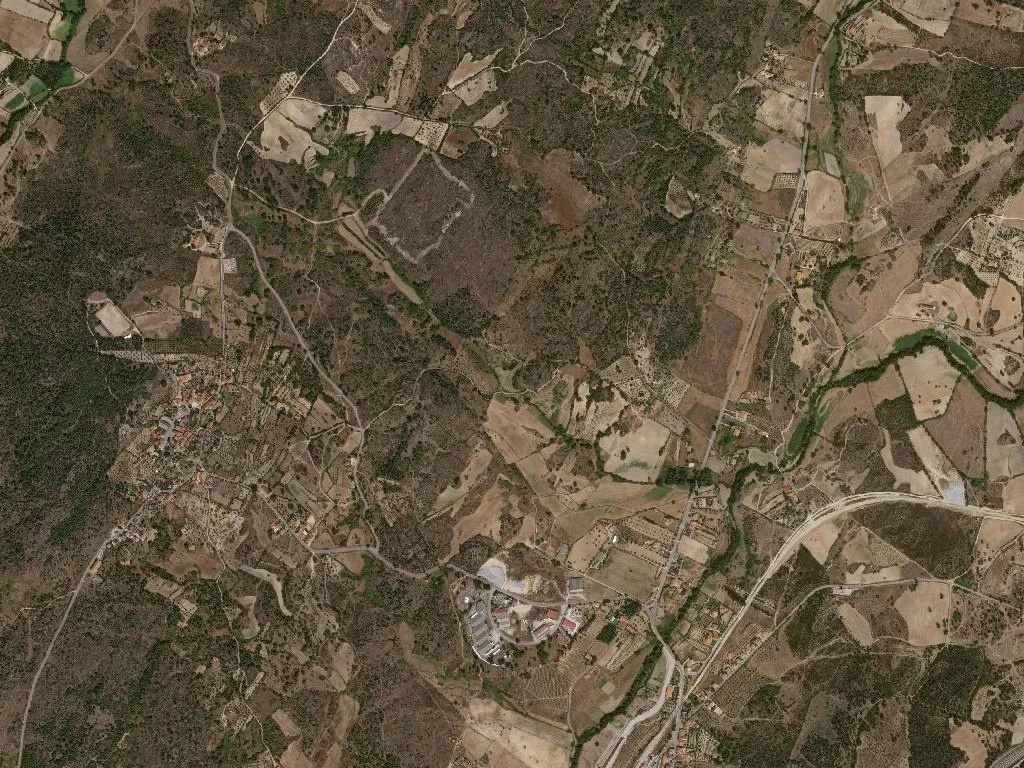
Inside the Serra da Estrela Natural Park, Forno Telheiro sits on a blister of granite where streams slide quietly toward the Mondego. Rural tracks coil past dark-stained granaries, orchards of Pêro Rocha pears and cider apples, walls that mark property without urgency. Gorse, heather and strawberry-tree scrub tattoo the steeper faces; lower down, lone cork oaks throw pools of shade for cattle. Dawn birding demands silence: hawfinches, mistle thrushes, goldfinches appear only when oblique light chisels the crags.
Hand-to-hand experiences
Seven kilometres away, Celorico da Beira’s keep watches over the Cheese Interpretation Centre. Here you learn why thirty days of ageing delivers custard softness, ninety days a fudgy crumble; you handle the linen bands that cinch each wheel. Back in the parish, producers sell from their own larders—taste, compare, wrap in grease-proof paper. Communal olive presses still grind on appointed Saturdays; crushed-fruit perfume clings to granite smoothed by generations. In the municipality’s taverns, chanfana arrives at table in steaming clay pots, rye broa soaking up the ink-dark sauce.
597 people occupy 2,076 hectares—quiet with measurable mass. Of the 198 residents over sixty-five, many still climb the terraces in November, spread nets beneath the branches and beat the olives free with ash poles. The gesture is mechanical, inherited, yet the dry thok of fruit on earth has sounded for centuries. It is in that repeated, certain note that Forno Telheiro recognises itself.