Full article about Mesquitela: a village that still kneads its own time
Oak-smoke drifts above granite cottages where 300-year-old ovens bake gossip into crusty loaves.
Hide article Read full article
The Saturday oven
The communal oven exhales a lazy plume of oak-scented smoke, the only thing in Mesquitela that refuses to rush. Inside, Lurdes and Amélia—always the same two sisters—shuffle blistered loaves across 300-year-old stone with a wooden peel, gossiping about a grandson’s courtship and the other’s liver. The oven itself dates from 1923, restored but still governed by ear: when the crust crackles under a fingernail, the bread is done. No timer, no thermometer—just the acoustic of tradition.
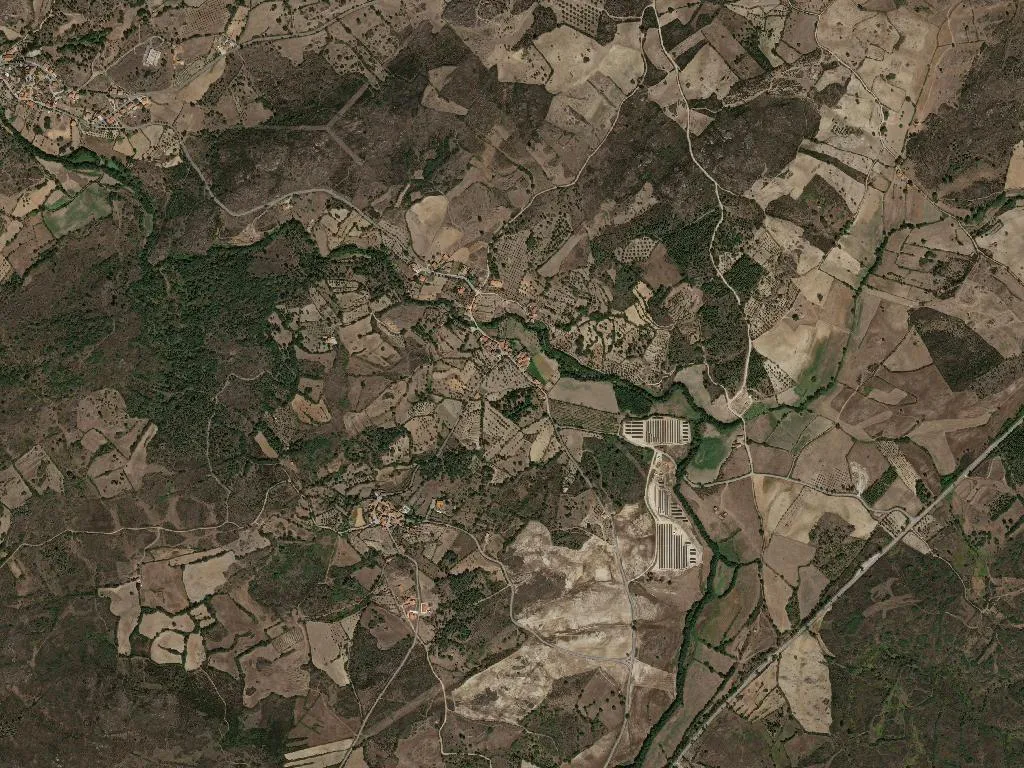
The village clings to a granite shoulder of the Serra at 476 m, headcount 203 and a half (the half is Zé do Cabrito, who only clocks in at weekends). Over centuries the Ribeiro de Carvalhal has sliced knife-clean valleys into the rock. In Valverde a cork oak with a 5.2-metre girth has been producing respectable bark since Napoleon’s day; in 1864 the parish could muster 435 souls, a number it now matches only if you include every feral cat.
Stone, carving and the stories the priest skips
The mother church stands milk-white against the granite square. Its Baroque altarpiece still bears the scar where the carver slipped and tried to disguise the gouge with an extra curl of leaf. Blue-and-white azulejos narrate the life of the Virgin, but the real scripture is outside at the stone cross: here, in 1942, António da Tasca swore that if he returned from the war he would fund an annual pilgrimage. He came back; the pilgrimage lasted three years until a girlfriend in Mangualde proved more compelling than saints.
Two kilometres uphill, the chapel of São Bento is smaller than most London kitchens yet has held its ground since Sebastian I trotted past on his ill-fated crusade. The 11 July procession once filled the hillside; now it is six elderly women and a priest who drives over from Celorico. They still walk the old footpath, plucking herb-by-herb lessons: meadowsweet for the liver, thyme for the cough that arrives with the easterly wind.
What actually reaches the table
The kid here grazed on wild thyme and heather, was scratched behind the ears by the same child who later carried it to the spit. Roasted over embers with a fist of garlic and rosemary, it tastes of altitude and short summers. Chanfana—goat stewed in red Beira Interior wine—comes from Zé’s butcher counter; the wine is a cousin of the Dão but without the pretension. In October chestnut soup is thick as pub gossip, smoked with bacon from black pigs that João do Vale allows to rule the slopes.
Serra da Estrela cheese is compulsory, either buttery-soft or sharp enough to start a conversation. Requeijão topped with heather honey is what you order when life feels unnecessarily complicated. The olive oil—fruity, peppery, from João’s 300 trees—could season a lifetime of lentils and still leave a gloss on the memory.
Paths, chestnuts and the train that stopped coming
The “Mills Trail” is the only reliable cure for a hangover: an eight-kilometre descent to Carvalhal do Mondego past the Pego mill, now an interpretation centre but once where grandfathers queued with maize. From the Alto da Senhora do Monte you can pick out Torre on clear days; if the view refuses, it is simply time for another bica.
October brings magusto in the churchyard: chestnuts roasted on a pyre, jeropiga (home-made fortified wine) that loosens tongues to ghost-whispering volume, and the story of the railway—Beira Baixa line, last service 1989. The station sign is still there, but the only carriages now are memories triggered when Zé do Pipo recounts walking the kids to the platform for market in Castelo Branco.
When the final loaf—mis-shapen because Amélia was day-dreaming—comes out and the iron door screeches shut, the air holds a braid of toasted crust and Zé’s last cigarette. Mesquitela keeps its own time: long enough for dough to rise, for promises to be broken, for cats to arrange themselves along a sunny wall.