Full article about Prados: Stone & Silence at 966 m
Prados, Guarda – granite sky-village where castros guard horizons, rye bread bakes seven days and Serra da Estrela cheese ripens in mountain cold.
Hide article Read full article
Dawn at 966 metres
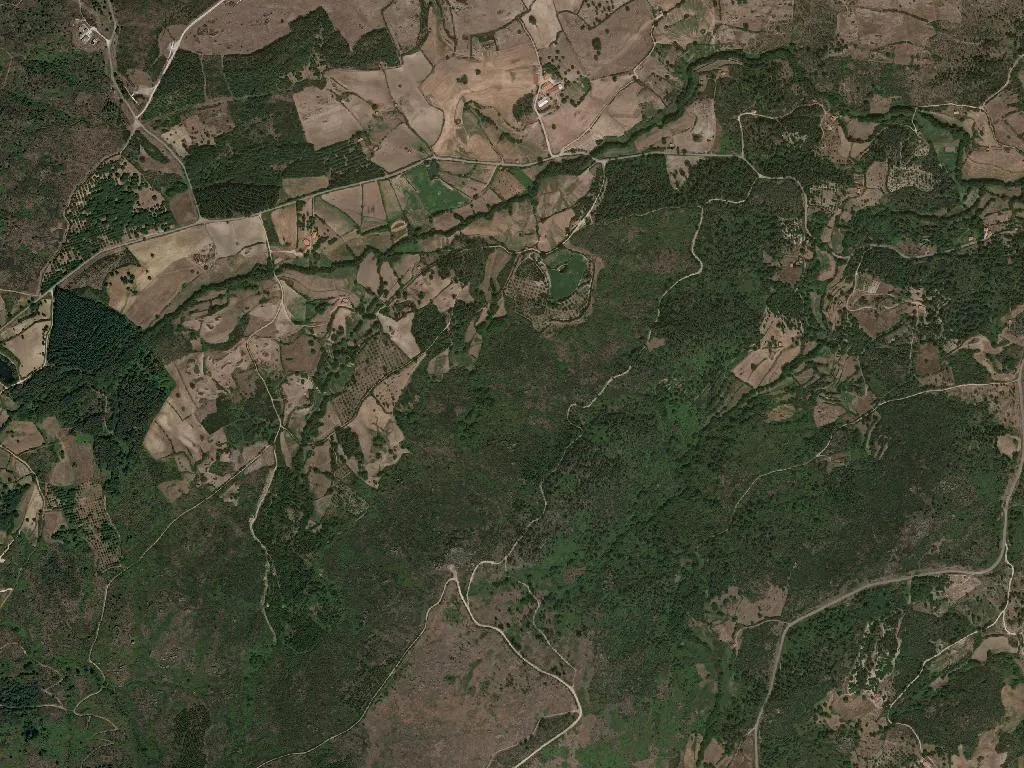
Morning fog still gloves the slopes when the mother-church bell fractures the silence. At 966 m – the loftiest parish in the whole of Celorico da Beira – the air rasps the throat with a cold that ignores the calendar. Granite cottages, their roofs stitched from midnight-blue schist, appear to grow straight from the bedrock; wood doors have cracked like droughted riverbeds; white smoke drifts unhurried from chimneys. Prados is stone, altitude and 1,423 hectares of forest – the greenest blot on the municipal map.
Hill-forts that once counted seven castles
Long before anyone thought of a village, someone was watching the valley. On the crown of Penha de Prados (1,134 m) a pre-Roman castro reminds today’s walkers of an obvious truth: height owns the horizon. Stand on the tussocky summit and local lore says you can pick out seven castles; by some geographical tease, the nearest – Linhares – is the only one you never quite spot. Two kilometres east, the second fort of Monte Verão completes an Iron-Age early-warning network that survived empires. Nowadays the sentinels are forestry tracks where Serra da Estrela DOP lambs and Beira IGP kids still file past, animals that shaped this land as surely as geology did.
Slow-rise bread, slow-curd cheese
Nothing hurries in a Prados kitchen. Serra da Estrela DOP cheese is coaxed, not forced, for forty days; the same milk yields requeijão only if the hand that stirs recognises the precise second of setting. Chanfana – goat stewed in red wine and juniper – slumbers for hours under a quilt of embers. In the communal wood-fired oven the rye loaf, black-crusted and dense enough to last a week, tastes of damp earth and smoke. Beira Interior olive oils – fruity Beira Alta, peppery Beira Baixa – gloss roast kid served on feast days. Inside pantries, cinnamon-dusted arroz doce, brittle cavacas biscuits and a saffron-yellow “wedding cake” appear only when the procession is due.
August, when the village spills outdoors
On the first or second Sunday of August the tiny chapel of São Sebastião fills for its patron’s day. Two weeks later, 15 August brings Nossa Senhora da Assunção: Mass in the nave, then a procession that squeezes through lanes barely two arm-spans wide. Accordions bounce off granite façades; trestle tables multiply in the square. All 146 residents – three-quarters over pension age – are joined by emigrants who fly home for the night. In winter the custom of encomendação das almas, a murmured litany for the dead, still slips from doorway to doorway like an ancestral draught.
Wood that remembers
In Mestre Marques’s workshop a gouge moves across chestnut and suddenly a shepherd, a caravel, a market-day quarrel re-emerge. Each figurine is a refusal to forget. The same memory marks the landscape: the sixteenth-century Fonte do Cano, the granite cruiseiro, the Pedra Sobreposta – nameless to guidebooks, unforgettable if you live here.
Climb to Penha at dusk and the wind slaps colour into your cheeks. Below, the forest rolls out in unbroken Atlantic green; above, red kites wheel on thermals. When the sun finally tilts, granite glows like iron in a forge, wood-smoke drifts again, and the bell that began the day tolls once more – a sound the mountain holds long after the note itself has gone.