Full article about Vale de Azares: granite echoes & topaz olive oil
Meet the 328 villagers who press liquid gold, ladle Serra cheese and call themselves “clod-hoppers”.
Hide article Read full article
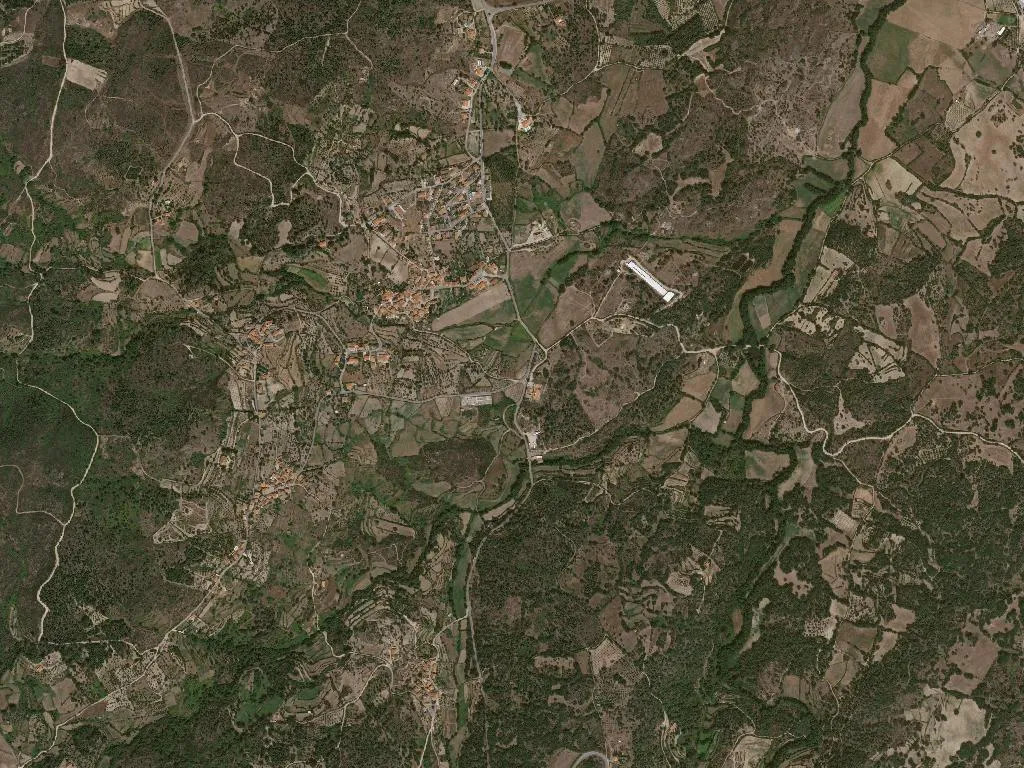
A flugelhorn riff ricochets off the granite walls as the village band warms up, the sound skimming across olive terraces stitched into the hillside. Vale de Azares lies at 510 m on the northern lip of the Serra da Estrela Natural Park, its 328 residents outnumbered by the rows of maçãs de inverno apple trees that stripe the valley. Late sunlight is stored in schist doorframes and released slowly; by dusk the air smells of fresh curds drifting from the micro-dairy that keeps twenty-odd neighbours employed year-round.
From Vale de Flores to the Valley of Ill Luck
Parish records once called the place Vale de Flores until, local lore insists, a 17th-century nobleman lost his entire household to a sequence of accidents and re-baptised the valley with darker irony. A gentler version blames a tiny chapel whose Marian cult became Nossa Senhora dos Azares – Our Lady of Misfortunes. Either way, villagers adopted the nickname basófias (roughly “clod-hoppers”) with such relish that they printed a satirical newspaper, O Basófias, until the 1980s. The manor house they once boasted – Solar dos Amarais – was dismantled in the 1950s and rebuilt stone-by-stone seven kilometres away in Lageosa do Mondego, leaving only a plaque to mark the site.
Oil, milk and the hands that shape them
Terraces of cobble-skinned olive trees supply a cooperative press whose Beira Interior DOP oil arrives on tables the colour of liquid topaz. In 2019 the parish revived a long-dormant Olive Festival, drawing millers from across the guarda district to demonstrate cold-extraction in granite troughs. Milk travels a shorter circuit: sheep that graze the high campos above Prados deliver daily to the dairy where Queijo Serra da Estrela DOP is hand-ladled into muslin, and the whey becomes cloud-light requeijão. Between October and November the same kitchens take delivery of Serra da Estrela lamb DOP and Beira kid IGP, while smokehouses fill with chouriços hung over sweet-chestnut fires. The final pantry note is heather honey, so viscous it folds like silk.
Gain height, lose noise
A way-marked trail climbs south from the hamlet of Prados, threading through gorse and rock-rose until the Atlantic suddenly feels irrelevant. In 4 km you gain 500 m, breaching the 1,000 m contour where wallcreepers flicker across granite bluffs and the only soundtrack is wind combing through broom. The panorama east swallows the Mondego valley whole; cyclists know the same gradient from the Volta a Portugal Juniores, whose peloton detours through Azares on a 12 % ascent that makes television commentators reach for hyperbole.
What still holds out
Chestnut-strip baskets – the same design used for centuries to sift maize – are still woven by two remaining artisans who soak slats in the Mondego, bend them round their thumbs and finish the rim with a single willow strand. The philharmonic band, founded 1988, rehearses every Thursday in the former primary school; on 15 August their brass lines the street for the Emigrants’ Fair, when London-plated cars disgorge grandchildren and the air turns charcoal-sweet with sardines. Dusk finally silences the flugelhorn; the last note lingers, then lets the valley settle into a darkness thick enough to taste.