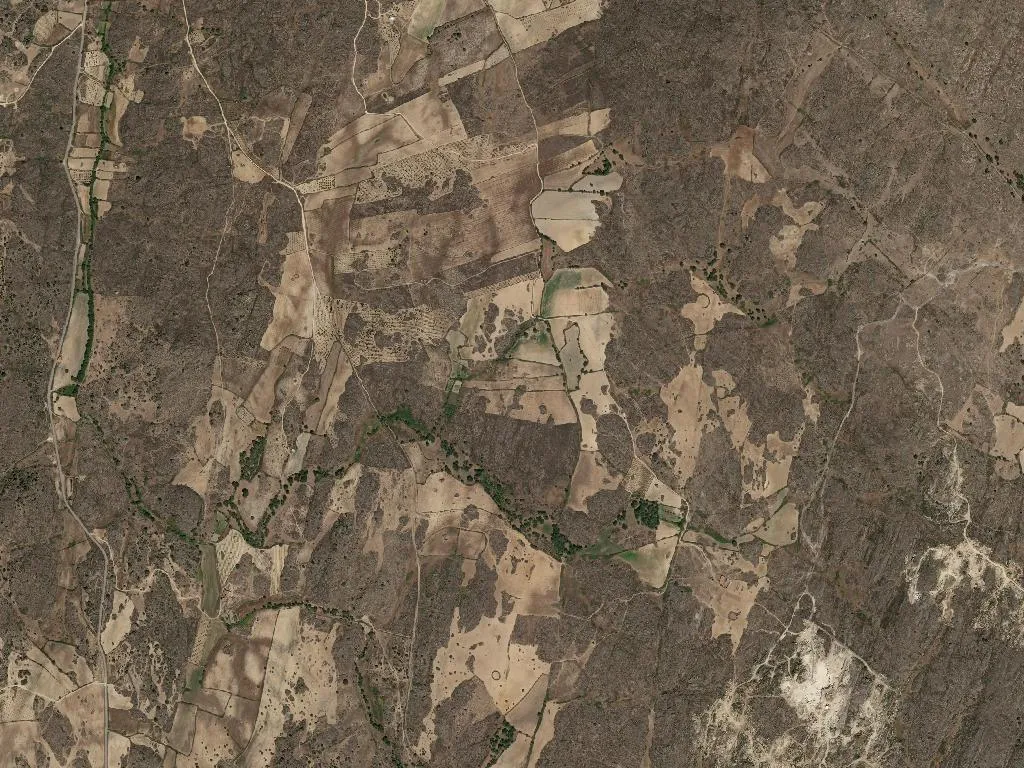
Full article about União das freguesias de Algodres, Vale de Afonsinho e Vilar de Amargo
In Figueira de Castelo Rodrigo’s fingertip, three granite villages share Côa valley silence
Hide article Read full article
The gate to Sr. Joaquim’s yard groans on its hinge, a sound like damp timber giving up.
In Algodres that groan is the daily news bulletin. Add the soft clack of D. Lurdes’s shoes on granite setts, the wind that scuds up the Côa valley and sets the olive trees creaking like ship-rigging, and you have the complete soundtrack of the parish. At sundown the stone walls exhale a faint scent of warm mildew—recognisable as home only if you were born here. Three villages, one parish, 431 souls, 545 m above sea-level, a fingertip of Portugal that almost brushes Spain.
One parish, three villages
The merger was signed in 2013, yet locals insist the places had already blended centuries earlier. Algodres keeps its façade whitewash fresh—town-hall decree, every two years—while inside the church beeswax and lavender hang in the air like immutable law. Vale de Afonsinho has a chapel the priest remembers only on alternate Sundays; candles still cost fifty cents, honesty-box nailed to the door. Vilar de Amargo is quietly folding in on itself—roof-tiles slipped, doors ajar, a black cat stationed among the ruins like a nightwatchman. Six inhabitants per square kilometre, but enough to leave a light on.
Rock art that outruns time
The Côa Valley engravings are not a visitor attraction here; they are simply the wallpaper of childhood. Grandfathers tell grandchildren that the Paleolithic horses of Penascosa gallop after dark when no one is looking. The walk in is straightforward: descend the ravine at dawn, shale crunching underfoot, sun climbing your back. The incised lines are hair-fine yet stubborn, much like the people who refuse to quit these slopes.
Taste at altitude
The olive oil comes from Zé Manel’s backyard tree; its peppery catch at the back of the throat is the local certificate of quality. Kid is roasted in D. Amélia’s wood-fired oven, Saturdays only; if the skin doesn’t crackle, the dish is sent back. Cheese is genuine Terrincho DOP, not the supermarket impostor with a sticker. Chanfana—goat stew—simmers in Seixo wine made by a cousin whose winery is too small for bureaucracy. Beira Interior reds mirror their makers: reserved at first pour, then unexpectedly expansive.
Wings over the Douro gorge
Griffon vultures own the thermals; humans merely borrow the trails. Start at the cherry-lined lane outside your door, drop to the Côa, climb back out. After dark, extinguish every bulb and the Milky Way drapes itself across the sky like linen forgotten on the line. When the church bell fades into cold air, stay on the threshold. Wood-smoke drifts past your face, frost settles on your shoulders. Nothing else is required.