Full article about União das freguesias de Almofala e Escarigo
Guarda’s near-empty parish where Roman granite, blossom snow and Terrincho cheese outnumber people
Hide article Read full article
Two millennia under one arch
The granite voussoirs of Almofala’s Roman bridge have absorbed two thousand winters. Water slips beneath them with the same hush that met the legionary engineers who first squared the blocks. Bring a coat if you come between November and March: the Douro wind slices like a cut-throat razor and the stone is colder than a landlord’s handshake.
The civil parish was stitched together in 2006 from the hamlets of Almofala and Escarigo, yet human fingerprints here pre-date the Visigoths. The Torre de Almofala – locals call it the Eagle Tower – stands above the rooftops like a family mansion no one can afford to mend. Falcons and Bonelli’s eagles use the empty arrow-slits as balconies, returning each spring the way expats fly back to Porto for Christmas.
Silence per square mile
One hundred and eighty souls across forty-eight square kilometres. Do the maths: that is one resident per Manchester United pitch. If you meet a body on the lane it is not a weekender – it is the postman. Say “Bom dia”; he will say it back. Houses are hewn from dove-grey granite, roofs slung with anthracite schist, dry-stone walls climbing the inclines like contour lines made solid. At four o’clock even the village dog gives up: you will find him asleep in the neighbour’s shed, exhausted by the crowds.
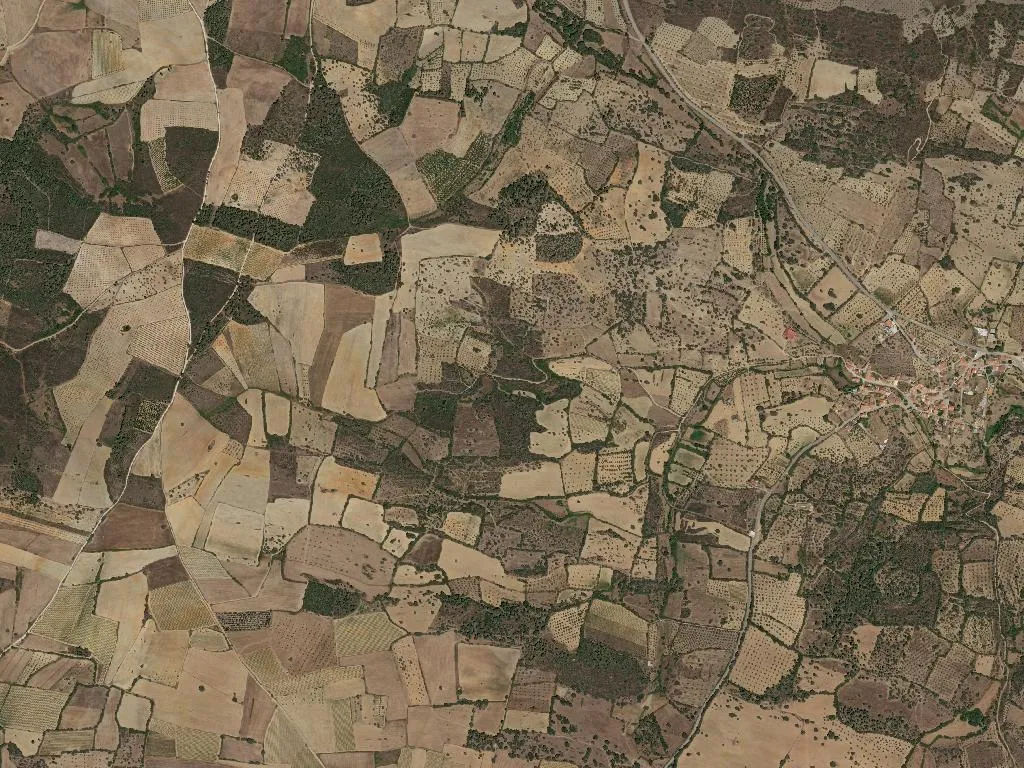
Beyond the last cottage the International Douro Natural Park unrolls – sierras of holm oak and almond that, in February, look as though a blizzard has settled on the branches. It is only blossom; leave the skis at home. At six hundred and thirty-six metres above sea level the dawn air stays crisp even in August – ideal for walkers who prefer not to finish the day marinated in their own T-shirt. Pack water: the café shut at two while Dona Rosa went to mass and never reopened.
Olive oil, Terrincho and altitude
Smallholdings still press Beira Alta DOP olive oil in restored stone mills. The groves occupy the same terraces the Romans planted with vines; something in the schist remembers. Terrincho cheese – a raw-milk sheep’s square aged sixty days – teases the throat with a peppery finish; not a choice for Cheddar conservatives. Kid goat appears only on Sundays, only in a wood-fired oven, and only if your GP is looking the other way.
The bridge remains a public right of way: two worn wheel-ruts guiding subcompact cars and hikers across the gorge. Mind the German backpackers: they halt mid-span to photograph the keystone, then ask if there is Wi-Fi. Lean over the parapet and you may catch the glint of a Super Bock can gliding downstream – evidence that José’s fishing session ended as these things usually do.
When the eagles wheel back to their ruined tower and sunset ignites the granite, silence thickens until you could slice it with the bread knife – if any baker were still open. Do not complain. The absence of everything is what drags people back. As José says, “We’ve no social media here, only chicken wire – and hens don’t do likes, they do eggs.”