Full article about Castelo Rodrigo, where shame became stone pride
Walk the inverted-crest village, hear 1383 betrayal in granite silence
Hide article Read full article
Castelo Rodrigo: An Upside-Down Crest, Right-Side-Up Pride
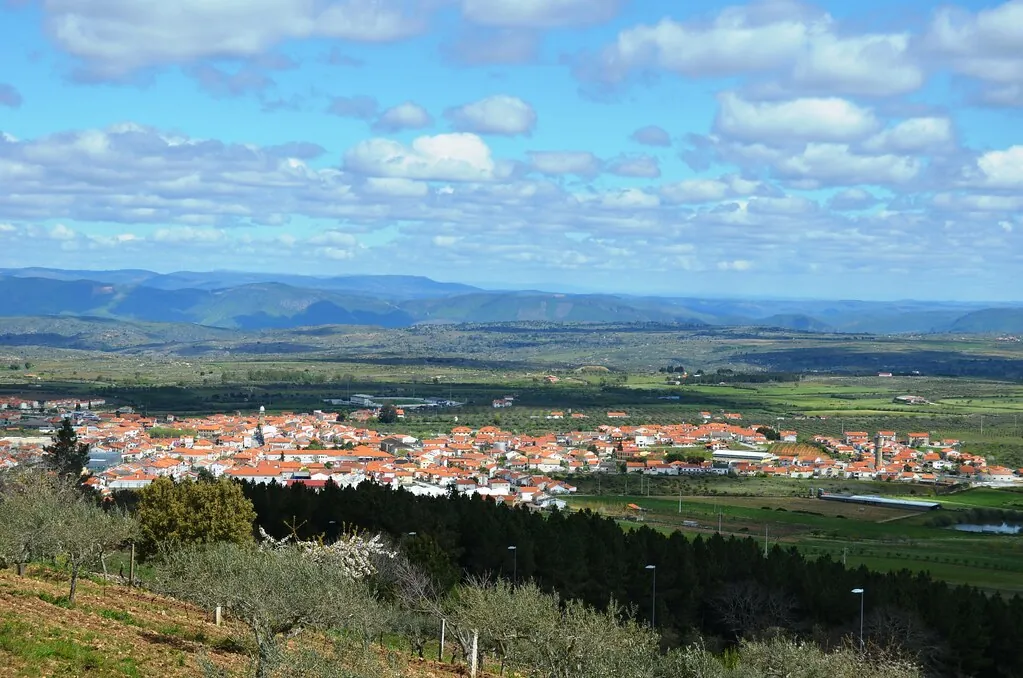
The wind gets here before you do. Long before the walls appear on the skyline, before the thirteen turrets stand their ground against the Beira heavens, the plateau’s 663-metre draught arrives, carrying granite dust, siege memories and the muffled echo of swapped allegiances. Pass through the gate – a stone mouth in the curtain wall – and your footfall changes pitch on the uneven granite. Inside live 468 souls, yet on a weekday morning the hush is so complete you can hear a wooden shutter creak two streets away while 300,000 visitors a year circulate somewhere beyond the walls.
Arms reversed, pride intact
Portugal’s heraldic rulebook contains only one inverted royal coat of arms: Castelo Rodrigo’s. The deliberate slight dates from the 1383-85 succession crisis, when the village backed Castile against the eventual victor, the Master of Avis. The punishment was carved in stone and, over centuries, ossified into identity. Earlier layers are still visible: Roman potsherds, a 1209 foral charter granted by a forgotten nobleman named Rodrigo, and the scorched skeleton of Cristóvão de Moura’s palace. Appointed Spanish governor during the Iberian Union, Moura built his power base here; after the 1640 Restoration the townspeople tore the palace apart, leaving the blackened walls open to the sky like an unsutured wound. In 1836 the council seat slid downhill to Figueira de Castelo Rodrigo, and the village froze in time, its shame turned to mineral dignity.
Thirteen turrets, one thirteen-metre cistern
The castle circuit, a National Monument since 1922, can be walked in under an hour if you resist pausing. The Clock Tower commands the entrance; the detached Albarrã Tower projects with such blunt masonry that adjectives feel superfluous – lay a palm on its sun-warmed grit and you measure medieval effort in fingertip calluses. Inside the enclosure the thirteenth-century parish church of Nossa Senhora do Reclamador keeps a cool gloom even in July. The pillory, also listed since 1910, punctuates the civic centre like a witness to pack-mules, inquisitors and Castilian troops. Below street level lies the village’s most eloquent relic: a Jewish cistern, thirteen metres deep, that doubled as synagogue and mikveh. Peer over the rim and you confront wet darkness and the smell of soaked stone, a chamber that preserved a persecuted faith beneath the cobbles. On Rua da Cadeia a Manueline window frames the sky in limestone lacework, while the neighbouring old jail spells out the same decorative grammar. A short drive away, the Augustinian convent of Santa Maria de Aguiar fuses Romanesque severity with Gothic light and has carried National Monument status since 1977.
Almond blossom and lamb on the coals
Between February and March the surrounding slopes undergo a transformation no photograph quite captures: almond trees cloak the hillsides in a pink-white haze and the air thickens with a faint, milky scent. Photographers migrate to the Serra da Marofa (977 m), a natural balcony over the Douro Internacional, chasing the legend of a Christian knight and a Jewish girl named Ofa whose impossible love supposedly gave the ridge its name. Autumn brings the Festival of Soups and Migas, steam rising from copper pots amid the smell of smoked sausages. November belongs to the Marofa Lamb Festival, celebrating Beira IGP kid and plateau-raised mutton. In the village shops, almonds dry beside jars of heather honey and bottles of Beira Interior DOP olive oil; Terrincho DOP cheese – orange-rinded, dense, yielding to the touch – is sliced and served with local red, poured without ceremony. Every July the village re-enacts the 1664 Battle of Castelo Rodrigo, the one fight it is proud to remember, filling the lanes with musketeers in starched collars and women in farthingales.
A frontier you can hear
The Águeda river marks the Spanish border to the east; northwards, the Douro Internacional Natural Park throws up vertical schist cliffs where griffon vultures ride thermals. Beyond them lies Portugal’s first private nature reserve, Faia Brava, a continuation of the same escarpment and steppe country. Trails to Alto da Sapinha or Santo André das Arribas halt walkers in their tracks – not through abstract beauty but through the concrete vertigo of several hundred metres of freefall to the river. The Roman bridge at Escalhão and the tower at Almofala confirm that this was a thoroughfare long before it became a frontier. Castelo Rodrigo has flown the flag for Portugal’s Twelve Historic Villages since 1991 and was voted one of the country’s Seven Wonders in the “Authentic Village” category in 2017 – honours that pull in coachloads but barely dent the demographic tally: 36 young residents, 202 older, a ratio that speaks louder than any heritage plaque.
When the last bus swings down the hill and the turrets cast elongated shadows across the granite sets, only the plateau wind remains, battering the gutted palace of Cristóvão de Moura – a hollow, ownerless sound that is precisely the voice of a village once scorched by its own fury, a village that inverted its coat of arms and still refuses to turn itself right-side up.