Full article about União das freguesias do Colmeal e Vilar Torpim
Engine-note greetings, thyme-scented ovens, 380 m of Beira Interior solitude
Hide article Read full article
Granite and quiet
The silence here has mass. It is not the absence of noise; it is the heat that granite stores all afternoon and releases after dusk, the wind that combs 7,000 ha of broom and olive without once rattling a windowpane. Between Colmeal and Vilar Torpim the council road bends so widely you can clock the distance between neighbours without leaving third gear. One-hundred-and-ninety-six people live here. They recognise one another by engine note or by voice carried across two kilometres of valley, the way others know a ringtone.
Borderland memory
Colmeal takes its name from the Latin colmus—a hill—and the old mule track that once slipped over the ridge to Spain still climbs exactly that. Vilar Torpim keeps its etymology to itself: vilar simply means hamlet, while torpim may be a man, a shrug, a scribal joke lost in the 13th century. Both settlements were knitted into the Linha de Castelo Rodrigo, the Portuguese forward defence that once marked the country's edge before the border drifted south to the River Guadiana. At 380 m the plateau is high enough for the Douro to glint in the distance but too low for its terraces—wine country in miniature, still deciding what it wants to be.
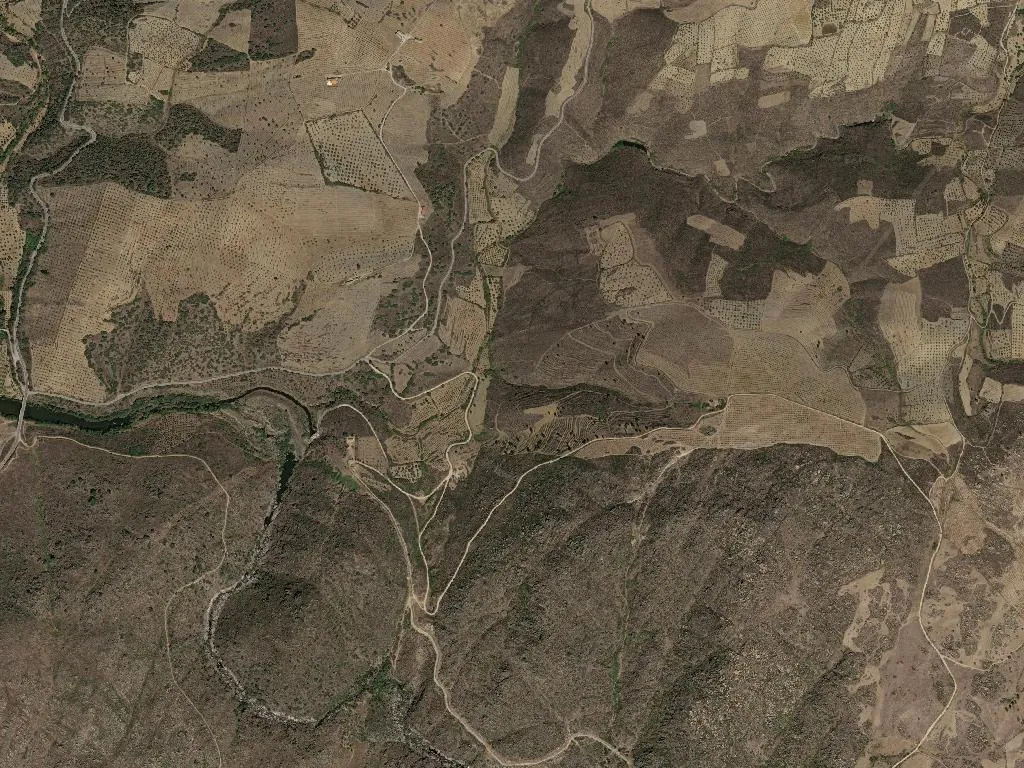
Part of the parish now lies inside the Douro Internacional Natural Park. There are no way-marked trails; instead, unclassified dirt roads braid the slopes, passing olive groves where the stones are older than the trees. This is the first whisper of the Beira Interior wine region—no tasting rooms, no shuttle buses, just vines that survive the wind and reds that survive the decades.
Cooking at 380 metres
You do not book a table here. Terrincho DOP cheeses ripen on rough-sawn shelves in back rooms; the shepherd still calls his animals by name. Kid goat is seasoned only with salt and garlic, then lowered into a wood-fired oven until the skin bronzes and the fat smells of wild thyme and broom. At harvest time the village olive press turns, conversation stopping every few minutes while someone tops up the funnel. Wine is poured from unlabelled bottles; the only vintage that matters is the one in your glass.
Twenty kilometres to the art gallery
There is no rock art in the parish itself, but the Côa Valley Archaeological Park is a 20-minute drive north. The five small guesthouses survive on spill-over: visitors who come for the Upper Palaeolithic engravings and stay for the stillness—much like stepping into the village bar for a coffee and emerging at 2 a.m. from the only tasca still serving aguardente. Generations of unnamed travellers have left nothing here but dry-stone walls and the occasional iron nail. Schist keeps their secrets the way a pub wall keeps postcards: out of sight, understood to be there.
Dusk throws peach light onto granite doorframes; woodsmoke rises perfectly vertical. Seventy pensioners, twenty children—the census is the metronome. Yet somewhere a pail clicks under a cow, a hand crank turns over the olive press, a cheese mould is lifted from its hoop. Continuity is not nostalgic; it is simply the texture of tomorrow, as solid as the loaf set to cool on the counter.