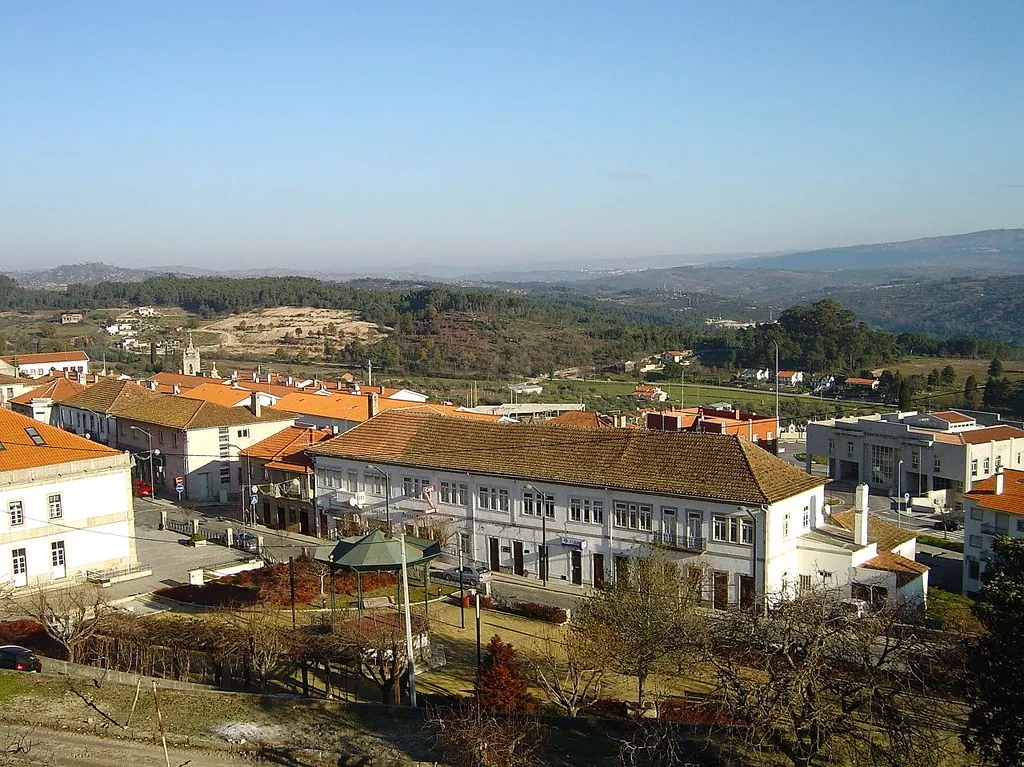
Full article about Algodres: village where granite keeps winter in its bones
Feel five centuries of chill in the same grey stone that built church, pillory and palace
Hide article Read full article
The granite is cold enough to make your fingertips tingle, and if you press your palm to it for longer than a heartbeat you can feel the stored chill of five January nights. That is the first lesson Algodres teaches: stone remembers. Every low cottage, every bruised step of the eighteenth-century Misericórdia church, every facet of the 1514 pillory has been quarried from the same grey stock. Touch one wall and you have touched the whole plateau.
A town that unbecame itself
Between the twelfth and nineteenth centuries Algodres was a fully fledged vila with its own town charter and a seat on the royal council. Then the administration drifted downhill to Fornos de Algodres, four kilometres away, and the settlement contracted to a parish of 290 souls—fewer people than you’ll find on a single Northern Line carriage at rush hour. The name survives from the Arabic al-godor, “the ponds”, and water is still the village’s quiet accomplice, running beneath the streets and reappearing in stone wells that look like afterthoughts until you notice the rope grooves worn thumb-deep.
Stone reused, time recycled
The Misericórdia stands exactly where a small castle once kept an eye on the Mondego valley. When the fortress outlived its usefulness, the townspeople simply rearranged the masonry into a church—same granite, new job description. The baroque façade is Joannesque without the theatrics: two volutes, a broken pediment, the charity’s coat of arms carved by someone who understood restraint. Step inside and nineteenth-century blue-and-white tiles from Massarelos wrap the chancel like a Delft tea service, while 36 oil-painted panels of saints stare down from the ceiling, each labelled in the same steady hand that once copied parish records.
Across the square, the parish church lifts a triple-tiered bell-tower visible from the turn-off on the N17. Inside, a Manueline rope of granite frames the triumphal arch; on the side walls, Hispano-Moorish azulejos—sixteenth-century edge-work uncovered during 1980s restoration—glint like pieces of a shattered chessboard.
What the plateau puts on the table
There is no tasting menu. There is Dona Alda’s kitchen. Lamb from the Serra bakes slowly until the bone surrenders; kid goat collapses into its own juices; Serra da Estrela cheese, still coagulated with cardoon, spreads like cultured butter on yesterday’s bread. Requeijão arrives in a terracotta bowl—eat it with a spoon, no ceremony. The local Dão vineyards sit at 700 m, absurdly high, and the altitude shows up as a blade of acidity that slices through the fat and demands a refill.
Water, granite and a horizon
Follow the lane past the last house and the calcada turns to sheep track. The Cortiçô and Muxagata streams have carved two green gashes into the plateau; maize and potatoes still manage to grow where the slope forgives. A 25-minute climb north brings you to the São Miguel thermal spring—37 °C water rising through fractured schist, a open-air pool facing south-east so you can float and watch the Estrela massif keep its centuries-long appointment with the clouds.
Back in the village the evening routine is immutable: wood smoke first, then the clink of a single coffee cup, then the church bell measuring out the day’s last quarter-hour. Granite absorbs the sun’s late heat and gives it back slowly, like a bank paying small change. By the time the stars resolve, Algodres has already reset to its factory default: quiet, upright, and waiting for tomorrow’s footsteps to wake the stone again.