Full article about Cortiçô’s bell drifts over cork oaks at dusk
Romanesque stone and rye-scented lanes link Cortiçô and Vila Chã in Guarda’s highlands
Hide article Read full article
The bell that refuses to hurry
The bell of Cortiçô’s Romanesque tower swings once, twice, then lingers. Its note is soft, almost woollen, yet it carries: down the slate-roofed lanes, across the chestnut terraces, bumping gently against the Serra de Algodres before climbing back to die above the cork oaks. At 679 m the air is rinsed; on very clear evenings the sound keeps rolling long after the bronze has fallen still, like a marble let loose on polished granite.
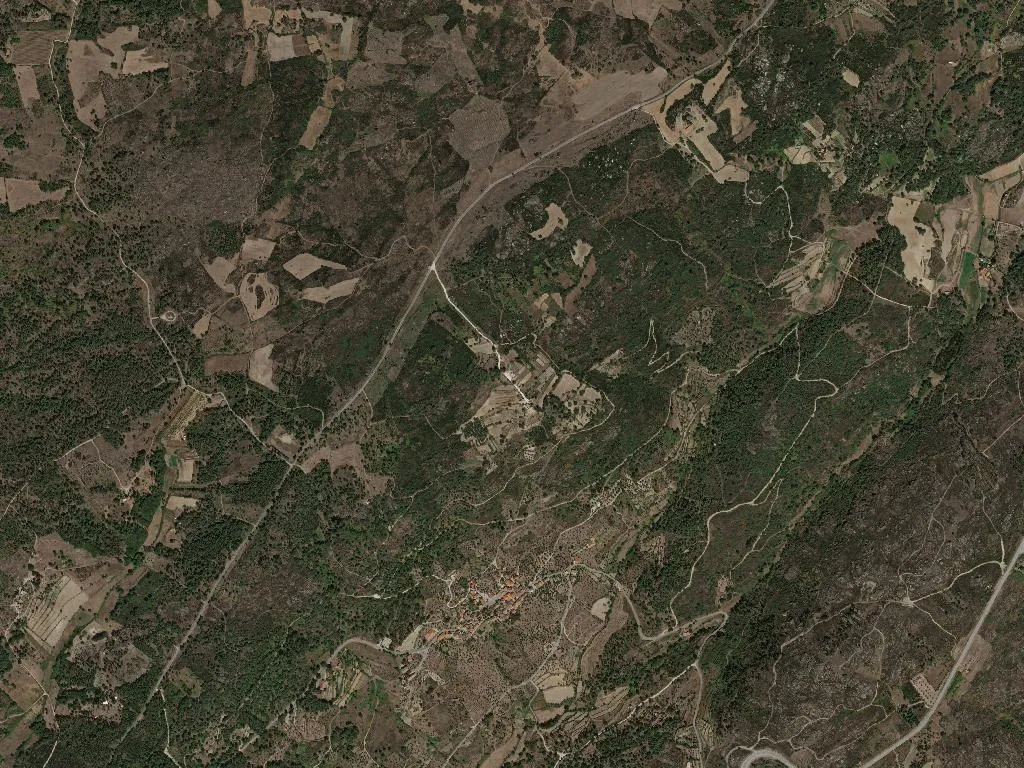
Cortiçô and Vila Chã were yoked together in the 2013 parish mergers – a bureaucratic marriage performed by officials who had never spent a dawn here. The new “union” covers 804 hectares, the cartographers announced. What that really means is two hamlets, two churches, a handful of dirt tracks and a cork plantation that stitches itself up the hillside until the soil gives up. When Zé shuts off his tractor and Toninho’s mongrel decides to nap, the silence that remains is not an absence but a low, steady hum of altitude and distance.
Stone with a memory
Cortiçô first surfaces in 1170, in the royal charter that created the Couto de Figueiró, already called “Cortiçolo” – the place of cork oaks. The same trees are stripped today on a four-year rotation, their raw trunks glowing rust-red in winter. São Pelágio’s church is textbook early-Romanesque, though the textbook has been annotated by eight centuries of botched repairs: a blocked arch here, a concrete patch there, a bell-turret that looks tacked on by someone who had seen a picture once. Inside, the single granite font still bears the rope-marks where travelling shepherds sharpened their knives.
Walk twenty minutes south-west and the land flattens into Vila Chã’s small checkerboard of rye and potatoes. The Igreja da Graça stands straighter, whiter, as if it had arrived from Lisbon on the postal bus and refuses to muddy its shoes. Between the two settlements runs the “paredão”, a flagged mule path locals claim is level enough for cycling. Try it and you’ll dismount at the first fig tree, tempted by shade that smells of milk and wasps.
The year the village shrank
In August 1855 cholera sprinted up the valley. Within eight days Cortiçô buried twenty-five of its 120 inhabitants. The town hall in Fornos posted armed guards at the crossroads, nailed together a wooden isolation hut on the church terrace and prayed the infection would not reach the market town. No plaque records the event; only the cemetery repeats the surname Matias three times in a row, three brothers gone between Monday and Wednesday. Mr Joaquim, 87, still points at the large slab by the sanctuary steps: “Four coffin-less bodies under there. Earth to earth, stone on top.”
Lunch in someone’s front room
There is no café, no tasting-menu, no chef playing with ancestral recipes. Instead, a woman you met two minutes ago ushers you through her bead curtain, cuts supermarket loaf into doorstops, spoons cold requeijão and pours last year’s Dão from a five-litre jug. The cheese is Serra da Estrela DOP, brought up from the valley that morning, still runny enough to eat with a spoon while the thistle rennet stings your tongue. Sunday lunch is lamb salted the night before, garlic-rubbed, then forgotten in the wood oven until the crackling separates like parchment. Potatoes arrive muddy, wine comes in handle-less cups and dessert is Maria biscuits dunked in espresso so strong it furrs the teeth. You will leave with olive oil on your cuff and a hiccup that tastes of wild marjoram.
A three-kilometre lesson in slowness
The council has printed glossy way-markers for the official trail. Ignore them. Take the farm track that drops from Cortiçô’s last cottage, ford the seasonal stream where the slate slabs tilt like bad teeth, then climb past the ruined mill. In late May the hedges exhale a sweetness that makes you want to bite the air. Stop to watch a blackbird feed her chicks inside a drystone wall; stop again when the farmer’s dog investigates your shoelaces. The phone signal vanishes, the battery withers, and the idea of kilometres dissolves into birdsong and the small sound of your own breathing. Three kilometres, forty-five minutes, one epiphany: geography is better measured in heartbeats than in metres.
Dusk brings the single bell again – two strikes this time, not a death knell but an all-clear. Sit on the granite step, let the ridge opposite turn from ochre to bruised violet, smell the first wood-smoke rising from chimneys that have never heard of a smoke-control zone. Tomorrow the 09:04 from Figueiró will carry you back to tiled platforms and timetables. Tonight the village does not ask you to stay for ever; it simply asks you to stay until the day finishes. No plan required.