Full article about Figueiró da Granja: amber light on granite
Guarda village where oak smoke drifts past the foundlings’ wheel and Serra cheese arrives by tractor
Hide article Read full article
Sunlight on Granite
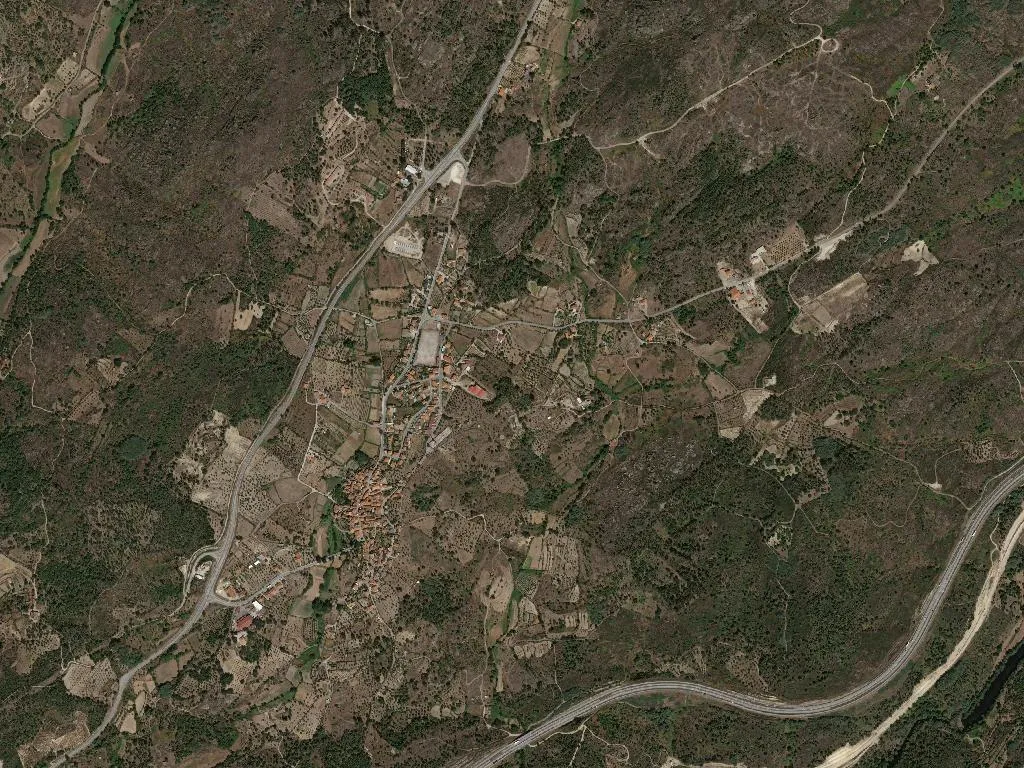
Light slips through the single stained-glass window of Figueiró da Granja’s church and prints amber rectangles on granite slabs still cold from the night. Outside, the wind combs the square, ferrying the resinous smell of oak smoke. It is half-past ten, yet chimneys continue to exhale as though the village wakes only when it chooses. At 469 m on the edge of the Guarda plateau, slate-roofed houses the colour of wet shale merge into the dry-stone walls that quilt the fields. Three-hundred-and-forty-four souls occupy just over a thousand hectares; the hush between front doors is measurable.
What the Stone Remembers
The only listed building is known simply as “the foundlings’ wheel”. No one enlarges on its history; conversation drifts quickly to the church instead—thick-walled, narrow-windowed, its eaves jutting like the brim of a farmer’s hat against the Atlantic weather that barrels down from the Serra da Estrela. Footsteps change timbre as you pass from schist pavement to packed earth. A warped gate still creaks on the same iron hinge it had when the Carnation Revolution erupted; in Figueiró, doors are recognised by the pitch of their groan, not by any bell.
Dão in the Air, Estrela on the Tongue
You are technically inside the Dão wine belt, yet what flows here is spring water. Wine is for saints’ days. Cheese is another matter: when António drives over from his brother’s quinta with a wheel of Serra da Estrela DOP, the parish council phones around before he has even parked. The requeijão never sees suppertime. Summer visits from Paris or Geneva prompt the firing of the wood oven; a butterflied lamb is lowered inside, and Dona Alda’s daughter reopens the café for three days, pulling frosted lagers that taste of borrowed time.
Arithmetic of the Afternoon
Thirty children aged 0–14. One-hundred-and-sixteen residents over 65. The demographic geometry reveals itself in the hardware leaned against walls: more ageing Raleigh bicycles than pushchairs. Vegetable plots are ruler-straight—lettuce soldiers, cabbages under tulle, tomatoes already lashed to cane. At dusk, if the café has remembered to stay open, low voices trade the morning price for a veal calf or quarrel over the ECMWF forecast. The church bell strikes six; the note rolls down the valley, ricochets off schist, and returns a semitone lower. A door thuds, a fluorescent kitchen light flicks on. Nightfall is abrupt, yet the chimneys keep issuing their quiet vertical script against the indigo—lines of oak and life that stay with you long after the N17 has carried you back towards the city.