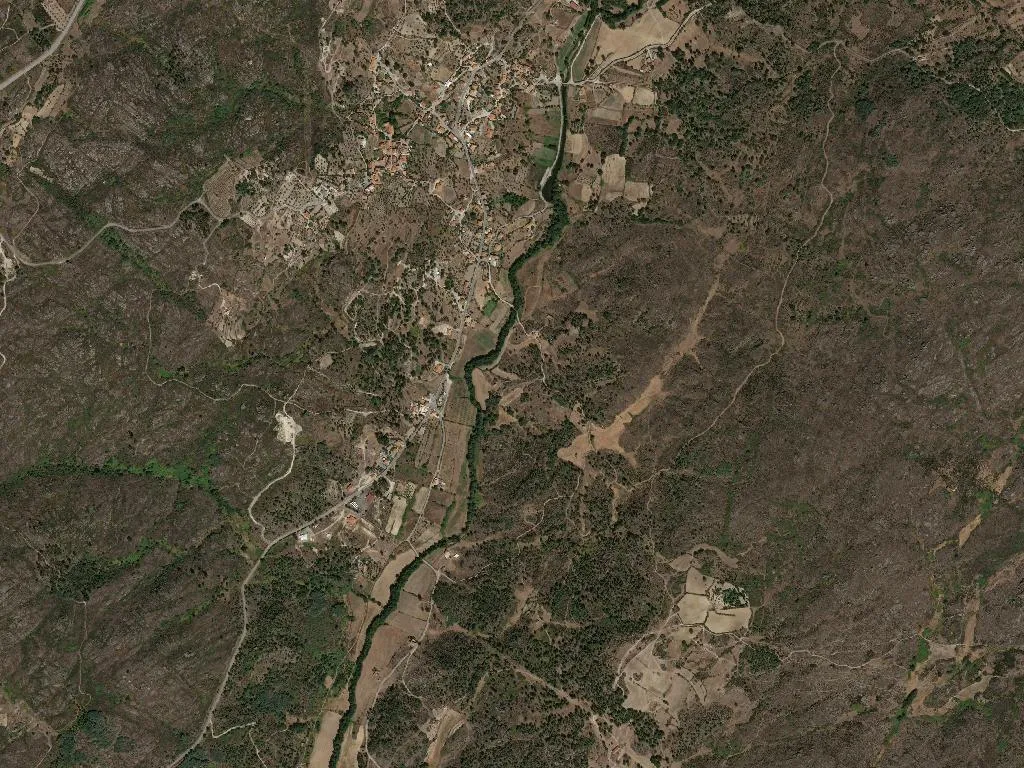
Full article about Muxagata: Where Knights Templar Gates Meet Dão Wine
Muxagata, Fornos de Algodres hides a 1258 Templar gate, baroque São Pedro church, oak-veined goat chanfana, cardoon-curd Estrela DOP and granite-terrace Dã
Hide article Read full article
Bell at noon
The bell of São Pedro strikes twelve. Its bronze note climbs the Muxagata valley, dissolving among holm-oak cork. Two hundred and twenty-three souls share nine square kilometres here; at 373 m the air is already thinner than on the coastal plain, light enough to carry sheep bells and tractor gears back up the hill.
Stone that remembers
A church has stood on this granite outcrop since 1258. What you see is eighteenth-century baroque wearing fragments of Romanesque chain mail across its nave. Downstream, the chapel at Póvoa still stages Sunday mass for a dozen folding chairs. The medieval pack-horse bridge takes modern traffic—John Deere sprayers and refrigerated vans—without complaint. The name is a Moorish-Latin hybrid: “muxa” (Arabic for lord) plus “agata” (Latin for gate) became Muxagatha in 1250s tithe rolls, then simply Muxagata when the Knights Templar parcelled out the Beira border after the Reconquest.
Milk, thistle and Dão
Estrela DOP cheese is coagulated with cardoon stamens, then cave-aged until it weeps amber oil. Requeijão, the loose, ricotta-like cousin, appears only on Saturday tables. Touriga nacional and encruzado grow on granite sands a few terraces above the stream; estates such as Quinta da Saudade open by appointment for comparative tastings. Chanfana—old goat braised in black clay with red wine and mountain mint—requires four hours in a wood oven. Ask for Agostinho or Celeste if you want salpicão or blood pudding laced with rice; they sell from the back door, cash only.
Water rights and wild boar
Irrigation turns are still negotiated neighbour-to-neighbour: a wooden sluice lifted at 17:00, lowered at dusk. The footpath to Póvoa threads 25 minutes through deciduous oak; dusk is when wild boar descend to drink—keep dogs leashed. On 29 June São Pedro brings processions and brass bands; the second Sunday of October, emigrants fly back for Nossa Senhora do Pilar, filling the sports pavilion with bifana steam and Dão tintos. Local folklore groups rehearse the vira every Wednesday in the parish hall, heels hammering the same boards their grandmothers did.
When the sun drops, chimney smoke rises in perfectly vertical columns: oak logs and supper announcing the day is done.