Full article about Arcozelo’s Waterwheel Still Hums Above the Mondego
Granite troughs, quartz plunge pools and fig-splitting boys in a 570-soul Guarda village
Hide article Read full article
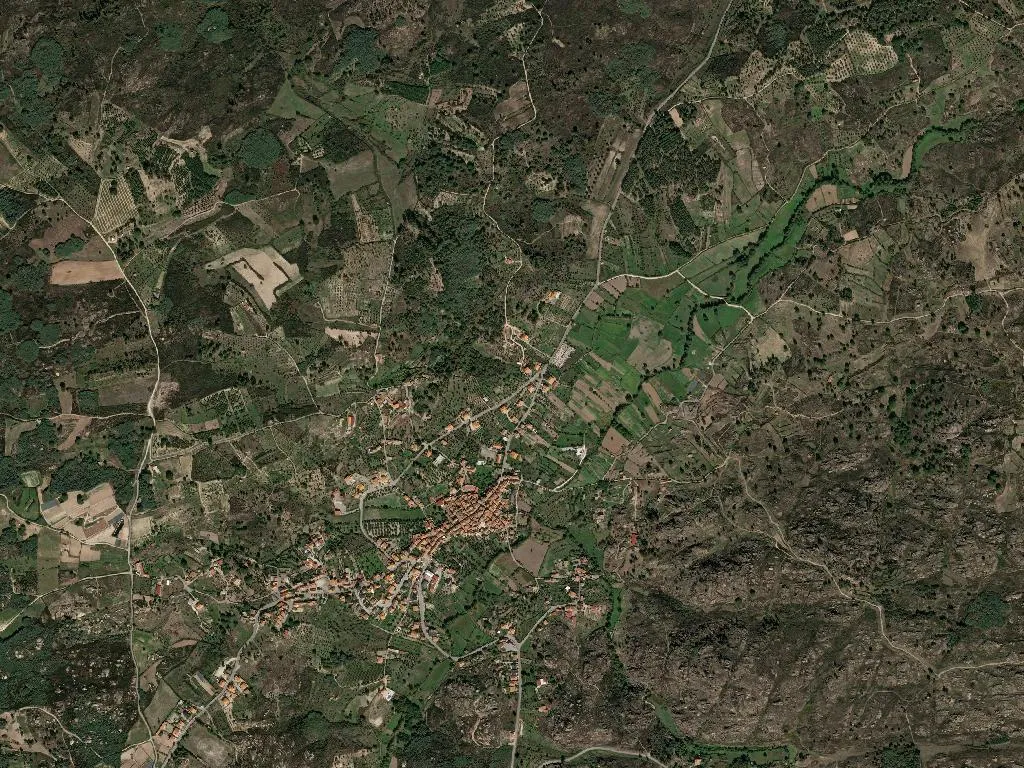
The mill wheel speaks before anything else: an arrhythmic slap of water against warped pine paddles that quickens after heavy rain, slows to a murmur in drought. At Azenha do Valinho no one has brought corn for decades, yet the granite trough still vibrates under your palm. It is mid-September, and the morning light skims across schist roofs, warming the ledge where three small boys sit swinging bare legs, splitting figs with their thumbs. Arcozelo spills across 367 m of granite ribs above the Mondego; pine plantations climb another half-kilometre to the skyline. Five-hundred-and-seventy souls are on the parish roll, but many only re-appear when the first swallows return.
Eight households and six pounds of grapes
A parchment from 1214 mentions the village, yet the date people recite is 1649 – the year the parish cross was carved. Look closely and you’ll still see wax drips in the niche where women once wedged candles to ward off thunder. Inside São Miguel the air is cold tallow and wet stone; the bell book records eight medieval households, today more than two hundred dwellings, most shuttered until July. Padre José keeps the key to the sacristy and the story of tithe-collecting monks who arrived from Grijó demanding chickens and baskets of grapes measured to the pound.
Bell tower, wood carvings and a pink-quartz plunge pool
The tower has been locked since the council clerk mis-footed on a broken step, but the sacristan will unlock it if you ask. From the louvre you sight the Seixal vineyards, the slate roof where the flying-doctor lands once a month, the ribbon of stream that vanishes every August. A ten-minute scramble north brings you to Pedra Alva, an open-cast quartz mine now flooded to an opal-green swimming hole where teenagers practise head-first dives. Capela de São Paio stands permanently unlocked; on the first Sunday of August the “seven soups” begin immediately after mass – every household tips its pot into shared cauldrons and you eat straight from the ladle.
Eels, pork belly and lemon-rind sponge
Cheese arrives from the Bica smallholding, still hand-milked at dawn. Eels are bought off Zé, who sets fyke nets by moonlight and drives up from Mangualde before breakfast. Dona Albertina’s eel stew starts with rendered pork fat, finishes with backyard white wine. Her rojões marinade for twenty-four hours in garlic and bay from the same yard. Tia Emília’s sponge contains winter-survivor lemon zest; it refuses to rise, staying dense and damp, the sort you want with coffee not cream. The feast-day folar is threaded with proper chouriço; vegetarians request the centre slices where the meat hasn’t reached.
Mill trail, kayaks and sunset lookout
The Trilho dos Moinhos begins at Quinta do Viso’s gate – Lobo the mastiff barks, remembers you, wanders off. Eight kilometres loop through blueberry terraces planted by António, now harvested by his Manchester-born grandchildren every July. Where the river bends you’ll find pocket beaches of gold sand; local children learn to swim here because the current is gentle. Mangualde canoe club stores plastic kayaks beside the calvary ramp, but locals slide in their own aluminium craft. The Viso lookout has no sign, no railing; at dusk teenagers perch on the cold wall drinking imperial, listening to dented cans roll across the dirt.
Night noise is orchestral: crickets, the nine-o’clock bell, Manel’s tractor ticking itself cool. Sometimes a drift of Brazilian forró floats from the barracks where fruit-pickers doss. Far below, the Mondego keeps moving, unseen but heard, like a long story that refuses to end.