Full article about Nespereira
Granite hamlet above Gouveia, scented by December olives and glacier-sculpted fields.
Hide article Read full article
Where the Mountain Learns to Breathe
Morning light slices through the east-facing windows like a fridge door yanked open at 3 a.m. Nespereira wakes reluctantly to the church bell—one bronze note that feels older than the 1755 earthquake and dissolves among the olive terraces where three men still beat the branches with sticks. The silence that follows is anything but empty: it carries the ballast of 661 souls who recognise one another by gait alone, and of a few whose names escape them yet whose grandparents’ scandals remain crystal-clear.
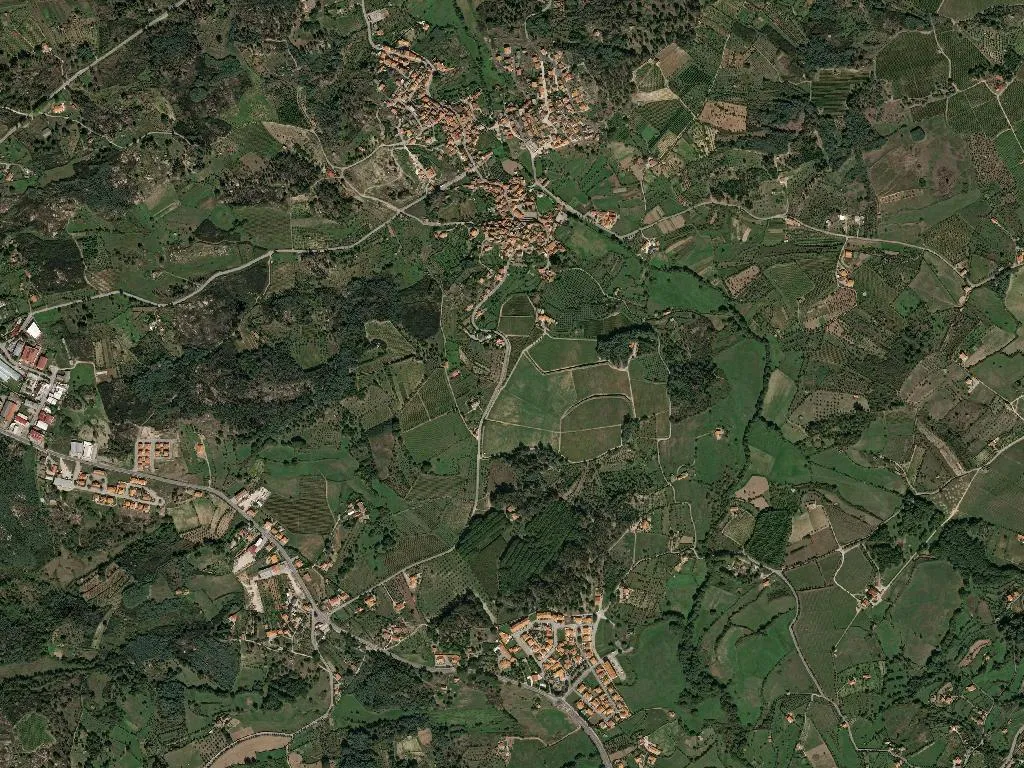
The parish unrolls across barely five square kilometres on the lip of the Serra da Estrela Natural Park—high enough for the sun to bruise, too low for reliable snow. By late afternoon the cold spills off the ridge like mercury, the sort that makes knees audition for Radio 4 sound effects. Houses huddle along the CM1247, granite on granite, canal tiles moss-wrapped on their north faces like coats borrowed years ago and never returned. Three classified monuments dot the map, but locals pass them with the same indifference shown to a cousin who once won Miss Beiras and now mentions it only at Christmas after too many aguardientes.
The Fields the Glacier Forgot
This is geopark territory, yet villagers simply say “the fields.” Ice-age stones lie tumbled and smoothed, as if someone sanded them through decades of bad moods. Between them, olive trunks twist like stand-up comedians mid-anecdote. Come December the air clings to the sharp, almost indecent perfume of crushed fruit drifting from the lagar, sweet and oily as a 1970s nightclub.
Sheep set the calendar. Lambs and kids graze the escarpments, watched by mastiffs that bark at buzzards for something to do. Morning milk travels down the valley to the cooperative in Viseu, returning as wheels of DOP Serra da Estrela—custard-soft, mouth-cementing—or as requeijão that grandmothers scoop with beechwood spoons while recounting who died, who left, who never came back.
Three Houses and the Sound of No Cars
There are no hotels. Jorge, Zé and Amélia rent out restored granite dwellings whose fireplaces actually draw (tested, not styled) and whose windows frame the mountain like a slow-loading postcard. Guests wake to the carbohydrate seduction of wood smoke and, on Fridays, to bread baked in the communal oven—its dome rebuilt after the 2017 storm—now tended by the baker’s granddaughter who drives it over from Vale de Estrela in a clattering Renault 4.
Population density sounds merely academic: 244 residents are over 65, only 68 under eighteen. By mid-afternoon the streets are so vacant that even the village’s lone Uber-inspired dog lies down in disgust. Café Central—two Formica tables, a deck of cards older than Schengen—hosts a tournament of dignified slowness; trump cards hit the table like verdicts.
Table Slow
There is no menu. There is Dona Helena, who braises kid in Vinho Branco de Lafões when her son flies in from Geneva. There is smoke-cured chouriço hung since the maize harvest, sliced only when the granddaughter brings someone new to meet the grandparents. Meals stretch until the mountain turns black outside; bread, holey as a student’s diary, mops the last glossy juices.
Night drops like a theatre curtain. Lights click on one by one—low-watt, tobacco-yellow—against a cobalt sky. The wind carries damp earth and composted straw, a scent that passports cannot stamp out. Somewhere a door slams; a mastiff offers two half-hearted barks, then remembers no one is listening. Nespereira folds itself away without fuss, certain that tomorrow will arrive, and equally certain it will look much the same.