Full article about Vila Cortês da Serra: Sheep-bells ring above Dão vines
Granite folds, chestnut scent and spoon-curd Serra cheese in a hidden Guarda hamlet
Hide article Read full article
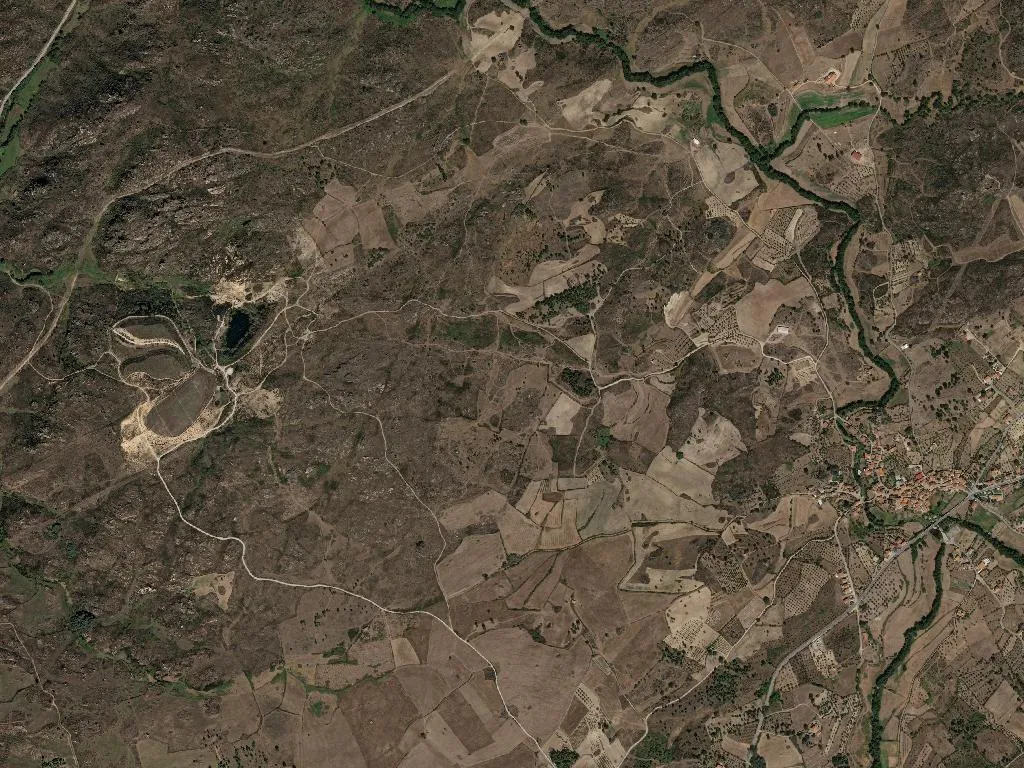
The tarmac narrows to a single track between slate walls, corkscrewing up the south-western flank of the Serra da Estrela. As the road climbs, streams slip beneath stone bridges, their voices low before they join the Mondego far below. Suddenly the village appears—forty-odd schist houses and a white-washed church pressed into a fold of chestnut and broom, 446 m above sea level yet still looking up at the ridge. Air smells of wet earth and lanolin: 202 people, several hundred sheep, and a rhythm set by bells rather than clocks.
Three geographies, one parish
Vila Cortês da Serra sits at the intersection of three designations that sound like bureaucratic footnotes but dictate daily life. It lies inside the Serra da Estrela Natural Park, within the UNESCO-listed Estrela Geopark, and on the northern edge of the Dão wine region. The same slope can carry heather and grazing rights, a geological trail marker, and a row of north-facing vines that give brisk white wines. Walk uphill and the granite changes underfoot: polished cushions of rock, striated by Quaternary ice, serve as outdoor pews for spring orchids. Griffons turn overhead, riding thermals that smell of wild rosemary.
Milk, meat and the mountain
Sheep outnumber people eight to one. Morning milk becomes Serra da Estrela DOP cheese by afternoon—still wobbly, spoonable, tasting of thistle rennet and butter. Locals eat it with rye broa and honey from chestnut blossom; the same milk reappears at breakfast as cloud-white requeijão. Lambs never see the lowlands: Serra da Estrela DOP lamb is slow-cooked in red Dão wine (chanfana) or simply roasted with Beira Alta olive oil. Goats qualified for IGP status supply Sunday roasts at the single restaurant in the village, paired with whichever grower’s wine had the best vintage.
Silent calendar, loud landscape
There are no festas, no procession with a silver-clad saint, no fireworks echoing round the valley. Instead, presence is measured in kilometres walked: transhumance trails that climb to summer pastures, the clang of milking pails at 06:00, the sudden hush when an Iberian lynx (reintroduced further east) is rumoured to have passed through the chestnuts. Even the wildcat and the polecat leave scat as calling cards rather than appear. The village’s only soundtrack is seasonal—cowbells in May, chestnut husks crackling underfoot in October, wind thrumming telephone wires in January.
Where to stay and eat
Three granite cottages have been restored as self-catering units; Casa do Lavrador, the oldest, books up months ahead—there is no reception, only a key safe and a note telling you where the woodpile is. Meals are served at O Casarão, open Friday to Sunday, no menu. Ask what is ready: usually chanfana or roast kid, both accompanied by bolinhos de batata and a jug of Dão tinto. If the kitchen has finished you will be directed to Gouveia, 20 minutes down the valley, where pastelarias open at dawn and an architect-renovated museum celebrates local modernist painter Abel Manta.