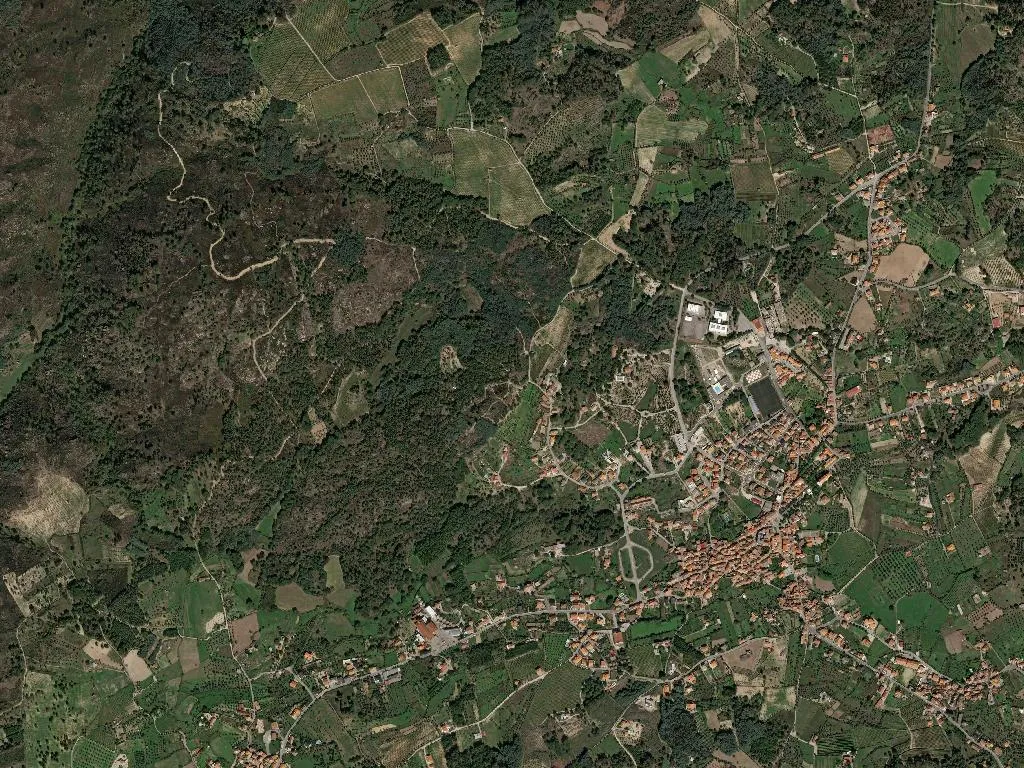
Full article about Vila Nova de Tazem: Woodsmoke, Cheese & Granite Silence
Taste Serra da Estrela DOP born in 462 m-high granite folds where only 1,469 souls remain.
Hide article Read full article
The scent of woodsmoke and granite
The first thing that strikes you is the smell—dry oak and chestnut drifting from chimneys before the sun has mustered the strength to lift the frost. Vila Nova de Tazem wakes slowly, at the pace of people who have measured their lives against the weight of granite underfoot and the hush of water slipping down the northern slopes of the Serra da Estrela. At 462 m above sea-level the Mondego valley opens like a bowl, its rim of schist walls and terraced plots holding the village fast against winter’s audits.
This is border-country cuisine: mountain pasture to the north, riverine farmland to the south. Roughly 1,600 hectares support the ewes whose raw milk becomes Serra da Estrela DOP cheese, and the lambs that will be certified Borrego Serra da Estrela DOP. In the handful of smallholdings left, requeijão—a spreadable, faintly sharp curd cheese—is still scooped into wicker moulds by hand, a ledger of skill handed down faster than the village can replace its young; only 154 residents are under thirty among 1,469 inhabitants.
What the table remembers
Food here is not rustic theatre; it is bookkeeping turned into dinner. Beira kid goat, IGP-protected, is lowered into a wood-fired oven until the meat sags at the nudge of a fork, its juices thickened with garlic and rendered pork fat. Emerald-gold olive oil from Beira Interior DOP splashes into winter soups heavy with couve galega, the region’s kale. In cellars scented with granite and cobweb, Dão reds slumber upright in dusty bottles; open one and it asks only for a wedge of cured queijo and the slow unspooling of conversation.
With barely ninety people per square kilometre, silence is an agricultural product. Kitchen gardens still grow potatoes for the year; dirt tracks taper into springs cold enough to numb a water bottle. The parish church, rebuilt after the 1755 earthquake and classed a building of public interest, anchors the skyline. Yet the real heritage is less pedigreed: dry-stone terraces gripping the incline, smokehouses where pork becomes chouriço and presunto, the low doorways that teach tall visitors to bow.
Between valley and summit
Vila Nova de Tazem sits on the south-western gateway to Serra da Estrela Natural Park and, since 2020, to the UNESCO-designated Estrela Geopark. Trails climb through gorse and oak until only broom and heather survive, the granite pavement beneath your boots a 300-million-year-old memoir of ice and weather. Accommodation is modest—four small guesthouses, a couple of self-catering cottages—where breakfast brings crusty bread, mountain honey and pumpkin jam the colour of late afternoon.
Close to a third of the population—475 people—are over sixty-five. They read the sky without apps, plant beans when the acacia flowers, and still gather at dusk by the church steps, raising a hand to passing cars in a gesture part greeting, part census. Darkness arrives early in December; windows light up one by one, yellow squares cut into the mountain’s indigo. Inside, a log fire stutters, cheese turns slowly on a slate shelf, and a glass of Dão waits beside the plate. Vila Nova de Tazem offers no spectacle—only the rarer currency of substance.