Full article about Vale de Estrela: Where Schist Walls Echo Wind at 900 m
Sheep tracks replace signposts, cheese ripens in stone cellars and 355 souls share Guarda’s rooftop.
Hide article Read full article
Wind at 900 metres
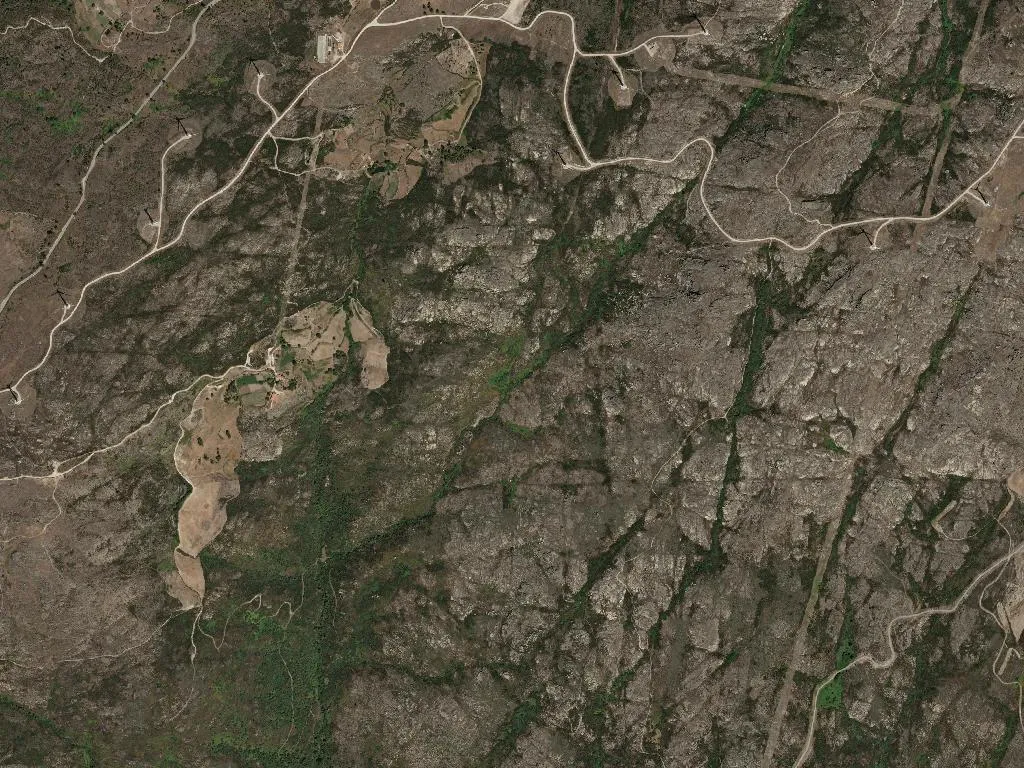
The wind arrives with a scent of pine and earth still locked in winter. Vale de Estrela is no place for flat-land lovers: 1,393 hectares of perpetual up-and-down where 355 residents know one another’s business and schist outcrops glare through the gorse like broken teeth.
Stone older than the parish itself
The hamlet sits inside the Naturtejo Geopark, a UNESCO ink-blot on the map, yet conversation here rarely turns to geology. Granite and schist simply are: in the wall you lean against, on the threshing floor where firewood seasons, in the boundary marker Mr Américo built when his neighbour’s goats strayed. Walk far enough and you can read millennia in a single glance—though you’ll also scuff your shoes if you forget to watch the ground.
The Caminho de Santiago—Portugal’s interior branch—crosses these heights, but waymarking is politely sporadic. Pilgrims usually wander into a sheep paddock once or twice before admitting that the correct route is the one that burns thighs all the way to the skyline.
What the mountain gives, the table takes
Start with the cheese. Locked in humid stone cellars, queijo da Serra da Estrela emerges with the texture of butter poised on the edge of liquid. It is made only from Bordaleira ewe milk—anything else is dismissed with a shrug. Requeijão, the silky fresh curd, is spooned warm onto dark rye bread that looks like rubble yet softens into something almost luxurious when dunked in broth.
Lamb and kid need nothing beyond salt, garlic and a wood-fired oven; the animals grazed above the tree line where clocks mean little. When locals have their own olive oil—pressed in neighbouring Beira Alta—it arrives with a peppery rasp that catches the throat and lifts the mountain soups eaten here with forks, not spoons.
Life with twenty-five neighbours per square kilometre
Census sheets reveal 114 residents over sixty-five and only twenty-seven under eighteen. Translation: the parish council meets in the same kitchen it always has, and the primary school closed its shutters a decade ago. Houses are spaced far enough apart that you can holler across the valley to check if someone is well without being thought rude.
Two granite cottages take paying guests: walls sixty centimetres thick, fireplaces that spit sparks, windows aimed squarely at the ridge. Pack layers; by mid-September night temperatures nibble bone and fog swallows the garden so fast the dog loses his bearings. After dark, silence owns the valley—just the crackle of logs and, if the sky keeps its side of the bargain, stars sharp enough to cut glass.