Full article about Granite dawn & Serra cheese in Manteigas (São Pedro)
Feel glacial cold, taste altitude-made cheese and lamb in Guarda’s mountain parish
Hide article Read full article
Granite that remembers the cold
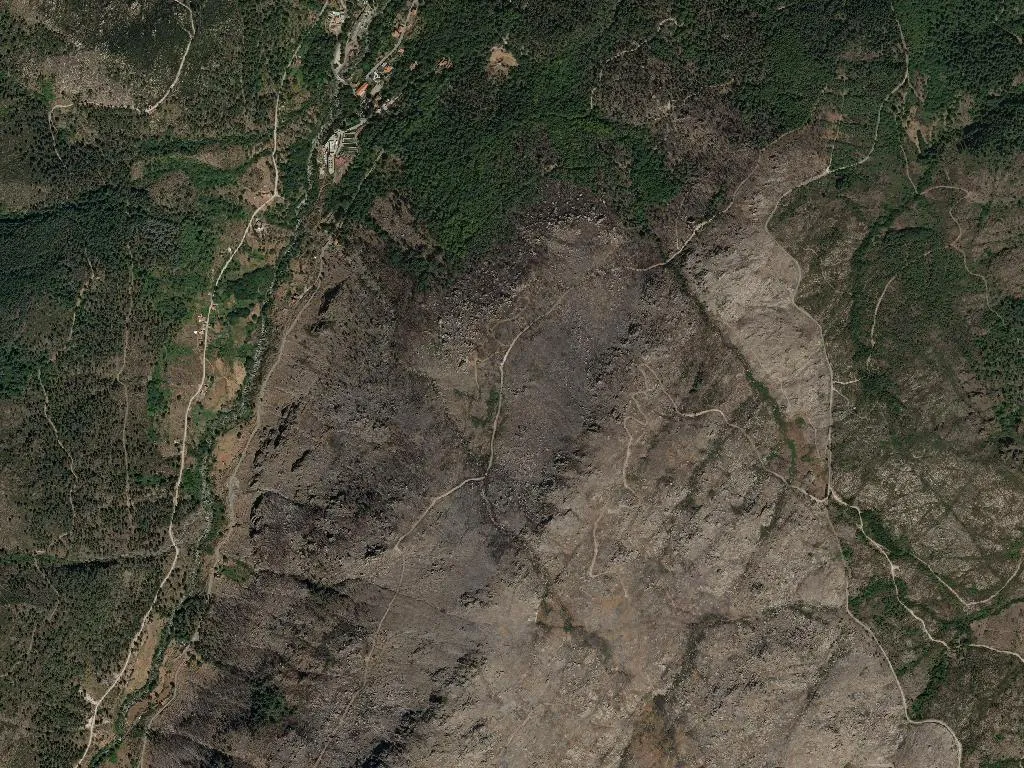
The stone walls of Manteigas (São Pedro) are slow to forgive. Even after dawn has glazed the ridge, the granite still radiates last night’s chill, a tactile reminder that you are 1 243 m above sea level and a universe away from Lisbon’s heat. Inhale: the air carries the mass of altitude itself, laced with damp pasture and lanolin from the sheep that graze the Zêzere’s headwaters. Somewhere downslope a Cão de Castro Laboreiro gives one authoritative bark, more statement than warning.
A mountain that feeds its own
Up here the scenery is not backdrop but infrastructure. For eight centuries transhumant shepherds have moved flocks between these summer heights and the lowland plains, and every step is written in cheese. In the stone huts called casarotas the curd of Serra da Estrela DOP is still coaxed into wicker moulds by fingers that can read 32 °C in muscle memory alone. The same milk becomes Requeijão da Serra, a spoonable cloud that collapses into whey within days—summer snow on brown bread.
The pasture itself is flavour. The lambs that qualify for Borrego Serra da Estrela DOP graze meadows scented with nabos-bravos and carqueija, a bitterness that sweetens the meat. Kids destined for cabrito assado are roasted over oak and bay, the skin blistering until it crackles like parchment. Where the valley bends south-east and the sun lingers long enough, micro-orchards produce Cova da Beira peaches and apples whose sugars balance the mountain’s austerity.
Geology you can touch
Manteigas (São Pedro) sits inside Portugal’s only UNESCO Global Geopark, and the timetable of the planet is roadside reading. Glacial polish shines on outcrops; U-shaped valleys open like cathedrals; erratic boulders the size of cottages seem left behind by absent-minded giants. Fifteen minutes on foot from the parish council, the Poço do Inferno waterfall dives 10 m into a cirque of black schist, the water so loud you feel it in your ribs.
Drive north to the Vale do Rossim reservoir and the narrative changes: a man-made lake cupped by wild shorelines where Scots pine lean away from the wind. Marked trails thread oak and laurel forest, breaking suddenly into meadows where morning frost turns every blade of grass into a prism.
Living the vertical
Fewer than 1 200 souls occupy 60 km² of slope, so silence is the default soundtrack—interrupted only by São Pedro’s single church bell or the low gear of a Land Rover climbing to a summer branda. Two-dozen self-catering houses—some 17th-century granite, some pared-back plywood—give hikers, cheese pilgrims and snow-seekers a place to regroup. When powder arrives, the Ski Parque’s two drag lifts and 700 m of pistas keep the village alive; in July the same slopes become launchpads for paragliders who ride thermals above the Zêzere glacier valley.
Altitude also flavours the glass. Vineyards planted at 600–800 m on schist and granite deliver Beira Interior reds with the tension of high diurnal swings—think Touriga Nacional that keeps its perfume while sharpening its bite. Drink them with a wedge of Serra cheese that has never seen a fridge and you understand why geography and flavour share a vocabulary.
The cold that clings
Dusk falls quickly. When the sun slips behind Torre, temperature plummets ten degrees in as many minutes, and oak smoke begins to ribbon from every chimney. The evening air turns into a weave of burning wood and roasting kid, while sheep file into byres and livestock dogs stretch across doorways like draught excluders. Lay your palm on a wall: the granite still stores the night you have not yet lived through, a cold memory that will follow you down the mountain road long after the valley lights have disappeared.