Full article about Vale de Amoreira: Juniper Air & Wolfram Echoes
Manteigas’ youngest parish breathes 825 m silence, tungsten scars, cardoon cheese
Hide article Read full article
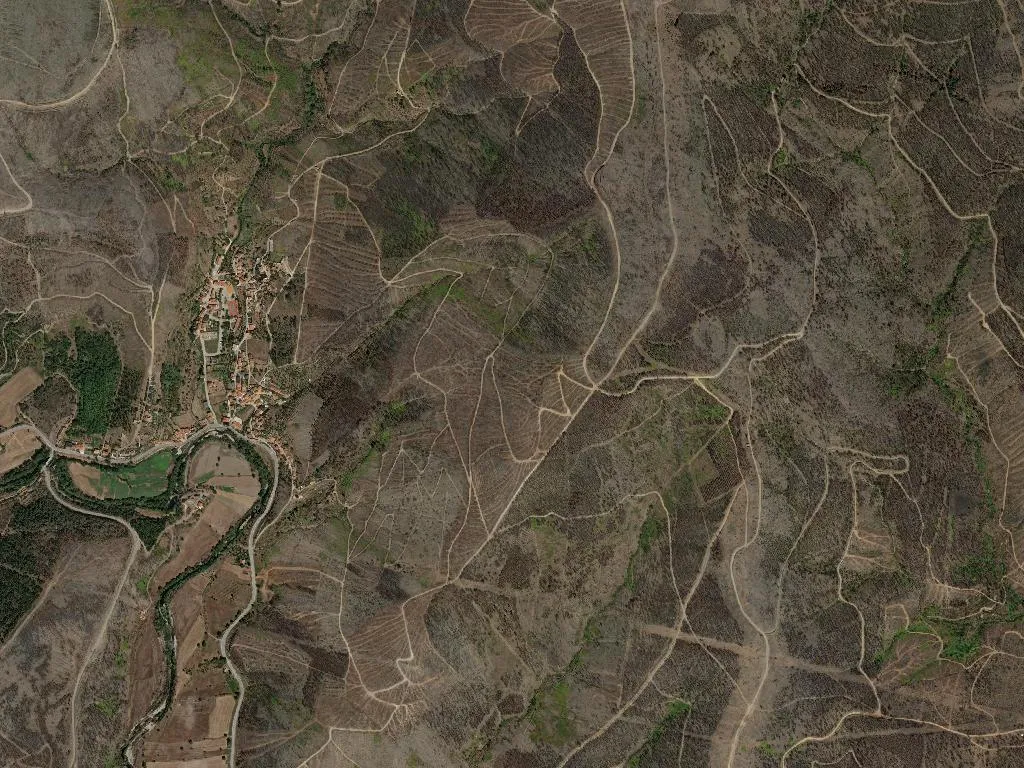
Juniper resin hangs in the air, sharp and clean, as the River Zêzere mutters between granite boulders wearing jackets of moss. The tarmac twists upward in hairpins; heather brushes the wing mirrors, still wet with melted night frost even where the sun is already pooling on southern slopes. At 825 m above sea level, Vale de Amoreira feels higher—because the atmosphere is thin with silence rather than oxygen. Population density is twelve souls per square kilometre; the horizon is occupied by black oaks, not humans.
The youngest parish on the mountain
Born 7 December 2002, Vale de Amoreira is both the newest and the smallest parish of Manteigas—2.08 km² prised from Santa Maria after 800 years of shared bureaucracy. The name remembers medieval mulberry groves that once fed silkworms for Lisbon’s looms. Listed in royal charters of 1188 and 1514, the hamlet was nonetheless overlooked every time Portugal redrew its map until the millennium turned. Of the 208 residents on the books, 116 draw pensions; only seven children sprint between the stone walls at dusk.
Sheep and tungsten
Transhumant shepherding and wartime mining have taken turns here. Between 1941 and 1943 the Allies clawed tungsten from the Ribeira da Laje adits—wolframite ore that hardened tank steel. Today the galleries are bricked up, colonised by ferns and shy genets. The economy has reverted to milk: Bordaleira ewes supply the raw material for Serra da Estrela DOP cheese, curdled with cardoon thistle, and for the buttery requeijão that arrives at breakfast tables still warm. Lamb protected under the same PDO and its kid-goat cousin (IGP Beira) end up in winter stews designed for the granite-clad reds of Beira Interior, where the Rufete grape holds court.
Inside the geopark
Vale de Amoreira lies wholly within the Serra da Estrela Natural Park since 1976 and, since 2020, inside UNESCO’s Estrela Geopark. Quaternary glaciers planed this terrain, leaving textbook U-valleys, cirques and polish-rock striations. The River Amoreira, a Zêzere tributary, feeds stone irrigation channels that once powered Manteigas’ textile mills and now keep trout farms supplied with oxygenated snowmelt. Forest covers more than 70 % of the parish—juniper and gorse on the plateaux, deciduous galleries lower down. Wildcats leave pawprints on the PR1 footpath that departs the village, climbs through heath and ends at the Poço do Inferno, a ten-metre waterfall that freezes into chandeliers most winters.
Between water and stone
Three kilometres away, Loriga’s interpretation centre unpacks the glacial story and the ancient transhumance routes. In Manteigas itself, the Bread Museum occupies the former municipal bakery where rye loaves were once fired to feed shepherd garrisons. At Quinta do Zêzere you can taste cheese minutes after it has been unmoulded, whey still dripping from the pine-slatted form. The Oficina da Serra sells heavy-duty burel capes, the wool dyed with walnut hulls and golden-rod. When snowmelt swells the river in May, local outfitters run gentle rafting trips—duck-egg water carrying flakes of oak leaf and sky.
Evening is announced by the chapel bell: three flat strokes that lie on the air long enough to be measured, then absorbed by granite and forest. No one hurries to answer; in Vale de Amoreira even the echo has time to spare.