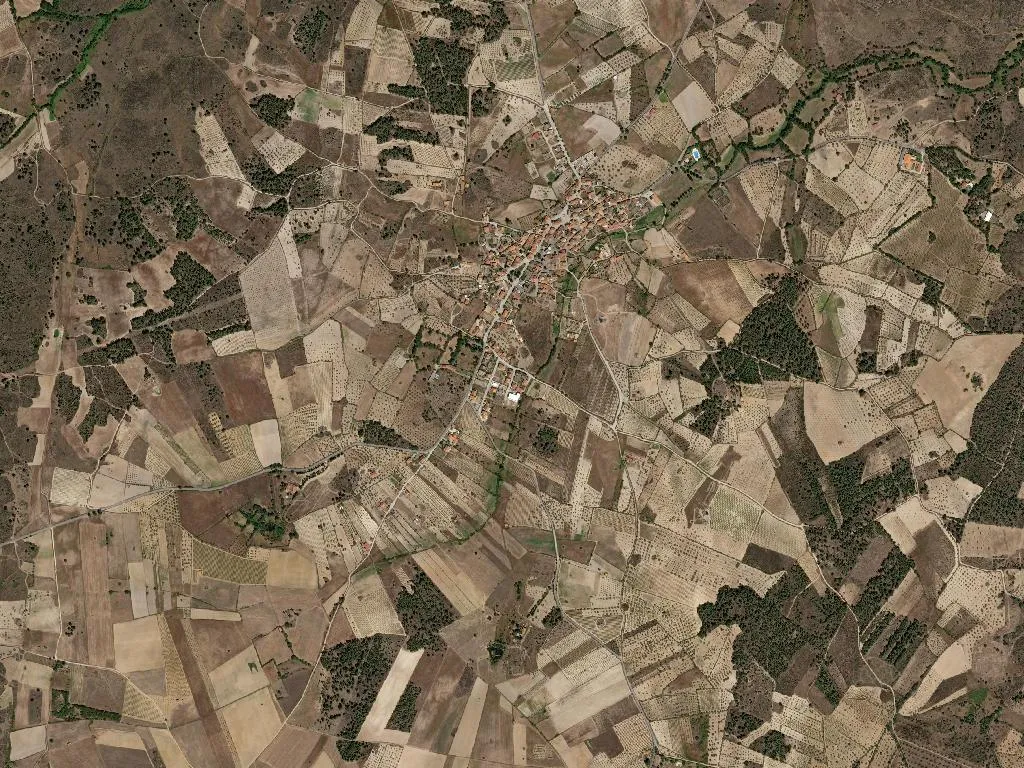
Full article about Coriscada: Silence at 496 m
Walk Roman mosaics, sip fountain water, taste thyme-fed lamb in a 177-soul Guarda village.
Hide article Read full article
The sun-bleached earth of the village square crackles beneath your boots. At 496 m above sea-level Coriscada feels wind-tunnel high; the breeze carries the scent of dry topsoil and almond resin, and the only reply is a wooden gate groaning shut of its own accord. Someone once counted 177 souls here—just nine of them under eighteen—and the arithmetic is audible: the silence is almost geological.
Lightning-struck earth, Roman footprints
Local etymologists argue whether coriscada means “lightning strike” or “scorched ground,” yet the real archive lies under your feet. A ten-minute walk north drops you into the Vale do Mouro, where low gorse scratches the mosaic pavements of a 1st-century Roman villa. Geometric dolphins, now faceless, still surface between thorns; broken roof-tiles mingle with 4th-century bronze coins that a winter plough spits out like loose change. The baths, once fed by a stone aqueduct, are open to the sky—an unstaffed, uninterpreted reminder that even empire had to schedule downtime.
The pilgrim thread
The Via Lusitana, the least famous arm of the Camino, cuts straight through the settlement: no scallop waymarks, no yellow arrows, only the occasional granite pillar incised with a medieval cross. Walkers emerge from olive terraces into wheat stubble, exchange nods with tractor drivers who look surprised to have an audience, and vanish again towards the Spanish border 90 km away. Their footprints erase themselves in the chalky dust; the village registers them only by the level in the public fountain dropping a centimetre.
Pantry of the high plateau
Coriscada does not “do” lunch. Instead, the flavours live in larders. Lamb labelled Terrincho DOP grazes on wild thyme and lavender; the same herbs stud the interior of the accompanying cheese, pressed into hoops the size of small wheels and aged on slate shelves. Golden Beira Alta olive oil, pressed within 24 hours at a co-operative press in Mêda, pools over wood-oven potatoes. Almonds from the neighbouring Douro valley are folded into brittle biscuits that emerge each December for the Feast of the Immaculate Conception, carried from house to house in dented biscuit tins. If you are invited in—accept; the granite hearth will still be warm from roasting kid, and the host will cite the exact hour the fire was lit.
Afterglow
Stay until the sun skims the horizon and the stubble fields glow like embers. The Roman tesserae catch the light first, then the dry-stone walls, finally the almond trunks that stand silver against the orange sky. For a moment the earth itself seems to replay the ancient lightning flash that gave the place its name. When darkness falls you will hear the gate slam again—Coriscada closing its own chapter until tomorrow’s solitary pilgrim re-opens the book.