Full article about Poço do Canto: where the plateau exhales
Stone benches, rosemary wind and a bell that forgets time—Poço do Canto drowses above the Côa.
Hide article Read full article
The Weight of Silence
Here, silence settles on the sternum like a stone. First comes the absence—no engines, no raised voices, no one checking a watch—then the details rush in: the unoiled shriek of Dona Aurora’s gate, the updraft from the Côa carrying rosemary and a whiff of scorched earth, the church bell that strikes seven at seven-thirty and leaves the extra half-peal hanging, as if the tower has lost count and decided not to care.
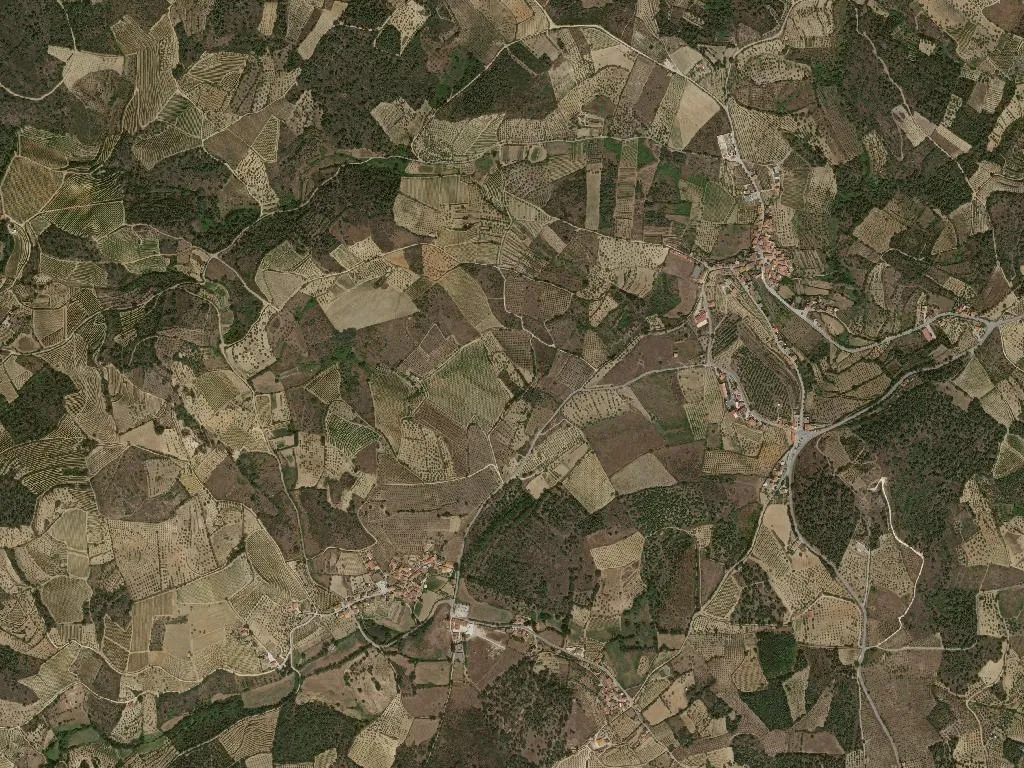
Poço do Canto unfurls at 665 m, the moment the plateau remembers to breathe. Three-hundred-thirty residents—fewer since the latest exodus to Lyon, more now that pensions stretch further back home—occupy a scatter of hamlets time has taught to speak more softly, move more slowly, belong more completely to themselves.
Where Stone Keeps the Minutes
The only listed building—a chapel beside the primary school, technically a Monumento de Interesse Público that no one ever calls that—still smells of candle stubs and tired roses on All Souls’. Stone here is not scenery; it is the bench by the door where José’s father once stitched boots every Sunday, the sun-warmed wall the lads lean against for a last cigarette before curfew. Walk the single lane and you read, in the scales of peeling whitewash, who stayed to raise children and who caught the 4 a.m. coach to Paris.
The Path that Drops In
The Interior Portuguese route of the Camino de Santiago crosses the municipal road high above the village, yet pilgrims still zig-zag downhill because someone whispered that the bakery fires its wood oven at dawn. They arrive—three, perhaps four on a fair day—with boots calcified in dust and leave clutching foil parcels of presunto and requeijão, apologising for their rusty Portuguese. Rosa keeps the postcards they send from Santiago compostela: I still dream of your bread.
A Beira Alta Table
No one replicates Grandmother Maria’s Terrincho DOP—blame the water, the wild pasture, the patience no one owns any more. Yet you can still buy it at Sr Alfredo’s grocery, sliced thick as a doorstep, tasting of stable and sun-dried hay. The lamb grazed above the 600 m line on pomegranate and gorse; you will recognise both in the meat. Almonds come from the three trees that outlived the village orchard; they are toasted on the wood stove, ground in Dona Alice’s pre-war grinder that starts after two strategic kicks. The wine is from the year António emigrated and left the vineyard to his son—sip it slowly; it burns throat and eyes in that order.
The Rhythm that Remains
Seventeen children learn to read in the same classroom their fathers occupied; their teacher is the niece of the woman who chalked the alphabet on the same blackboard. The two holiday cottages belong to the doctor’s daughter and the stonemason’s grandson—opened because “people have to eat” and because the roofs were sliding into the street. The café has no Wi-Fi, but Zé Manel will explain how the vintage was trodden before the machines arrived: “Easier now, but where’s the story?” At five, the low sun slants through the kitchen window and sets the dust dancing; the scent of damp firewood mingles with roasted coffee; silence is not emptiness but presence—the thud of a ball against a wall, a gate the wind refuses to close, a neighbour calling a white cat named “Preta”.