Full article about Ranhados: where granite walls remember yesterday’s frost
At 813 m, Mêda’s forgotten village keeps its castle, sheep-cheese and 234 stoic souls
Hide article Read full article
The granite holds last night’s chill like a classified file. Long after sunrise, the walls are still icy – you discover this at the exact moment you steady yourself against the door of the old bakery (closed since 1997). Ranhados sits at 813 m, but the road corkscrews so violently it feels alpine. Up here the sky isn’t scenery; it’s simply what hits your retinas when you sneeze. The light, sharpened by altitude, makes your eyes ache the way they do when you leave a matinée in midsummer.
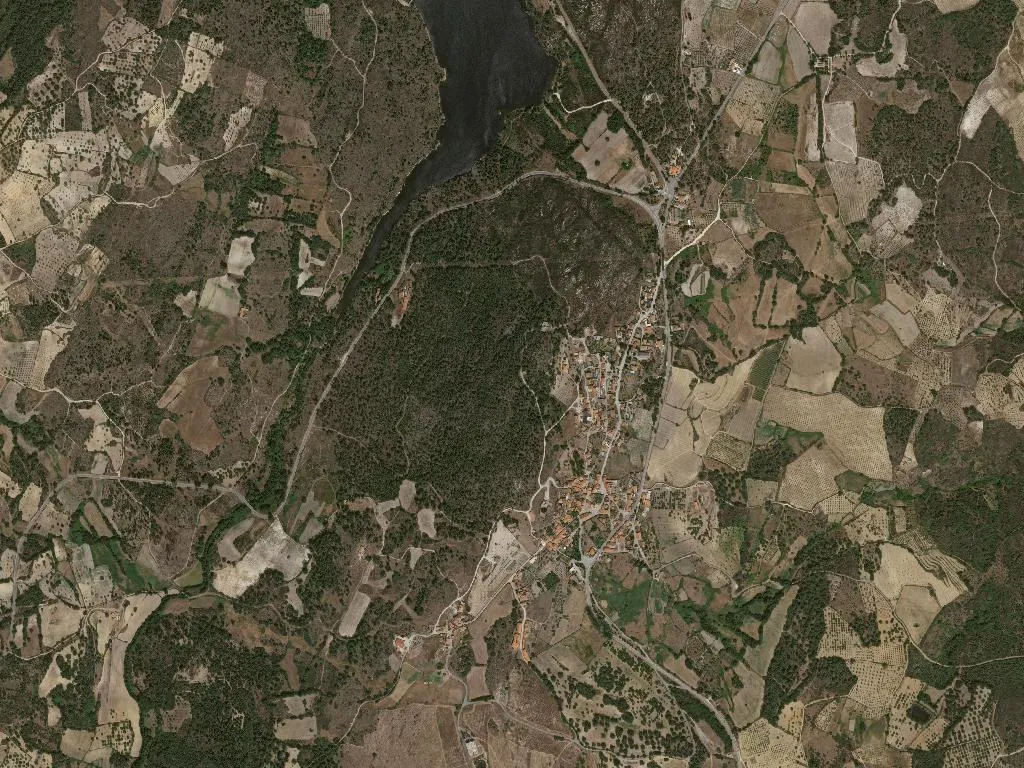
Population: 234, density nine per square kilometre, which translates as enough personal space to stretch both arms and spin – a daily necessity when the north wind arrives. Of those 234, 101 are over 65. Seventeen are children, the size of a single classroom. Everyone else stayed because someone had to, or returned because Portuguese wages couldn’t bank-roll loneliness.
Stone that outlives
Two monuments are listed. One, a National Monument, means the state remembers it exists every decade or so. The castle’s stones were quarried from the same ridge they watch over; no ticket desk, no turnstile, no fridge magnet. There is, however, a mongrel – occasionally two – and Adrião, 82, who will recount every siege the stone forgets if you let him buy the next bica.
Territory on a plate
Terrincho DOP cheese tastes of the exact meadows the sheep are grazing as you drive past: bruised grass, slow afternoons. The roast lamb isn’t reinvented; it’s what has always been served when there’s something to celebrate. The kid goat once robbed almond trees that later explode into improbable blossom. The olive oil is technically from Trás-os-Montes, yet locals call it “ours” – thirty kilometres counts as next door when you share a mountain range.
Pilgrims and porch silence
The Caminho Português Interior slips through the village, though not the carbon-fibre-pole version. These walkers started in Alvaiázere with socks that smell of coach stations and a faith still undecided between God and self-discovery. A crooked yellow arrow on a wall graffitied “Manuela back soon” points the way. They refill bottles at the granite trough, ask if there’s coffee. There is – next door – but it’s shut on Monday. Not Monday? Still shut; life’s like that.
When the sun drops behind Marofa, Ranhados drains to monochrome. Lights switch on one by one – not by magic, but because the evening news has started. The church bell rings; nobody moves. It rings again, yawning into the valley. Then silence thick enough to let you hear Zé Manel’s dog barking in Marialva – ten kilometres as the crow flies, a lifetime if you walk it.