Full article about Vale Flor’s granite plateau trades silence for almond blosso
Vale Flor, Carvalhal e Pai Penela: walk the Interior Way, taste Trás-os-Montes DOP almonds, Terrincho cheese & high-altitude honey
Hide article Read full article
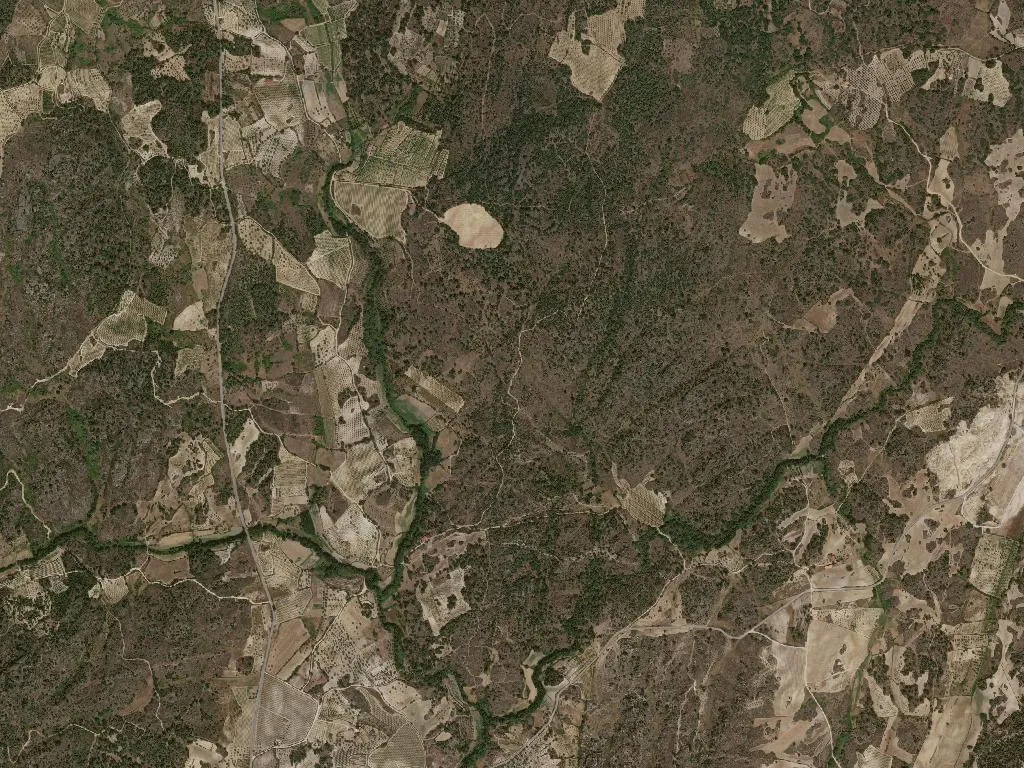
Granite ribs push through the thin soil at 570 m, snagging the low branches of almond trees that have grown contorted by decades of wind. Nothing moves except the plateau itself – a slow Atlantic weather-system dragging its coat tails across north-eastern Portugal. In the civil parish collectively known as Vale Flor, Carvalhal e Pai Penela, 255 souls occupy 34 km²: roughly one person every thirteen football pitches. The horizon feels monetised; silence is the local currency.
Three villages, three pedigrees
The 2013 merger yoked three medieval hamlets whose separate stories refuse to be flattened by administration. Vale Flor, recorded by 1250, still flies the flag of St Peter. Carvalhal’s heraldic shield carries the oak sprig that named it and hosts the September feast of Nossa Senhora dos Prazeres. Most itinerant is Pai Penela, christened after the 12th-century knight Paio Penela and passed, like an unwilling dowry, between the municipalities of Trancoso, Marialva and Vila Nova de Foz Côa before settling in Mêda in 1872.
What the land signs off
The kitchen here keeps bankers’ hours: it opens only when the land is ready. Almonds – the Douro DOP ones – drop into wicker baskets in late August. Olives follow, trundling by tractor to the stone lagar for cold pressing, yielding Beira Alta DOP oil the colour of pale cider. Terrincho DOP ewe’s cheese ages six weeks on pine boards, developing a tangerine rind and a whiff of burnt butter, while lambs of the same breed and the kid goats certified Beira IGP graze the terraced meadows that tilt toward the Coa valley. Beekeepers station their hives among rosemary and heather, producing a high-altitude honey that, despite its “Minho” label, belongs to these granite uplands as much as gorse belongs to moorland.
Stone footnotes to Compostela
The Interior Way of St James – the Via Lusitana – bisects the parish on its back-door route from Lisbon to Santiago. Pilgrims who choose it over the coastal path come for the debit-card economy of grace: no souvenir stalls, just three village houses licensed to give bed and breakfast, a stamp for the credencial, and a silence thick enough to butter bread with. They cross schist pavements laid by villagers whose grandfathers laid them before, passing wayside granaries perched on staves like stone birds.
Demography is brutal: 120 elderly residents, only seven under eighteen. Yet February still whitens the almond canopy, granite walls still shoulder the fog, and the wind still tallies each footstep across the empty churchyard. Travellers leave with weather in their lungs and a sense of calibrated distance – the measurable gap between a place that endures and one that merely persists.