Full article about Alto do Palurdo: Portugal’s Whispering Plateau
Granite hush, 629-metre views and oak-scented silence above the Côa valley
Hide article Read full article
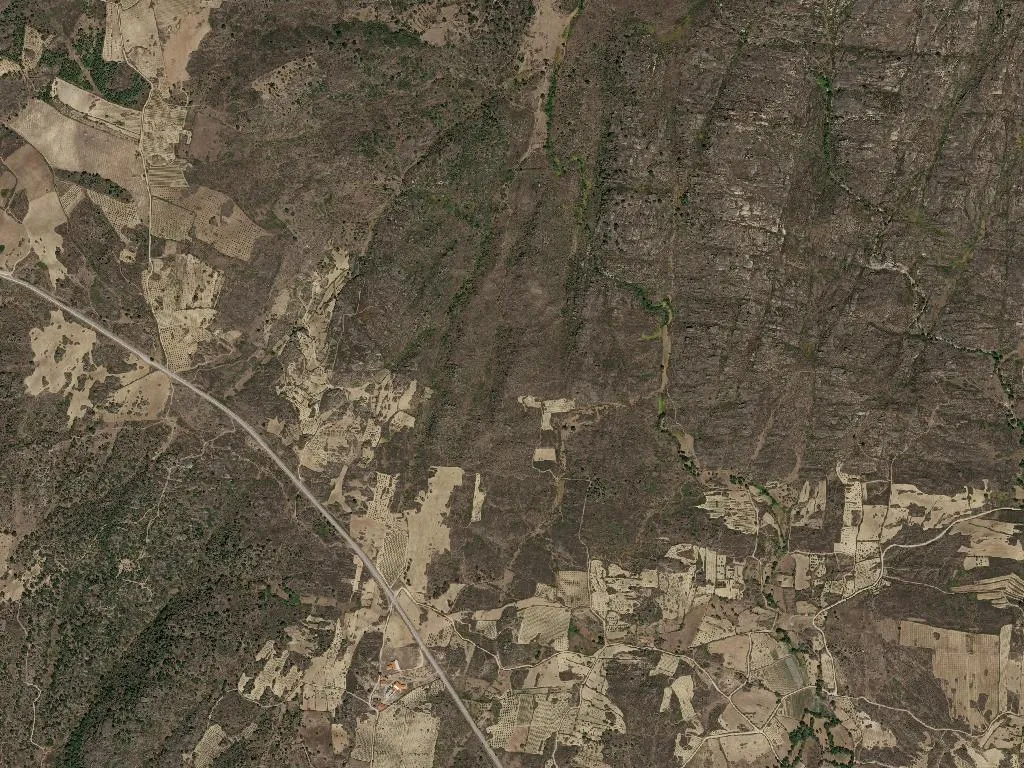
The silence arrives first. Not the empty quiet of abandoned places, but a weighted hush stitched from the dry scrape of oak leaves and the low moan of wind across 629 m of granite. Stand on the Palurdo plateau at dawn and the world feels suddenly larger: Guarda’s Côa valley folds away to the north, the Serra da Estrela floats like a bruise to the south-west, and you share every square kilometre with barely five other souls.
Anatomy of absence
Pinhel’s least-populous civil parish occupies 48 km² of thin soils and rose-grey outcrop. Its 192 electors include 87 pensioners and six children; the rest are working-age adults who commute to the IP2 or the olive co-op in Figueira de Castelo Rodrigo. Farmsteads sit so far apart that smoke from breakfast chimneys rises in solitary white columns, each one a semaphore of occupation. Between them, the land is parcelled into micro-plots of almond, rye and winter wheat, stitched together by dry-stone walls whose lichen has been calibrated by centuries of Atlantic weather.
Light behaves differently up here. Winter sun arrives knife-clean, throwing cobalt shadows across schist; in August the air vibrates, bouncing heat back off the stone so that even at 9 p.m. the walls still radiate warmth. Meteorologists call it a continental plateau regime; shepherds simply button their smocks and keep walking.
Taste of altitude
The kid that roasts on Sunday in the wood-fired oven at Casa da Laje grazed the same broom-covered slopes you hiked that morning. Protected under the EU’s PGI since 1996, Cabrito da Beira develops its faintly resinous flavour from browsing genista and wild thyme; the meat tightens on the bone, then relaxes into fibres that taste faintly of pine smoke and rosemary. Locals anoint it with olive oil pressed from centenarian Galega trees—DOP Beira Alta since 1996—whose low-acidity liquor carries green-pepper and sorrel notes sharp enough to cut the fat. Drink, if you’re invited, a table wine made from high-altitude Rufete and Marufo grapes: the diurnal swing gives the reds a schist-driven spine that belies their modest 12.5% abv.
There is, officially, one place to stay: a granite longhouse reinvented as a two-suite guest annex, its Wi-Fi deliberately left patchy. The owners leave sour-cherry jam and a bottle of água-pé (the light, must-fermented country “foot-water”) on the oak table, then disappear.
Lone sentinel
The 18th-century parish church of São João Baptista squats above the single asphalt road, its bell cast in 1743 and still rung by the same family on a rota that no one has thought to update. Inside, the single-nave interior is washed in chalk-white lime, the only colour coming from 19th-century tiles depicting the beheading of the saint—an oddly graphic flourish in a place so spare. Outside, waist-high tomb-slabs catalogue four centuries of da Câmara and Sousa bloodlines; lichen has erased dates but not the surname repetitions that map a micro-population keeping its own genetic counsel.
Evening brings the plateau’s daily vanishing act: the sun slips behind the Marofa ridge, temperature plummets eight degrees in twenty minutes, and the wind drops to nothing. Walk back across the threshing floor and the loudest sound is your own pulse—proof, if you needed it, that Alto do Palurdo measures time in heartbeats, not in hours.