Full article about Lamegal’s Silent Plateau Aged in Stone & Olive Oil
Echoes of 209 souls, thyme wind and schist lanes above Spain’s granite frontier
Hide article Read full article
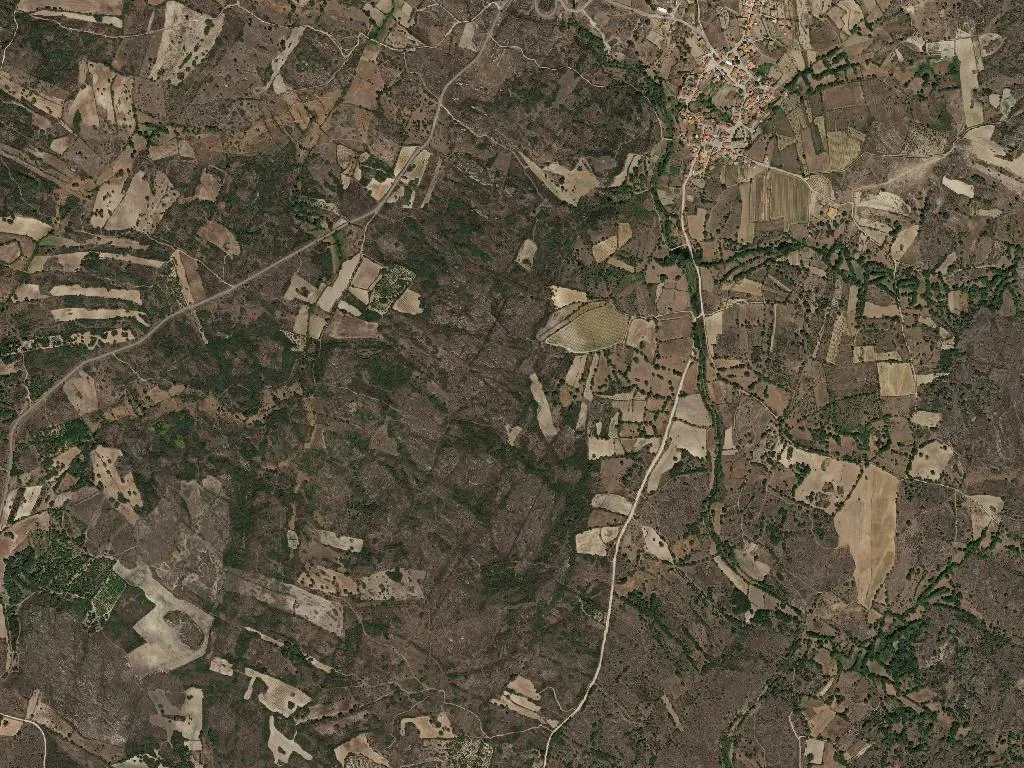
The silence in Lamegal has heft. It settles between the schist walls like a held breath, thick enough to taste. At 707 m above sea-level, on the lip of Spain-facing granite country, the parish counts 209 souls – 113 of them already past retirement age – and spreads across 2,196 hectares of olive groves, vineyards and thyme-scented scrub. Wind combs the plateau without haste, carrying the resinous snap of summer earth or the metallic chill that leaks from stone in January.
Lanes barely two metres wide thread past houses the colour of weathered parchment. Sun-blistered shutters hang ajar; doorsteps are scooped out by generations of leather-soled slippers. Clay roof-tiles store the afternoon’s heat and release it slowly, like a sigh, after dusk. The elderly residents still practise the old choreography: stacking firewood into perfect cairns, edging cabbage beds against the gable wall, pausing for slow conversation when the day cools.
The weight of emptiness
Population density: 9.4 people per km². What that buys you is acreage – for hearing your own pulse, for walking an hour without meeting another footprint, for sunlight that lies uninterrupted on your forearms. The land rolls in modest swells, studded with olive trees older than the republic and with low-head-trained vines that give Beira Interior its nervy reds. Evening light arrives sideways, gilding the schist and turning every boulder into a relief map of itself.
The only officially listed monument – a sixteenth-century granite cross classified in 1982 – feels almost incidental. The real heritage is the patchwork: cobbled footpaths that stitch vegetable plots together, stone-walled water troughs still fed by mountain springs, property boundaries marked out but never fenced off.
Tastes that grow here
You don’t “find” lunch in Lamegal; someone’s grandmother produces it. Beira Alta DOP olive oil is pressed from galega and cobrançosa fruit hauled to the village mill between October and December: grass-green, throat-catching, nothing like the supermarket glide. Kids destined to become Cabrito da Beira IGP graze the surrounding meadows, their milk-fed meat roasted until the skin fractures like sugar glass.
There are no billboards, just kitchens where smoke-cured chouriço and pale mountain ham hang from ceiling hooks, seasoned weeks earlier with garlic and sweet paprika. Bread emerges from wood-fired ovens with a crust that splinters satisfyingly under tooth.
Nightfall arithmetic
When the sun slips behind the Serra da Estrela, temperature falls one degree every five minutes. Windows glow amber against basalt; the silence regains its mass. All that remains is the distant clack of a gate latch, water murmuring through a stone spout, the slow creak of a donkey cart on uneven cobbles. Somewhere before total darkness you realise the world’s hurry hasn’t arrived here yet – and possibly never will.