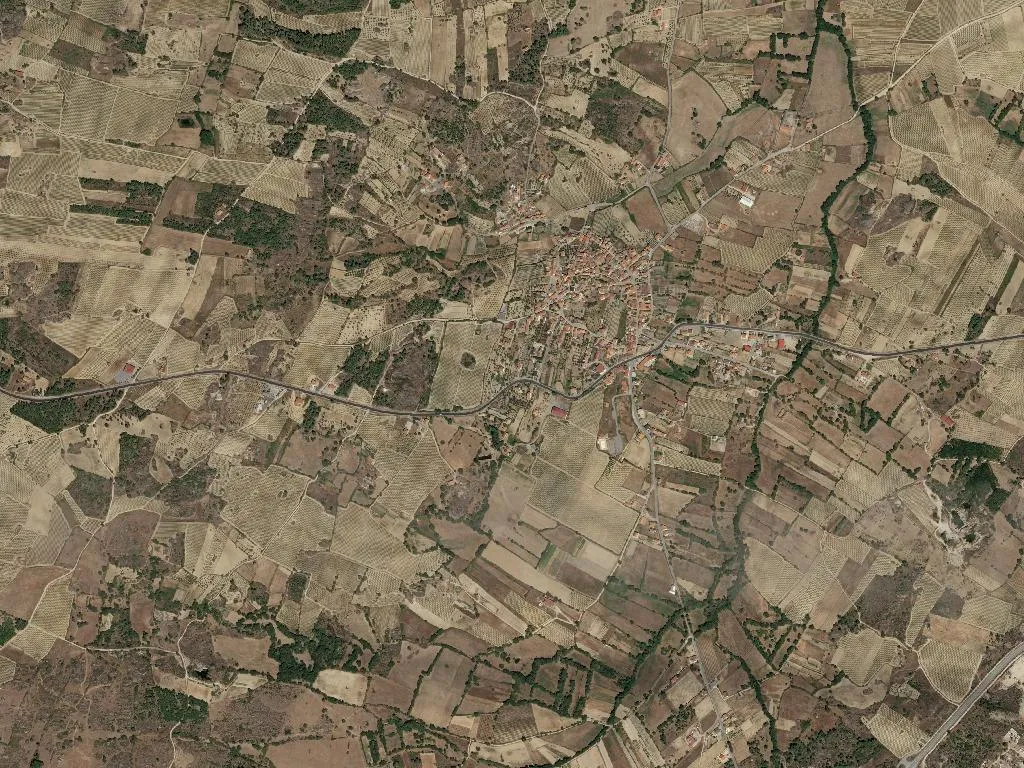
Full article about Souro Pires: Quartzite Dawn Above the Côa Valley
637 m above the Côa, granite cottages glow as mist lifts off olive groves and cork oaks.
Hide article Read full article
Morning light on quartz
A rectangle of sun slips through the church door and lands on the abraded granite of the porch. Below, the Côa valley is still tucked under a gauze of mist while the single bell in the tower tolls eight unhurried times. Souro Pires wakes slowly, at an altitude where the air has already decided the day will not run away from you. At 637 m the quartzite plateau inhales before it begins.
The parish unrolls across 1,567 hectares of montado and olive groves, a landscape where schist pushes through as dry-stone walls and cork oaks lean north-west, wind-trained into living bonsai. The name—"Souro" from the stone once quarried here, "Pires" from some forgotten medieval landowner—carries the memory of border country organised around smallholdings and a mother church. Today 473 people are on the roll, many of them retirees who have returned from Grenoble or Geneva to repopulate granite-and-schist houses, prising shut the doors that had yawned empty since the 1970s.
Stone, carving and baroque light
The parish church stands at the village centre: one vessel, a pediment without fuss, rebuilt in the eighteenth century on medieval bones. Inside, gilded carving in the chancel catches candle-light, and a thumbnail altarpiece keeps a period painting that few strangers pause to study. Down the lane in Penaverde, the old casais keep their original metrics—thick schist walls, doorways you duck through, timber boards cracked into zebra stripes. In the disused olive mill the granite millstone lies motionless, a silent witness to decades of paste becoming oil.
New olive oil and lamb in the oven
The kitchen follows the metronome of Beira Interior: migas with pork ribs, lamb stew, kid roasted in a wood oven—IGP Beira Kid, meat so tender it unthreads at the nudge of a fork. Home-made charcuterie dries in the fumier: meat chouriço and alheira scented with garlic and sweet paprika, dark morcela fried at breakfast with slices of skillet bread. DOP Beira Interior olive oil, sub-region Beira Alta, is the parish’s liquid bullion: viridian in November when you taste it still warm at Pinhel’s cooperative press, catching the throat with a peppery cough. For pudding, walnut cake collapses on the tongue, and burnt-top rice pudding carries a sheet of caramel that shatters like thin ice—Maria do Carmo makes the best, baking until the sugar blisters and blackens to coal.
Schist trails and faultless sky
The Olive-Oil Route traces six kilometres between the village and a centuries-old grove, a dirt track where the only soundtrack is a skylark or the groan of José’s trailer when he tractors up to collect the fruit. The Serra de Pinhel sketches a northern horizon; shepherds still use its paths at dawn, crooks tapping stone like metronomes. There are no special-protection zones, yet griffon vultures plane above the water-meadows, and in spring wild orchids—sawfly and mirror—spot the verges purple and yellow. Rosa still knows where the first ones appear, near the cistern where the boys smoked inaugural cigarettes. On summer nights the local association hosts star-watches: zero light pollution, the Milky Way slashed cleanly overhead. António brings the telescope he bought in Zurich, children gape at Jupiter’s moons while parents sip medronho brandy that Sr Alfredo distils in the abandoned press-house.
Border Portuguese
In the café-cum-function-room you can still overhear "border Portuguese"—Mirandese lexical fossils you will find nowhere else. Manuel says chapeleiro for hat, Olinda calls the stone kitchen floor lajedo. On the first Sunday of October an outdoor mass for Our Lady of the Rosary pulls expats back for a shared lunch: chequered cloths on stone tables, red wine served in clay jugs. Women arrive with iron pots of stew, men rake chestnuts over coals, Lisbon cousins tell city stories that sound like inventions to village grandchildren.
The afternoon wind brings the smell of burnt firewood, and footsteps echoing off cobbles give the walker back the sound of his own stride. What lingers here is not the haste of arrival—it is the warm weight of stone under your palm, the low sun across the valley, the taste of new oil still on your tongue.