Full article about Terras de Massueime: Where Schist Breathes & Silence Weighs
Olive-oil scent, kid goat smoke & 205 named souls 591 m above Guarda.
Hide article Read full article
The late-afternoon sun slants across Rua da Igreja, heating the dark schist until the stone exhales a warm, mineral scent that drifts into the thin ribbon of smoke curling from Café Central. In Terras de Massueime, silence has body: 591 m above sea-level, it weighs on the 205 souls scattered between hamlets called Pero Soares and Mata da Torre.
Demographics you can greet by name: eight children in the single primary classroom that doubles as the village hall, 103 pensioners who still prop up the bar at Zé’s without checking the time. Mid-day is announced by the squeal of the communal granary door; dusk, by the black cat picking its way across the uneven slabs. Every nod is deliberate—here you recognise the face before you recall the surname.
Olive oil, kid goat and the persistence of taste
The kitchen larder is the surrounding hillside. António’s Beira Alta DOP olive oil—pressed from 300 Cordilheira trees—spreads like liquid grass over Pinhel rye, leaving the faint, peppery catch that only high-altitude fruit gives. On 20 August, the feast of Nossa Senhora da Assunção, Joaquim Crespo lowers a whole Beira IGP kid into the wood-fired bread oven; four hours later the meat flakes into rosemary-scented fat while wild herbs smoulder on the schist walls. This is not rustic theatre; it is Tuesday lunch that happens once a year.
Behind every house a walled plot survives: Rosa’s tall-stemmed cabbages, Manuel’s onions braided from the rafters, the metallic scent of newly turned soil after rain on dry slate.
Geography of having room
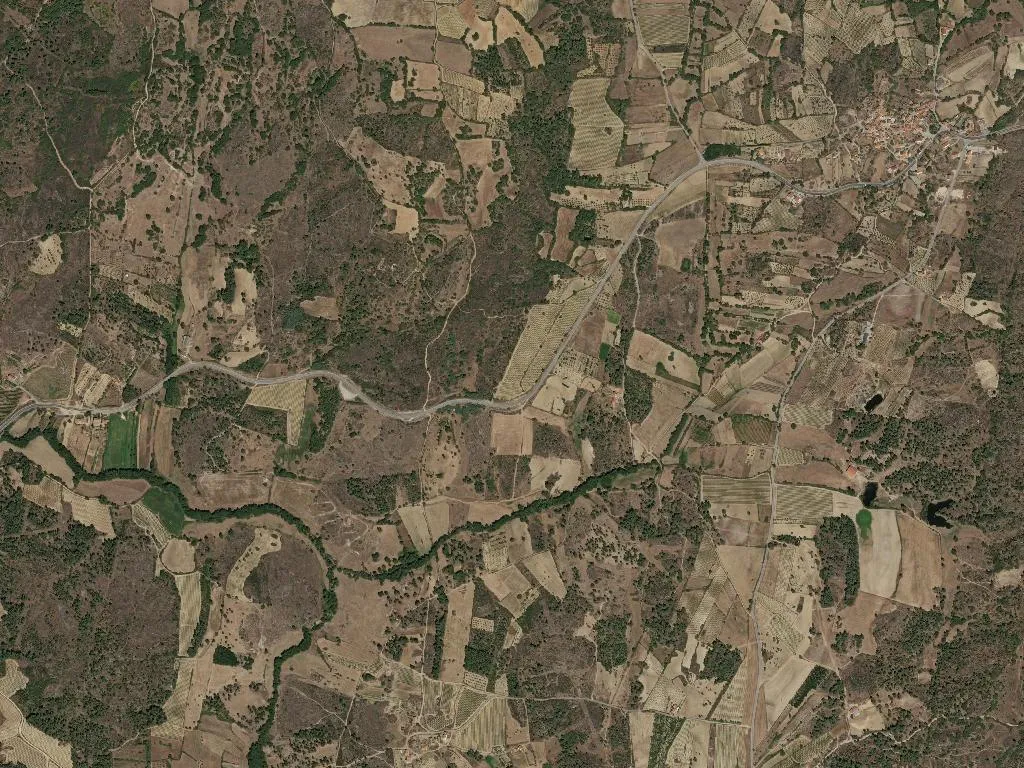
Sixteen people per square kilometre mean you can walk for twenty minutes and meet only your own echo. The solitary guest bed is in Casa da Padeira, the old baker’s house—bookable only in the singular; there is simply no infrastructure for a crowd. Soft ridges carry the eye south-east until the Serra da Estrela bruises the horizon; in between, cork oaks and loose-stone walls have defined Quinta do Vale since Wellington’s troops were in the area. The unimpeded north wind delivers knife-cold January air and August dust so dry it hisses against the terraces, forging a population that shrugs at discomfort.
The mathematics of meeting
Drive the M627 and every car is statistically familiar; each inhabitant occupies 3.4 hectares of personal space. When Adérito’s bar closed in 2019 the parish lost its last public espresso machine; provisions now require a 17 km descent to Pinhel’s Intermarché, prescriptions a twenty-minute haul to the pharmacy. Freezers stay full, tractors stay fuelled—John Deere, 1978, still ticking.
The sun drops behind dark-tiled roofs, chimneys draw sharp vertical lines in the still air. Six o’clock: one bell from the white-washed church of Nossa Senhora da Assunção. No one hurries; no one is expected.