Full article about Valbom-Bogalhal: where schist walls outnumber people
Centuries-old olive terraces, goat-cropped pastures and a Nordic hush at 565 m near Pinhel
Hide article Read full article
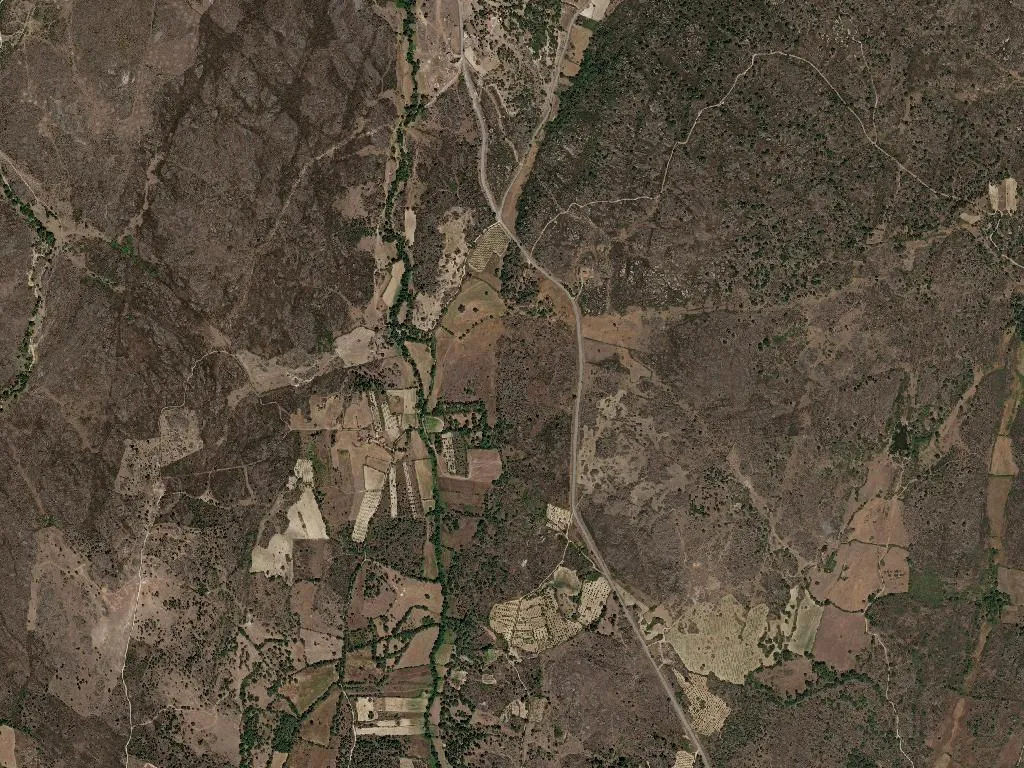
The afternoon sun warms the schist terraces where dry-stone walls trace irregular geometry. At 565 m above sea-level, on the southern lip of Portugal’s central plateau, silence has real mass—broken only by the groan of a wooden gate or the faint bleat of goats drifting across a pasture. Valbom and Bogalhal were merged into one civil parish in 2013, yet the landscape paired them long before: 3,233 ha of valleys and rough grazing where the land, not the clock, sets the tempo.
A good valley, still
Latin survives in the name—vallis bona, “good valley”—and the soil backs up the boast. After the Christian re-conquest these slopes were parcelled into small agricultural concessions; later, Bogalhal’s seasonal ponds gave the hamlet enough status to warrant its own town charter until 1836, when it was absorbed by neighbouring Pinhel. That lost autonomy lingers in the shape of solitary chapels and cobbled footpaths that stitch scattered settlements together.
Today the parish registers 192 inhabitants. Census arithmetic tells the rest: 112 are over 65, only ten are under 15. At six residents per square kilometre, horizons feel uncluttered, gates stay locked, and every face is familiar—yet the space delivers a rare, almost Nordic sense of liberty.
Olive oil, kid, and granite’s slow release
Sheltered paddocks harbour centenarian olive trees whose fruit qualifies for the Beira Interior DOP oil label. Schist soils and wide diurnal swings give the oil low acidity and a blade-of-grass finish. Higher up, Serrana goats crop the broom; their meat becomes Cabrito da Beira IGP, roasted over vine prunings or simmered with potatoes and winter greens.
Vineyards nibble at the plateau—Beira Interior DO reaches these altitudes—but polyculture still rules: rye laid out on threshing floors, walled vegetable plots, almond blossom that lingers into April because nights stay cool.
Time, unpurchased
There are no glossy leaflets, no audio guides, just one rural guesthouse registered with the parish council—a hint that outsiders are beginning to notice. Visitors come less for monuments than for the privilege of walking a secondary road for an hour without meeting a car, or of hearing their own footsteps echo across the forecourt of a chapel whose key is kept by a neighbour two kilometres away.
Granite absorbs the day’s heat and hands it back at dusk, when wood-smoke rises and the temperature plummets behind the ridge. The valley was named a thousand years ago; at sunset it still earns the compliment.