Full article about Aldeia da Ponte: bull dust, chestnut rings and border echoes
262 souls, one nail-less bullring, a granite bridge where smugglers once hurried
Hide article Read full article
The snap of the pole
The pole snaps and the crack ricochets across the granite-flagged square like a shotgun fired by mistake. August heat, 810 m up on the Portuguese side of the border cordillera. The wooden bullring is packed shoulder-to-shoulder, voices rise, the bull wheels and charges again. In Aldeia da Ponte summer smells of sweat, sun-baked earth, and sardines spitting on street-side braziers. The parish head-count is 262 – 161 of them over 65 – but the place trebles when emigrants fly home from France and Switzerland. Laughter rattles off stone walls, memories are traded in dialect no one else would follow.
The bridge that christened the village
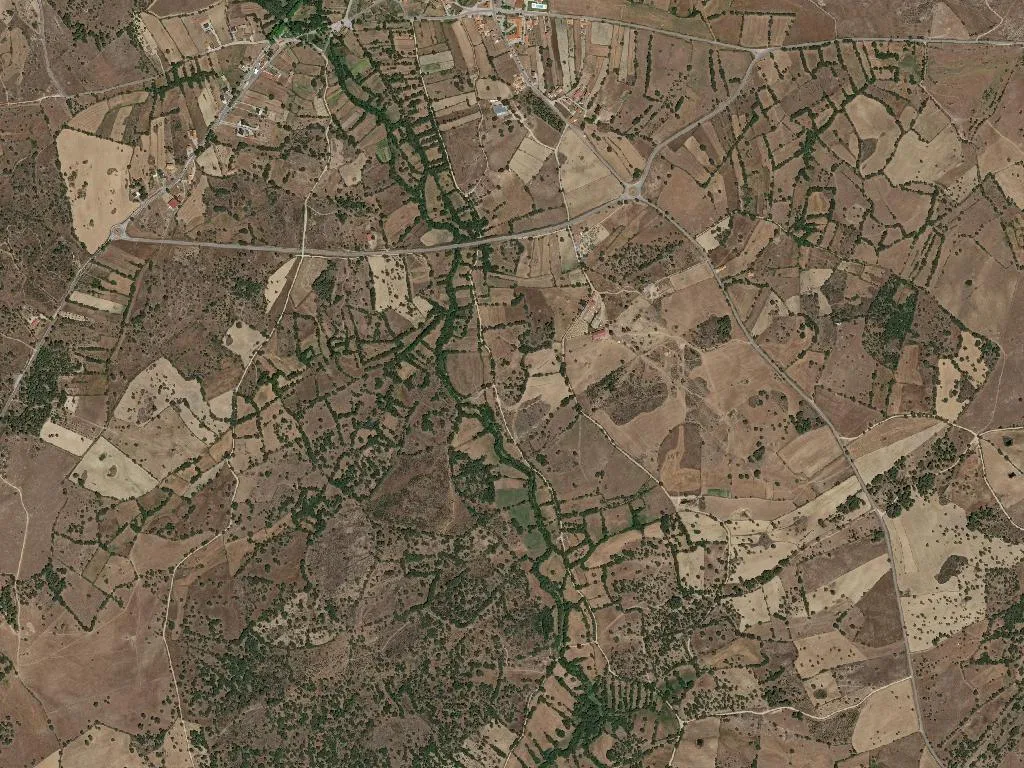
Below the houses the Ribeira da Aldeia – locals still call it the Cesarão – slides between meadows and chestnut coppices. The single-span bridge that gave the village its name still carries the Sabugal–Vilar Formoso road, its medieval bones reinforced with twentieth-century concrete. Over centuries it has taken shepherds, smugglers, gun-metal Austin Sevens and, more recently, Dutch touring bikes. Walk across at dusk and you hear nothing but water gargling round the grey granite and, somewhere above the heather plateaux, the whistle of a short-toed eagle.
The parish church of Nossa Senhora da Assunção, 18th-century and unshowy, anchors the square. Beside it the former Colégio dos Servos de Jesus – a boys’ school since 1888 – stands hollow, glassless windows framing shifting sky. Latin verbs and long-division once echoed here; now only wind patrols the empty classrooms.
Border bulls, pitchforks and Capeia
Aldeia da Ponte styles itself a capital of the Capeia Arraiana, the trans-border bull-game particular to these high, thin-soiled villages. The ring, built without a single iron nail from local chestnut and schist, stages two capeias a year: Easter Saturday and 15 August. Days later comes the championship “Ó Forcão Rapazes!”, when nine villages send teams to wrestle bulls with nothing but a long wooden fork. In 2010 a 600-kg bull split the cross-beam clean in half; photographs of the splintered timber are still produced like war medals.
Between fiestas the encerro keeps tradition alive: a fighting bull is shepherded through the alleys at dusk, flanked by lads carrying the same forks, hooves drumming on granite in a choreography that predates the border treaty of 1297.
Mountain food for mountain weather
Cooking here is built for winter. Roasted Beira IGP kid emerges from a wood-fired oven the colour of mahogany; chanfana – goat stewed in red wine and black pepper – is eaten from the same chipped terracotta bowl your grandfather used. Black pork from the bisaro breed becomes chouriço and morcela; the olive oil carries Beira Alta DOP; the cheese is Serra da Estrela, runny enough to demand a spoon. Vineyards sit at 800 m on granite, giving Beira Interior reds that taste of wild thyme and overnight frost. Come October, stewed wild boar appears on every table; in August the afternoon is killed slowly with pumpkin filhós fritters and requeijão custards.
The hush of Malcata
South-east, the 16 000-ha Serra da Malcata nature reserve begins where the last house ends. Humans are out-numbered by Iberian wolves and griffon vultures (population density: 7.14 per km²). A way-marked rural trail links Aldeia da Ponte to the abandoned hamlet of Aldeia Velha and the shepherd huts at Forcalhos. Walk it in late afternoon and you’ll meet cattle with lyre-shaped horns moving unhurriedly between granite outcrops, while griffons ride the thermals above.
Long after the bullring empties, the air still holds the scent of sun-warmed timber and the faint metallic echo of a pole striking stone – not a break this time, just someone, somewhere, rehearsing for next August.