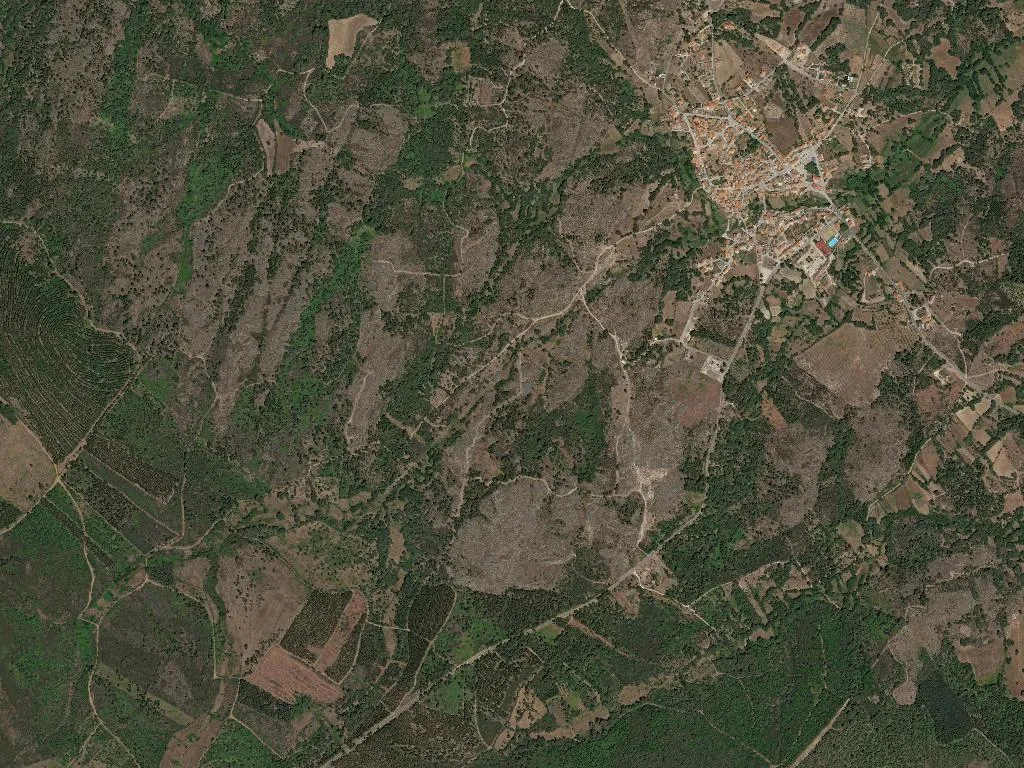
Full article about Aldeia do Bispo: schist pillory & dunking well
Chanfana stew, Roman bridge, shale pools—village life in Guarda’s hidden schist corner
Hide article Read full article
The village pillory is quarried from the same blue-grey schist as the roofs. It has stood 300 m downhill from the mother church since 1514, the year Aldeia do Bispo was elevated to a town; it stayed put when the crown revoked the charter in 1836 and the settlement shrank back to a village.
What is left
The parish church unlocks at 10 a.m. if the sacristan is home—knock on the white door beside the cemetery wall. Most of the baroque gilding on the high altar vanished during the 1832 Liberal Wars; what glints today is a 1958 restoration. The single-lane Romanesque bridge over the Ribeiro de Aldeia still carries lorries up to 3.5 tonnes. The “communal jail” is a three-metre-wide well; rustlers were dunked, not detained. São Brás chapel opens once a year, 3 February at 4 p.m.; drop a euro in the basket for each child’s doughnut.
Where to eat
O Bispo is the only restaurant. Order chanfana (goat stew) a day ahead; the kid comes from Monforte, not the village herd. The house red is from Trancoso, not the local Rufete grape. The biennial fair fills the lanes on Pentecost Monday—arrive before 11 a.m. or the thirty parking spaces are gone.
Trails
The PR4 Malcata loop, eight kilometres of heather and broom, begins two kilometres past the bridge. Griffon vultures lift off the thermals between nine and eleven; lynx tracks are for hunters to interpret. The shale pools stay at 14 °C even in August. Capeia—loose bulls trotted through the streets—happens on the last Sunday of the month; five-euro tickets are sold from a table in the square at 2 p.m., festivities end when the final animal loses interest.
The potter, António, opens his workshop when his wife goes to market. Rap on the blue shutter; he sells unglazed clay tiles for two euros each but does not demonstrate.