Full article about Fóios: Dawn above the Côa Valley mist
At 975 m this granite hamlet keeps Atlantic oaks, goat-fed thyme smoke and eagle-owl nights.
Hide article Read full article
Dawn at 975 metres
The cold arrives before the sun. At 975 metres, Fóios’ granite doorjambs still hold the night’s damp, and the air is so thin that a dog’s bark carries from the other side of the valley like a thrown stone. No streetlights, no engines, just the wind combing through the gorse and the first light sliding across schist walls that have fenced these small fields since the 18th-century land reforms. Stand still and you can hear your own pulse.
Vertical country
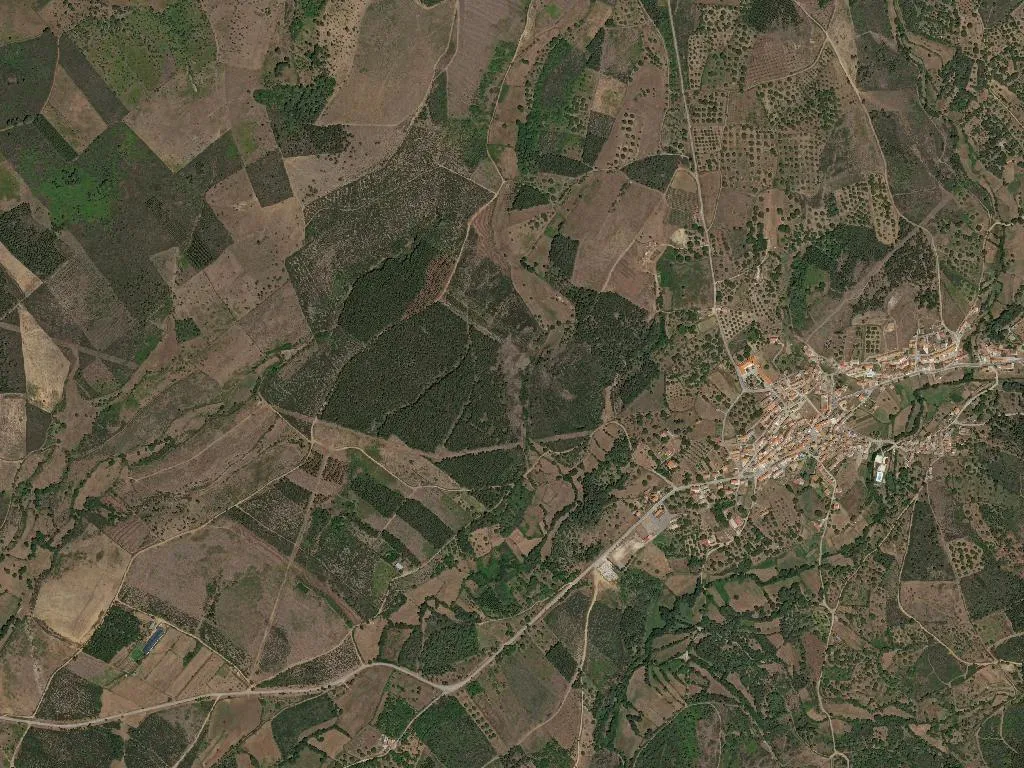
You don’t “visit” Fóios; you tilt into it. Three thousand hectares support only 310 souls, a population density lower than the Scottish Highlands. Every plot has a baptismal name—Póvoa, Vale de Cão, Cabeço do Melro—and a family ledger of who borrowed the oxen in 1953. Trails descend so steeply to the Côa tributaries that locals call them “ladders”; after rain they become temporary rivers, rolling fist-sized quartz downstream like slow hail.
Above 900 metres the vegetation flips. North-facing slopes keep the last Atlantic oaks; turn south and you’re in Mediterranean scrub, resinous and loud with cicadas. At dusk the buffer zone of the Malcata reserve leaks wildlife into the lanes—red fox on the church steps, genet among the chestnut stacks, eagle owl calling from the abandoned watermill. The parish council still pays a stipend for every wild boar tail delivered, a practice unchanged since the 1930s.
Flavour that remembers the field
Kid goats graze the terraced meadows in movable electric nets, tasting cistus and wild thyme that season their meat like built-in aromatics. Dona Amélia’s wood-fired oven is lit at 5 a.m.; by seven the loaf is ready, crust blackened, crumb hot enough to scald fingers. Pour over it the first pressing of local Galega oil—so aggressively green it makes the back of the throat tingle—and the day begins.
Inside the smoke-blackened kitchens, oak logs smoulder for weeks beneath dangling chouriço and salpicão. The flavour is transfusion-strong; walk out after breakfast and your coat carries the scent for days. In rock-hewn cellars, tinta roriz and touriga nacional ferment slowly enough to survive the winter; the resulting wine is spoon-thick, sipped beside stoves when frost feathers the inside of the windows.
Capeia Arraiana: the village reassembled
Once a year the emigrants return and Fóios swells to a thousand. The Capeia Arraiana—a bull-running ritual that predates the Salazar era—turns the single street into a theatre of dust and brass bands. Cast-iron cauldrons of ox-broth bubble in the square; grandmothers pluck chickens for oversized pans of arroz de frango while teenagers with Parisian accents argue over the merits of last year’s bull. Cowbells clank like loose church bells, and the evening air is stitched with woodsmoke and debate.
When the last hire-car disappears down the hill, the village exhales back into its seasonal rhythm. The only sound is the slow scrape of a hoe on granite soil and, at dusk, the soft percussion of oak logs settling in the hearths—proof that someone is still home behind the stone.