Full article about Malcata: Where Portugal’s Oldest Silence Still Echoes
Granite ridge, lynx-haunted woods and a village whose 322 souls keep time by church bells.
Hide article Read full article
Morning light knifes through the kitchen window and lands on a loaf still exhaling steam from the wood-fired oven. Outside, the church bell tolls the hour at a tempo the 322 villagers could recite in their sleep. Malcata wakes reluctantly, shoulder to shoulder with the granite ridge that gave it its name, 807 m above sea level where the air in May carries the snap of a dry sherry. Between them the parish owns 2,125 hectares of cork-and-holm oak parkland, centenarian chestnuts and a silence so dense only a passing hawk is authorised to break it.
Below the ridge
Documented since 1230, the settlement took its name from the Latin malcatum – high ground – and for eight centuries lived off goats, chestnuts and charcoal. In the 1960s mule trains still creaked downhill laden with sacks of blackened beech, traded in Sabugal for flour and coarse salt. Then came the exodus: half the population clocked off to the Renault plants of Lyon and the foundries of Luxembourg. Remittances paid for neat brick houses with aluminium shutters, but they also hollowed the streets; today 205 residents are over 65, only 17 are under 25. Their memories – Saturday dances on the threshing floor, contraband olive-oil runs across the Coa on moonless nights – are kept in heads rather than archives.
Where the lynx survives
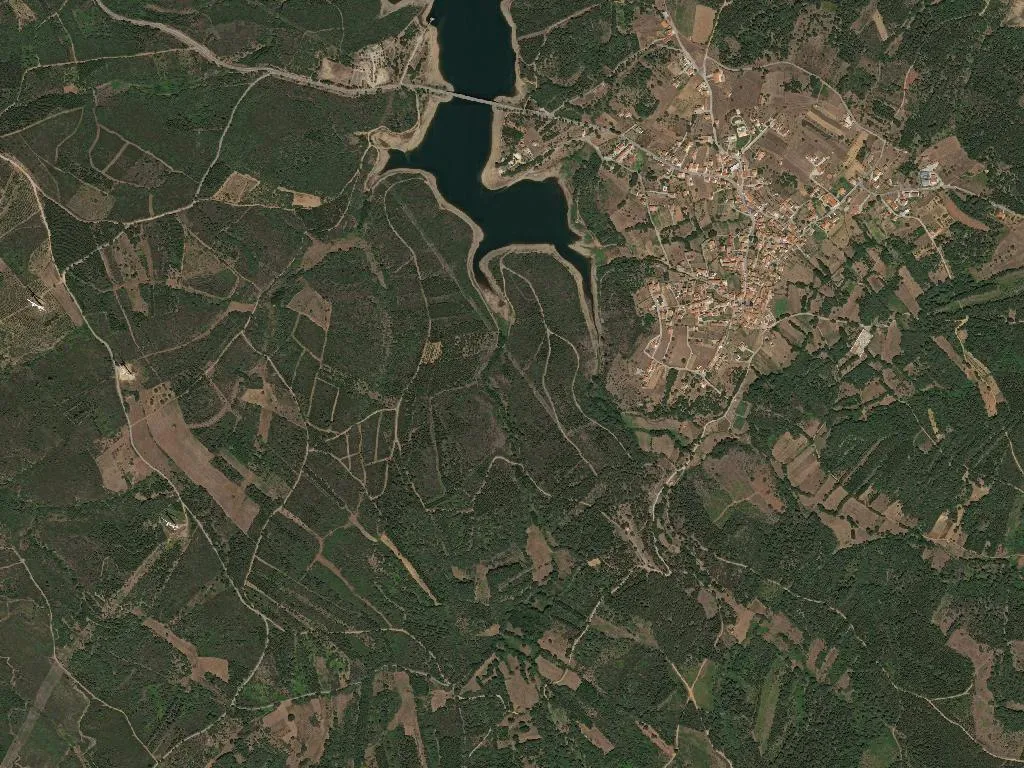
Malcata sits squarely inside Portugal’s only reserve created solely for the Iberian lynx. The parish coat of arms – a lynx’s head flanked by chestnut sprigs – is carved into every granite door-jamb. At the small Interpretation Centre biometric footage shows how the re-introduced cats are tracked by GPS collar, while the 6.4 km Sobreiral footpath threads through oak and maritime pine where wild-boar prints pock the damp earth and a clatter of stonechats protests from the gorse. Above the treeline the Malcata reservoir, one of the highest in the country, holds a wind-flayed sheet of sky where red-canoeists drift and locals cast for trout at dusk.
Mountain kitchen
The cooking here is bluntly seasonal: kid goat roasted in a wood oven until the skin blisters, wild-boar stewed for four hours in Dao red, mountain hare transformed into a dark, wine-laced rice. Trout come straight from the dam, grilled with garlic and coriander. Everything glistens with Beira Interior DOP olive oil; the plate of crackling-skinned IGP kid finishes with a snowfall of coarse salt. Dessert is either cinnamon-dusted rice pudding or farófias – billowy meringue islands in vanilla custard. At O Tear, Trutalcôa or Casa da Esquila the menu is written by the hunt and the season, not the marketing manager.
Bulls, saints and echoes
Saint Barnabas is honoured in June with a modest mass and procession, but volume arrives with the Capeia Arraiana, a trans-border tradition that lets a single bull career through the streets while half the village – and every cousin who ever emigrated – cheers from doorways. Grilled-sardine smoke mixes with hoof-raised dust, and for one weekend Malcata refills its missing decades. Ten kilometres away Sortelha’s fortress village glowers from a basalt outcrop, and the keep of Sabugal – “the five-sided castle” – still commands the Côa crossings. Yet when the last trumpet ends, what lingers is the hush: wind combing through chestnut foliage, dusk chill rising from the valley, footfalls echoing on schist as if someone who left in 1973 had just come home.