Full article about Olive-glow harvest at Quintas de São Bartolomeu
Taste warm topaz oil, hear bulls pound granite lanes, swim dragonfly pools in Sabugal
Hide article Read full article
A ribbon of green-gold
The first drop of olive oil emerges from the press at Quintas de São Bartolomeu like molten topaz, still warm enough to fog the tasting glass and sharp enough to make your tongue tingle. From November to January the air is thick with the scent of crushed fruit; it drifts into jacket fibres, clings to car upholstery, announces the harvest before you’ve seen a single tree. In the old village school—now an interpretation centre—the slate chalkboard that once taught generations their ABCs bears a fresher inscription: “DOP Beira Alta olive oil—fruity, lightly peppery.”
Between two saints and a stream
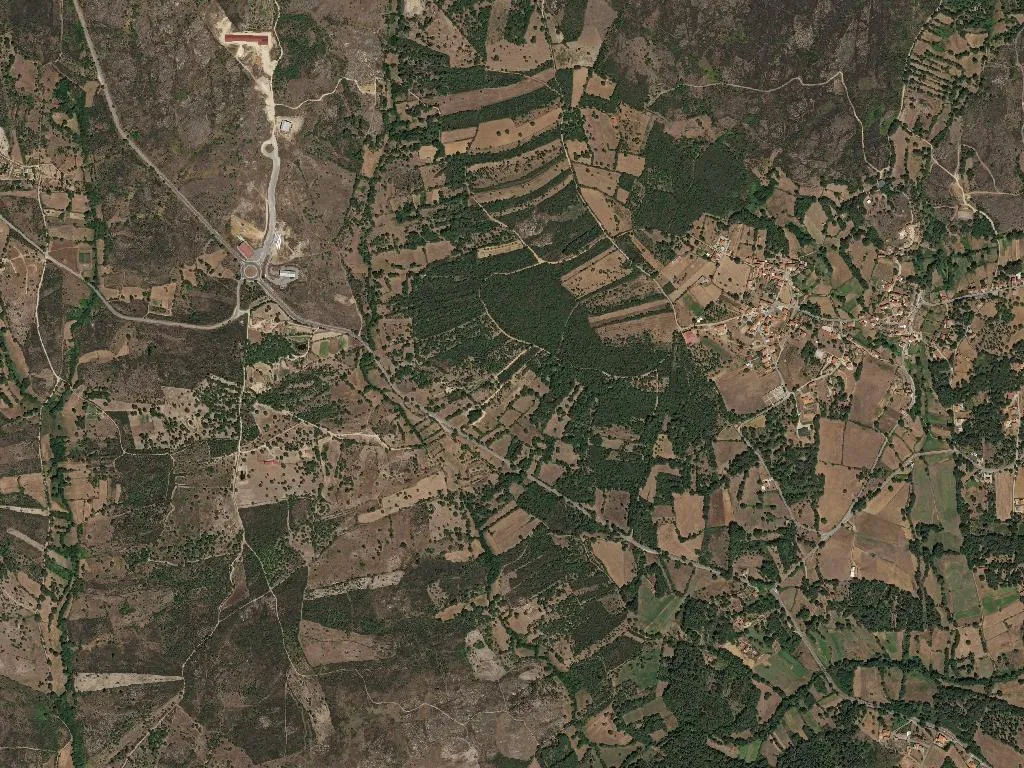
The parish was created in 1835 by merging Quintas and São Bartolomeu, two 16th-century communities whose names still map the landscape: quintas—country estates—of wheat and olive, watched over by the apostle Bartholomew. Inside the modest Beiran church a gilded baroque retable catches candle-light like a private sunrise. Outside, an 18th-century stone cross stands beside the restored pillory, both carved from the same granite that built the village, rough-hewn signatures of medieval self-rule.
Below the houses the São Bartolomeu stream slides over dark schist, forming mirror-bright pools where dragonflies hover and children cannon-ball in July. Along its banks sit the hollowed shells of water-mills; one at Vila Boa still keeps its wooden axle, motionless since electricity arrived yet eloquent about the days when bread began with flour ground 20 m from the oven.
Capes, masks and new fire
On 24 August the saint himself is shouldered through the lanes, but the bigger draw is the Capeia Arraiana, a county-wide contest of brute elegance: half-ton bulls, campinos in leather leggings, dust rising under hoof and accordion. The Sunday before Lent belongs to the caretos—local youths in fringed linen masks and rainbow quilts—who career through the alleys during the Queima do Entrudo, rattling cowbells. At Midnight Mass on Christmas Eve the priest kindles the “new fire”, then the congregation breaks into impromptu four-part polyphony that drifts up the cold nave like incense.
On the table, the taste of Malcata
Roasted kid (IGP Cabrito da Beira) arrives sputtering in a wood-fired oven, basted with rough red from the upper Côa. Goat chanfana stews for hours in a clay pot sealed with smoke-blackened bread dough; morcela de arroz, smoked over beech, hangs overhead like edible bunting. Winter suppers end with chestnut-and-bacon soup, its surface slick with the parish’s own peppery oil. Festival days bring cinnamon-scented pumpkin tijeladas, walnut cakes and coscorões—crackling ribbons of orange-scented dough.
Trails among oaks and wildcats
Quintas de São Bartolomeu skirts the Serra da Malcata Natural Reserve, 20 000 ha of cork- and holm-oak where Iberian lynx leave paw-prints in the dust. The 8 km PR4—“Rota da Malcata”—threads past ruined mills and a lookout over the Côa gorge. In late spring the hillside ignites with yellow-blooming tojo—gorse—so bright it hurts the eyes. At the hilltop apiary-school, beginners learn to handle traditional straw hives while bees write circles in the air.
December nights close in early. Inside a schist cave the village stages its living nativity: neighbours in woollen cloaks, new-born lambs steaming under candle-light, the same whispered prayers that have warmed these stones since the 1830s. Outside, the mountain silence is absolute; inside, the animals breathe like small engines and history keeps its pulse.