Full article about Rebolosa’s Matança Morning: Smoke, Meat & Granite
At 802 m, join the blue-ticket scrum for chouriço, stone ovens and a vanished Côa valley
Hide article Read full article
Smoke Over Schist
The chimney exhales a thin ribbon of oak-scented smoke and the morning air already carries the sweet, paprika-laced perfume of curing chouriço. It is 8:30 a.m. on 25 November, altitude 802 m, and the thermometer refuses to climb above three degrees. Beside the granite parish church, three trestle tables sag under loops of morcela and paio, a pair of brothers hawk axes and sickles, and a woman in a woollen shawl bargains for a kid goat. The parish-council president moves through the scrum, issuing scraps of blue paper that serve as kill permits for tomorrow’s matança: no ticket, no pig.
Stone, Water and What’s Left
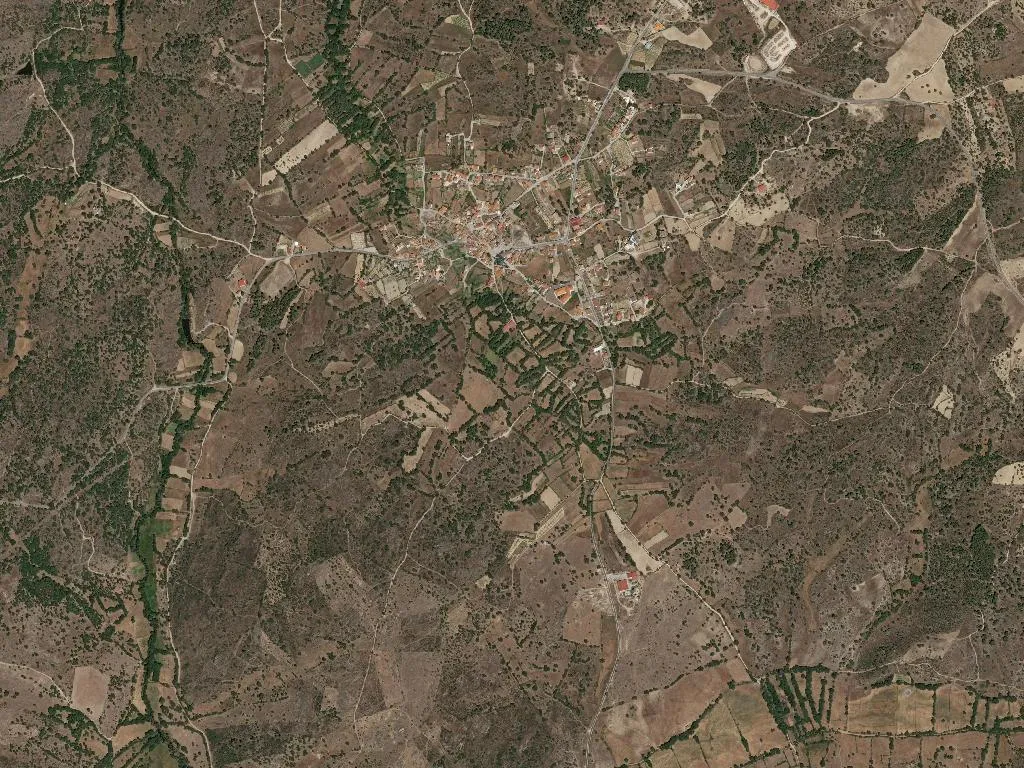
Rebolosa first appears in a royal charter of 1229. Back then, olive terraces stitched the hillsides all the way down to the Alfaiates stream; only six remain. Sunday worship starts at nine sharp—step inside to find a Manueline altarpiece whose gilt has thinned to a freckle and 17th-century azulejos missing a corner of Gabriel’s wing. Outside, the stone cross does double duty as a map rest. Climb 400 m west to the ridge-top manor (dated 1732 on the lintel): iron balconies flake like burnt paper, shutters clap in the wind, and the view unrolls across the Côa valley like a charcoal sketch.
The water-mill runs on Saturdays. Five kilos of wheat become flour in fifteen minutes; bring grain and the miller lets you keep the meal. The communal oven fires up the first Sunday of each month—book your slot at the newsagent-cum-bar “O Centeio”. A six-kilometre trail, way-marked in yellow, threads past stone granaries starting at the cemetery; carry water—there are no springs.
Eating the Border
At “Cimo da Aldeia” order smoked bucho—pig’s stomach stuffed with minced lung and pepper—swimming in chestnut broth (€6). Ask for extra broa, the local corn-and-rye loaf (€1), sturdy enough to mop the bowl clean. DOP Beira Interior olive oil is sold from the cooperative in Alfaiates, weekdays until 5 pm. Roast kid is strictly by reservation (tel. 923 456 789). Graminês—wild-pear firewater—comes in unstoppered two-litre bottles from the café “O Alívio”; bring your own bag.
Where the Ridge Breathes
Twelve kilometres north, the gate to the Malcata reserve is reached via the municipal 615; the final three are dirt. The visitor centre opens 9 a.m.–noon, has toilets and a GPS-ready map. The Veado trail is an eight-kilometre loop with 250 m of ascent; follow the boards to the hidden lagoon. Bonelli’s eagle hunts the north-facing scarps between 10 a.m. and 4 p.m.—binoculars essential. After three days of autumn rain, parasol mushrooms push up through the chestnut litter; pick only with a certified guide.
On 15 August the village hosts its capeia arraiana: bulls loosed through the streets at four in the afternoon. Carry a forcão (traditional herding fork) if you fancy joining in; otherwise bolt the shutters. Tickets (€5) from the tavern. The bonfire is lit at eleven; drinks are cash-only.