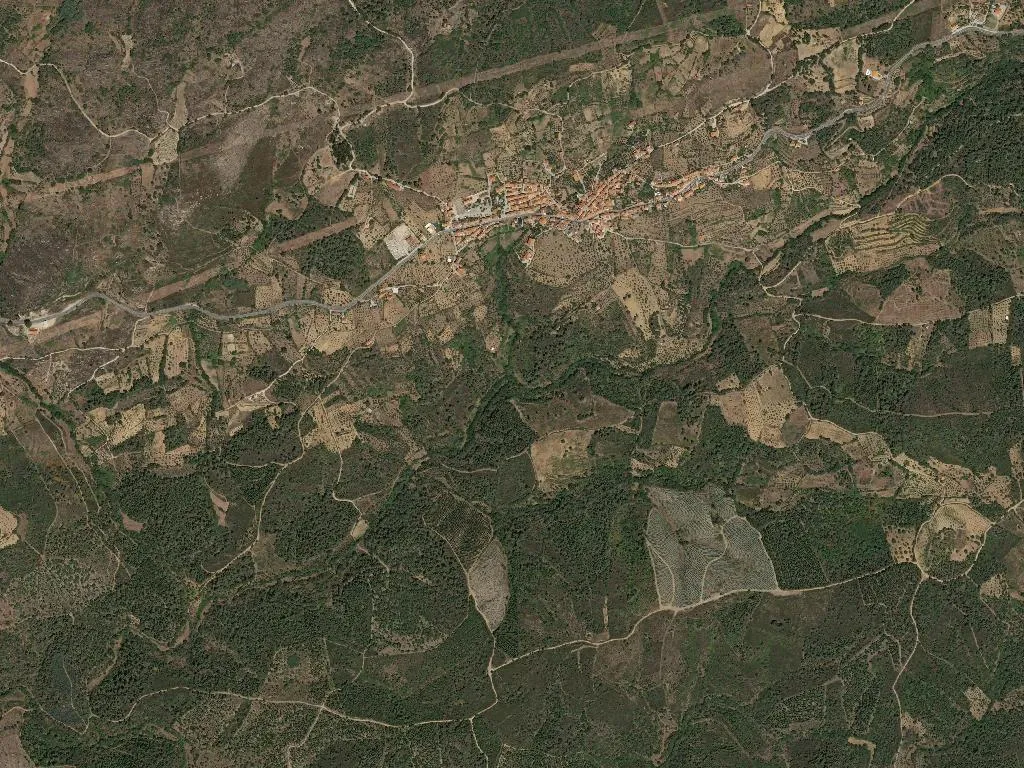
Full article about União das freguesias de Santo Estêvão e Moita
Santo Estêvão & Moita, Sabugal: join 18th-century Capeia bull runs, hike Serra da Malcata, taste altitude-sharp olive oil.
Hide article Read full article
A sharp shout ricochets across the flagstones, then the mountain hush reclaims the square. Hooves drum the packed earth; voices rise like wood-smoke. This is the Capeia Arraiana – not a show for cameras but a summer covenant between villagers and half-wild cattle, rehearsed since the 18th century on the high plateaux of Portugal’s eastern frontier.
Two hamlets, one ridge
Administratively stitched together in 2013, Santo Estêvão and Moita have long shared the same fold of schist at 613 m. Between them they can muster 327 souls and 2,900 hectares of broom-covered scarp, where every dark-stone cottage seems chiselled by the same hand that built the irrigation walls in the valley meadows. Roman roof-tiles have turned up in vegetable plots; a Visigothic lintel props open a barn. Yet no one trades on the past – they simply heat their houses with it, stuffing granite window frames against the January air that drifts in from the Spanish meseta 15 km away.
Where the scrub becomes a reserve
Walk past the last potato patch and you are inside the Serra da Malcata Natural Reserve – no ticket booth, just the slow fade of wood-smoke into pine resin and the sudden absence of human sound. Iberian wolves leave paw-prints in the sand of the Coâ tributaries; genets eye you from laurel thickets. The paths are workaday cattle routes, waymarked by generations who knew which spring still ran in August and which ridge carried the snow-wind.
Olive oil that tastes of altitude
Breakfast is a slice of warm maize bread drizzled with Beira Alta DOP oil, peppery from trees that spend their days in cloud. The kid on the table is IGP Cabrito da Beira; no certificate is necessary when the cook can name the goatherd. It roasts in a stone oven with rosemary cut from the hillside, while a jug of Beira Interior red – Jaen and Rufete grapes grown at 700 m – breathes beside the wood-burner. There are no tasting menus, just a deal: you eat what the house is eating, slowly, between sentences that arrive unhurried.
The name no one forgets
On the military map it reads Terreiro das Bruxas – “Witches’ Terrace” – first printed in 1952. Moonless nights still invite stories of women who knew which herb staunched blood and which induced it, who healed and frightened in equal measure. Whether fact or folklore, the toponym clings like a scar: proof that censuses cannot record everything. They count only 20 residents under thirty and 182 over sixty-five; they do not measure memory.
When the sun slips behind Marofa peak the bull is led back to pen. The square retains the print of hooves and bare feet; the wind carries off the final yell. What lingers is the raw smell of animal sweat and dust suspended in warm air – a souvenir no souvenir shop could ever stock.